Abu Dhabi’s vast logistics landscape—spanning the massive Khalifa Industrial Zone (KIZAD), the sprawling Mussafah industrial sector, and expanding residential zones like Khalifa City A/B and Mohammed Bin Zayed City—demands specialized cold chain vehicles engineered for the emirate’s unique infrastructure and operational demands.
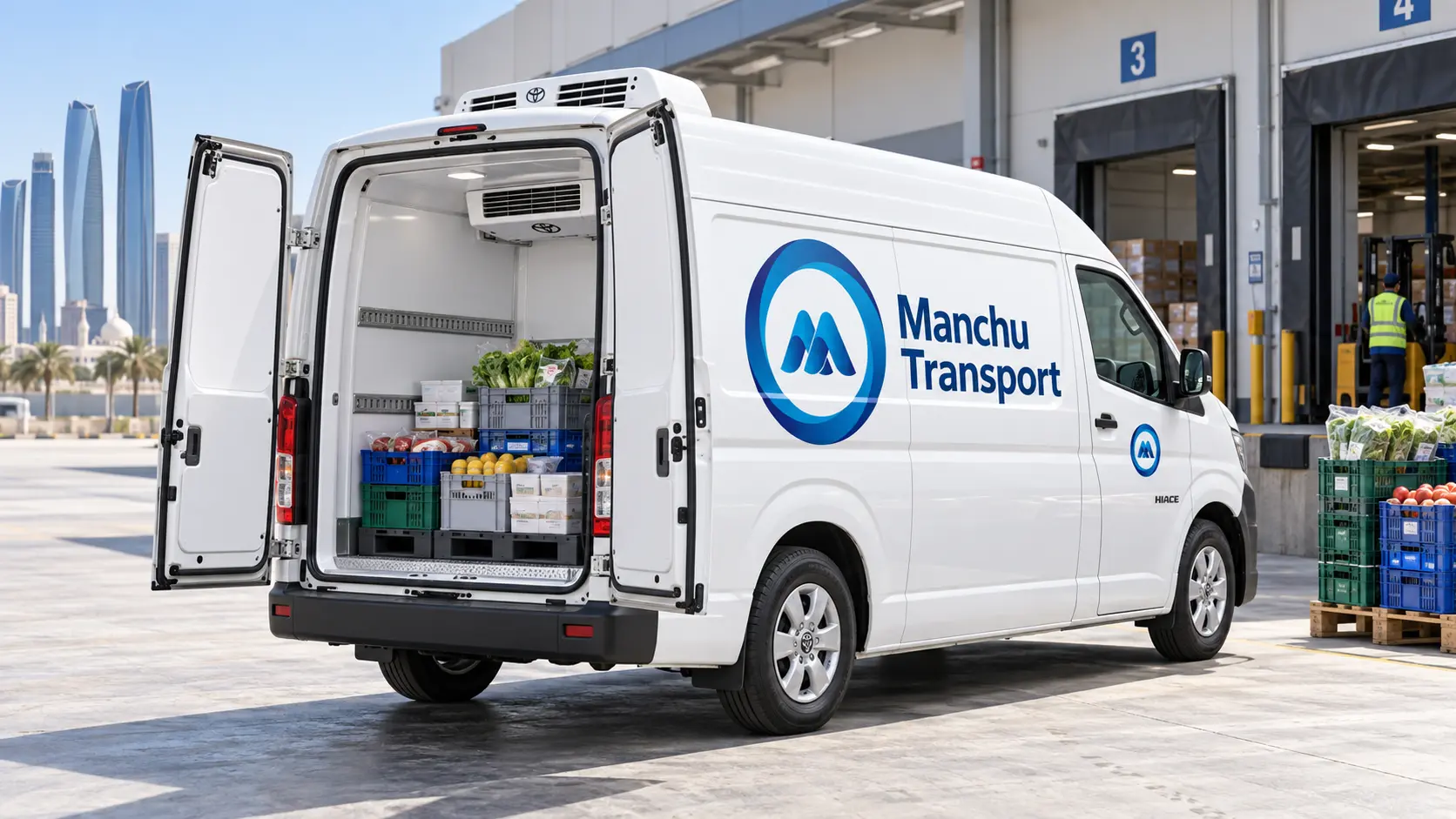
The high-roof chiller van has emerged as the critical asset for food distribution, catering, pharmaceutical logistics, and supermarket replenishment in Abu Dhabi. Unlike standard-roof vans, the high-roof variant introduces significant volumetric advantages, operational efficiencies, and strategic deployment possibilities—along with specific infrastructure constraints that dispatchers must navigate meticulously.
This comprehensive guide provides the technical specifications, dimensional analysis, thermal management considerations, geographic deployment strategies, and regulatory compliance requirements for high-roof chiller vans operating across Abu Dhabi’s complex logistics environment.
Interior Dimensions: Volumetric Advantage and Walk-In Access
The most profound operational advantage of the high-roof chiller van is the 30-centimeter increase in internal height, which transforms how personnel interact with cargo and how thermal air circulates throughout the compartment.
Standard-Roof vs. High-Roof Comparison
| Specification | Standard-Roof Van | High-Roof Van | Operational Delta |
|---|---|---|---|
| Internal Length | 280 cm | 295 cm | +15 cm |
| Internal Width | 155 cm | 155 cm | 0 cm |
| Internal Height | 135 cm | 165 cm | +30 cm |
| Total Cargo Volume | 5.8 m³ | 7.5 m³ | +1.7 m³ (+30%) |
| Exterior Height (with TRU condenser) | ~199 cm | ~228 cm (+TRU: 2.3+ m) | +29 cm |
Walk-In vs. Stoop-In Loading
The 135 cm internal height of a standard-roof van restricts operations to “stoop-in” loading—personnel must bend or crouch to access cargo, retrieve items, and position restraint straps. This creates severe ergonomic strain, increases occupational injury risk, and dramatically slows offloading at each delivery stop.
The 165 cm internal height of the high-roof variant permits “walk-in” access—personnel can stand upright inside the cargo box, engage in natural body mechanics, and rapidly locate and retrieve items without physical stress. For multi-drop urban distribution routes encompassing ten to fifteen delivery nodes daily, the cumulative time saved through efficient, upright cargo retrieval translates directly into:
- Reduced driver fatigue and lower occupational musculoskeletal injury risk
- Accelerated drop times (typically 20–30% faster per stop)
- Enhanced fleet productivity and reduced labor costs
The additional vertical clearance facilitates superior airflow above stacked pallets—a critical factor in maintaining homogeneous temperature distribution throughout the refrigerated compartment. Cold air circulates freely around cargo stacks rather than encountering blocked airflow that creates dangerous “hot spots” (interior locations where temperature spikes above the set-point), causing regulatory violations and product spoilage.
Payload Capacity and the “Cube-Out” vs. “Weigh-Out” Paradigm
While the high-roof variant offers 1.7 additional cubic meters of volume, the payload weight capacity increase is marginal. The additional structural steel, expanded exterior paneling, and more high-density polyurethane insulation required for the high-roof body create inherently heavier tare weight.
Payload Capacity Range:
- Standard-roof chiller van: 1,000–1,200 kg usable payload
- High-roof chiller van: 1,200–1,500 kg usable payload
This mechanical reality creates a distinct operational paradigm: the high-roof van is engineered to “cube out” (reach physical spatial limit before weight limit) rather than “weigh out” (reach maximum weight before filling available space).
Critical Application Decision:
- Dense cargo (frozen poultry, bulk seafood, liquid dairy): A standard-roof van is sufficient. You will reach maximum axle weight long before exhausting available space. High-roof premium is wasted.
- Voluminous, light cargo (pastry boxes, wedding cakes, floral arrangements, catering trays): The high-roof van becomes indispensable. The 7.5 cubic meter capacity allows consolidation of loads that are spatially demanding but physically light, reducing total vehicle trips required and maximizing route efficiency.
Door Clearance Constraints: Navigating Abu Dhabi’s Infrastructure
The most significant operational limitation of the high-roof chiller van is its extended exterior height, which directly conflicts with specific sectors of Abu Dhabi’s architectural infrastructure. The structural design of urban centers heavily dictates commercial vehicle deployment.
Height Dimension Critical Facts
- Standard-roof Hiace: Exterior height generally remains under 2.0 meters
- High-roof van: Exterior height approximately 2.28 meters
- High-roof with roof-mounted TRU condenser: Total operational height frequently exceeds 2.3 meters
Subterranean Logistics Network Exclusion
The 2.28+ meter height immediately disqualifies the high-roof van from the vast majority of underground parking structures, subterranean hotel service entrances, and basement supermarket receiving bays across Abu Dhabi—which are commonly capped at 2.1 or 2.2 meters of clearance.
Deploying a high-roof van to these subterranean locations results in immediate logistical failure. When faced with a clearance barrier, drivers are forced to:
- Park the vehicle illegally at street level
- Manually transport temperature-sensitive cargo across open pavements down ramps
- Move cargo through public access corridors in ambient temperatures exceeding 45°C
Consequence: This prolonged exposure causes severe thermal breaches to the cold chain, placing cargo in direct violation of ADAFSA food safety standards and risking catastrophic product spoilage.
Critical Operational Rule: High-roof vans must be strictly allocated to routes where the destination infrastructure supports open-yard, street-level, or high-clearance warehouse loading bays. Dispatchers must map delivery routes against physical clearance constraints before assigning the vehicle.
Geographic Zoning and Optimal Deployment Strategies in Abu Dhabi
Abu Dhabi’s vast geographic footprint and varied urban planning require distinct logistical strategies. High-roof chiller van deployment must be strategically matched to specific industrial and commercial zones.
KIZAD (Khalifa Industrial Zone Abu Dhabi) and Khalifa Port
KIZAD serves as the deep-water maritime gateway and primary import hub for bulk food and FMCG (Fast-Moving Consumer Goods) entering the emirate. Operations here involve breaking bulk—moving imported frozen seafood, primal meat cuts, and packaged foods from massive 40-foot shipping reefers into smaller commercial LCVs for localized distribution.
High-Roof Van Deployment in KIZAD:
- Perfect fit for cross-docking operations
- Expansive, open industrial architecture poses absolutely no height restrictions
- High-roof vehicles seamlessly interface with raised loading docks
- Maximizes 7.5 cubic meter capacity to move large consolidated loads to inner-city distribution centers
- Walk-in access accelerates unloading of hanging meat carcasses and tall produce stacks
Mussafah and ICAD (Industrial City of Abu Dhabi)
Mussafah and ICAD function as the operational nerve center of Abu Dhabi’s cold storage and logistics sector. The overwhelming majority of chiller transport fleets maintain primary dispatch yards, heavy maintenance facilities, and pre-cooling depots within this grid. The zone is characterized by:
- Large-scale food processing plants
- Massive centralized cloud kitchens
- Wholesale meat and seafood markets
High-Roof Van Excellence in Mussafah/ICAD:
- Transport hanging meat carcasses and towering stacks of fresh produce crates directly from processing facilities to regional hypermarkets
- Industrial layout features raised loading docks and high-clearance steel canopies
- No operational friction from the 2.3-meter height—infrastructure perfectly accommodates
- Increased internal height enables ceiling-mounted meat rails for hygienic carcass transport (preventing floor contact, a severe ADAFSA violation)
Khalifa City A/B and MBZ (Mohammed Bin Zayed) City
These rapidly expanding suburban residential zones depend heavily on supermarket replenishment, specialty bakery deliveries, and direct-to-consumer meal preparation logistics.
High-Roof Van Suitability:
- Preferred asset for multi-drop supermarket routes
- Standalone supermarkets and community retail centers feature dedicated ground-level receiving bays at rear premises—not subterranean docks
- Can deliver large volumes of varied products in a single trip without encountering overhead clearance issues
- Walk-in efficiency critical for rapid, high-frequency urban stops
Souk Al Qassim and Central Business Districts (Not Recommended for High-Roof)
Traditional street-facing souks, Hamdan Street, Electra Street, and the Tourist Club Area are characterized by extreme density, narrow service alleys, and heavy traffic congestion.
High-Roof Van Deployment Cautions:
- Deliveries to traditional souks and independent restaurants may work if adequate street parking exists
- For high-rise hotels, towering commercial complexes, and subterranean mall deliveries (prevalent in central business district), operators must default to standard-roof vans to ensure seamless subterranean access
- Illegal street-level unloading in high-density areas results in crippling traffic citations and potential vehicle towing
Thermal Efficiency and Thermodynamic Considerations
Operating a cold chain in the UAE’s extreme climate requires overcoming thermodynamic gradients among the most severe globally. With ambient summer temperatures frequently between 45–50°C, the thermal efficiency of a chiller van is the single most critical factor in preventing food spoilage.
The Thermal Mass Challenge
A high-roof van contains 1.7 additional cubic meters of air. In refrigeration physics, this increased volume represents a significantly larger thermal mass. When the rear barn doors or side sliding door opens during delivery, dense refrigerated air rapidly spills out and is instantly replaced by hot, humid ambient air. The refrigeration unit must possess necessary BTU capacity to execute rapid “pull-down”—extracting this heat and restoring the set-point temperature before the cargo’s surface temperature rises.
Industry-Standard Refrigeration Capacity
Industry-standard refrigeration units used in Abu Dhabi—such as Carrier Transicold Citimax or Thermo King V-200 and V-300 MAX series—are specifically engineered to handle the expanded high-roof volume. These systems utilize advanced reciprocating or scroll compressors to rapidly cycle R-134a or R-404a refrigerants, extracting heat from the expanded cargo bay.
Operational Reality: Because the compressor is driven directly by the vehicle’s engine via belt and pulley, prolonged idling in heavy urban traffic combined with frequent door openings can severely strain the system’s ability to maintain set-point temperatures, especially during summer peaks.
Critical Insulation Specifications
While standard rental vans use 75 mm insulation panels, premium high-roof chiller vans deployed in Abu Dhabi’s extreme climate employ 80 mm high-density polyurethane (PU) panels to compensate for the larger roof surface area directly exposed to intense solar radiation.
Mandatory Pre-Cooling Protocol: High-roof vans require strict 30 to 45 minutes of pre-cooling prior to dispatch. The expanded interior space and greater surface area of walls require the unit to run at high idle until the internal ambient air and, crucially, the insulated walls themselves are fully saturated with cold energy—typically reaching stabilized +2°C to +4°C before any cargo crosses the threshold.
Failure to Pre-Cool: The thermal mass of warm walls will radiate heat directly into cargo, rendering the refrigeration unit’s efforts futile during the crucial first hour of transit, causing regulatory violations and product loss.
Secondary Thermal Barriers
High-roof vans are heavily reliant on PVC thermal strip curtains installed at all door openings. These curtains act as a critical thermal break, retaining cold air within the compartment while allowing walk-in loading operations. Structural integrity of the cold envelope also relies on door seal quality. Degraded or damaged magnetic seals cause massive cold air loss, forcing the TRU into continuous high-output operation and destroying fuel economy.
Dual-Temperature Configurations and Movable Bulkheads
One of the most advanced and economically advantageous deployment strategies for the high-roof van involves dual-temperature configurations using movable insulated bulkheads.
These heavy-duty bulkheads mount on integrated tracks running along ceiling and floor of the van. They can be manually repositioned to divide the single cargo bay into two distinct, hermetically sealed thermal zones:
- Forward section: -18°C deep-freeze for frozen meat, poultry, or ice cream
- Rear compartment: +4°C for fresh produce, dairy, and ambient baked goods
Economic Impact: This configuration effectively transforms a single high-roof van into a multi-modal logistics asset, replacing the need to dispatch two separate standard vehicles on identical routes. This maximizes fleet utility, halves fuel expenditures, and significantly reduces driver labor costs—making the high-roof van an exceptionally lucrative asset for diversified wholesale food distributors operating across Abu Dhabi.
ADAFSA, ASATEEL, and HACCP Regulatory Compliance
Commercial transport of food and pharmaceuticals in Abu Dhabi is governed by a rigorous, overlapping matrix of municipal, federal, and international standards. A high-roof chiller van cannot legally operate without satisfying stringent compliance requirements.
ADAFSA (Abu Dhabi Agriculture and Food Safety Authority)
ADAFSA enforces zero-tolerance for temperature abuse. Violations discovered during random roadside inspections or at receiving docks result in:
- Immediate fines ranging from AED 5,000 to AED 50,000
- Vehicle impoundment
- In severe cases: suspension or revocation of operator’s business trade license
ADAFSA Inspection Requirements: To obtain a valid ADAFSA permit, the high-roof van must undergo highly detailed physical inspection by municipal officers, verifying:
- Entire cargo compartment lined with seamless, food-grade Glass Reinforced Plastic (GRP)
- Coved (rounded) corners to prevent biological matter accumulation
- No exposed timber or corroded metal fixings
- Adequate floor drainage systems for sanitary wash-down of wet cargo spills
- Strict physical segregation of raw proteins and ready-to-eat foods (often requiring physical partitions—which high-roof van’s larger volume easily accommodates)
ASATEEL Tracking and ITC Compliance
All commercial freight vehicles in Abu Dhabi must be registered with the ASATEEL tracking platform. Compliance requires:
- Installation of certified GPS tracking devices linked to ITC’s central monitoring network
- Certification is absolute prerequisite for commercial access to controlled zones (KIZAD, ICAD, deep-water ports)
- Vehicles lacking active ASATEEL certification are summarily denied entry at security gates, paralyzing logistics operations
- Lack of compliance incurs immediate fines of AED 1,000 per vehicle
HACCP and ISO 22000 Compliance
Temperature maintenance is identified as the primary Critical Control Point (CCP) in Hazard Analysis and Critical Control Points frameworks. High-roof vans must operate under meticulously documented HACCP plans dictating strict protocols for:
- Intake temperature verification
- Continuous transit monitoring
- Documented corrective actions for any thermal deviations
Temperature Data Loggers: Continuous data loggers must be certified under European standard EN 12830, guaranteeing accuracy of ±0.5°C across extreme temperature ranges. Modern high-roof fleets utilize IoT-connected loggers that transmit internal temperature data in real-time via cellular networks to secure cloud servers, bypassing localized device memory limitations and ensuring audit-ready compliance data is accessible the moment ADAFSA inspectors request transit logs.
Aerodynamics, Fuel Economy, and Environmental Impact
The physical dimensions that give the high-roof van its logistical utility simultaneously introduce penalties in aerodynamic efficiency and fuel economy.
Aerodynamic Drag Principle: Aerodynamic drag is proportional to the square of velocity; therefore, engine power required to overcome wind resistance increases exponentially at highway speeds. The standard diesel engines (2.8L turbo diesel) in modern Hiace platforms face significantly higher wind resistance when propelling the high-roof configuration compared to sleeker standard-roof models.
Fuel Consumption Impact: In mixed routing profiles (stop-and-go city driving in central Abu Dhabi + high-speed E11 transits), a fully loaded high-roof chiller van can expect fuel consumption of approximately 8.0 to 9.1 liters per 100 kilometers. The increased aerodynamic drag coefficient, coupled with heavier tare weight of high-roof insulated body, generally reduces fuel efficiency by approximately 5–8% compared to standard-roof counterparts on identical routes and loads.
Cost-Benefit Analysis: The increased fuel expenditure must be factored into Total Cost of Ownership (TCO) and route profitability calculations. However, this aerodynamic penalty is often financially negated if the additional 1.7 cubic meters allows elimination of an entire secondary delivery run, thereby saving fuel and labor costs of dispatching an additional vehicle.
Real-World Commercial Use Cases in Abu Dhabi
HORECA and Specialized Event Logistics
The event logistics sector is characterized by need to transport high-volume, low-density, exceptionally fragile cargo. Caterers servicing Formula 1 Etihad Airways Abu Dhabi Grand Prix, ADNEC exhibitions, or royal weddings require transporting delicate multi-tiered cakes, tall stainless-steel pastry racks, and pre-plated meal carts. A standard-roof van cannot safely accommodate the vertical height of these catering racks. The 165 cm interior height of the high-roof van allows these towering racks to be rolled directly into the cargo bay, eliminating risk of crushing fragile culinary items during transit.
Wholesale Meat Transport and Hygienic Carcass Handling
For wholesale transport and distribution of primal meat cuts from slaughterhouses or international import facilities at Khalifa Port, the high-roof van is uniquely suited for installation of heavy-duty, ceiling-mounted meat rails.
Transporting premium meat by hanging it from ceiling (rather than stacking in plastic crates on floor):
- Preserves structural integrity of muscle tissue
- Promotes uniform cold air circulation around entire carcass
- Prevents localized temperature spikes causing rapid bacterial growth
- Meets ADAFSA hygiene standards (no floor contact)
Height Requirement: The 135 cm internal height of a standard-roof van is insufficient to hang large lamb or beef carcasses without dragging on floor. The high-roof van provides necessary vertical clearance to execute hygienic, compliant hanging-meat logistics.
Floral and Horticultural Industry
Premium flowers destined for luxury hotels on Saadiyat Island or high-end event planners are transported standing upright in deep water buckets to preserve hydration and aesthetic freshness. The high roof permits stacking of taller floral arrangements, large decorative foliage, and long-stemmed varietals—making it the default choice for florists distributing across the capital.
Supermarket Mixed-Good Replenishment
Large supermarket chains operating in Abu Dhabi require daily, synchronized replenishment of mixed goods. A single high-roof van equipped with a dual-temperature bulkhead system can deliver:
- Frozen seafood held at -18°C
- Chilled dairy products maintained at +4°C
- Ambient bakery items
All in a single, highly efficient trip. The additional volumetric space allows transport of taller, consolidated pallets wrapped in shrink film, drastically reducing total trips required from Mussafah distribution warehouses to retail fronts scattered across the emirate.
Abu Dhabi Market Availability and Rental Pricing
The temperature-controlled rental market in Abu Dhabi is highly mature, well-regulated, and highly competitive. Major logistics providers maintain diversified fleets encompassing both standard and high-roof vehicles to service different commercial segments.
Fleet Composition Analysis: A benchmark fleet analysis of prominent UAE providers indicates active fleet compositions of approximately 80 chiller vans segmented into 38 standard-roof units and 42 high-roof units—demonstrating near-parity in fleet size across the market and underscoring consistently high commercial demand for volumetric benefits provided by the high-roof model.
These rental fleets typically consist of late-model vehicles (2020–2025) running reliable, proven Japanese diesel powertrains to ensure maximum uptime in the harsh desert environment.
Rental Rate Structure and Pricing Economics
| Rental Duration | Standard-Roof (1.0–1.2 Ton) | High-Roof (1.2–1.5 Ton) | Cost Premium |
|---|---|---|---|
| Daily Rate | AED 250 | AED 300 | +20% |
| Weekly Rate | AED 1,500 | AED 1,800 | +20% |
| Monthly Rate | AED 4,800 | AED 5,700 | +18.75% |
Strategic Decision Framework: A logistics manager must meticulously calculate whether the 30% increase in cubic volume (5.8 m³ → 7.5 m³) justifies the 20% increase in baseline rental cost.
- Dense cargo (frozen poultry, seafood, dairy): The 20% rental premium yields zero economic return—you reach weight capacity long before upper volume is utilized.
- Lightweight, voluminous cargo (bread trays, bakery items, floral arrangements): The 30% volume increase reduces total dispatch trips by one-third, generating massive cascading savings in driver labor, fuel, and vehicle wear-and-tear that far outweigh the AED 900 monthly rental premium.
Strategic Procurement and Logistics Optimization Playbook
Verification of Regulatory Compliance (SLA Formulation)
Never assume baseline regulatory compliance from a transport provider. Service Level Agreements with rental companies must explicitly state and guarantee that the supplied vehicle holds:
- Active ADAFSA approval
- Current ASATEEL registration for ITC compliance
- Verifiable HACCP certification
- Valid EN 12830 calibration certificates for onboard temperature loggers
Pre-Cooling Verification as Contractual KPI
Operators must mandate that the vehicle arrives at the loading dock fully pre-cooled to the required set-point. The expanded thermal mass of high-roof van necessitates minimum 30–45 minutes of active pull-down time. Operators should integrate physical temperature probe checks of compartment’s interior walls prior to authorizing loading commencement.
Route Sequencing and Door Discipline
The larger volume dictates that significantly more cold air is lost during every door opening. Implement strict “First-In, Last-Out” (FILO) loading principles. Cargo destined for final drop should be loaded deepest near bulkhead; cargo for first drop should be directly accessible inside rear doors. This minimizes door-open duration, preserving thermal stability of remaining cargo.
Architectural Route Mapping
Prior to dispatching a high-roof van, dispatchers must cross-reference the daily delivery manifest against known architectural clearances across Abu Dhabi. Maintain a centralized database of client receiving bays; if a client resides in low-clearance facility (specific Reem Island commercial towers, subterranean hotels on Corniche), reallocate that route to a standard-roof vehicle to avoid logistical failure and product loss.
Payload Distribution Dynamics
While the high roof encourages vertical stacking, managers must rigorously adhere to proper weight distribution principles. Heavy, dense items must be secured on the floor directly over rear axles to maintain traction and stability; progressively lighter items stack toward roof. High-roof vans possess higher center of gravity, making them more susceptible to dangerous body roll during cornering and aerodynamic crosswinds on high-speed E11 corridors. Proper payload distribution ensures driver safety, minimizes cargo damage, and optimizes fuel consumption.
High-Roof Chiller Van Rental Checklist
- Verify vehicle registration and actual usable payload (not generic “1.5 ton” claims)
- Request internal box dimensions and door-opening measurements
- Confirm required temperature and chiller capability under 45–50°C ambient
- Verify temperature-monitoring method and real-time cloud data accessibility
- Map delivery route against architectural clearances—identify any subterranean locations that require standard-roof vehicle instead
- Confirm pre-cooling protocol: minimum time required before cargo loading
- Request ADAFSA approval documentation and valid permits
- Verify ASATEEL registration and functioning GPS tracking device
- Confirm EN 12830 calibration certificates for temperature loggers
- Clarify fuel, toll, mileage, overtime, cleaning, and damage responsibilities
- Understand breakdown response procedure and replacement vehicle availability guarantee
Frequently Asked Questions
How much more does a high-roof van cost than standard roof?
Approximately 18–20% premium. Daily: AED 250→AED 300. Monthly: AED 4,800→AED 5,700. This premium is economically justified only if the additional 30% volume reduces your total vehicle trips required.
Can my high-roof van deliver to underground parking garages?
No. At 2.3+ meters exterior height (with TRU condenser), it will not clear basement loading bays capped at 2.1–2.2 meters. Dispatchers must map clearance constraints before assigning the vehicle to ensure delivery location is compatible.
Does a high-roof van need longer pre-cooling time?
Yes. Due to expanded thermal mass (7.5 m³ vs. 5.8 m³), high-roof vans require 30–45 minutes of pre-cooling prior to dispatch, compared to 15–20 minutes for standard roof. Failure to pre-cool causes rapid cargo temperature rise during first hour of transit.
Can I use a high-roof van for dual-temperature transport?
Yes. The high roof’s larger volume accommodates movable insulated bulkheads dividing the bay into two sealed thermal zones—allowing -18°C freezer section + +4°C chiller section simultaneously. This is economically powerful for diversified food distribution.
Is high-roof fuel consumption significantly higher?
Yes, approximately 5–8% higher than standard roof due to increased aerodynamic drag and heavier tare weight. However, this penalty is often offset if the additional volume eliminates one complete delivery trip per day.
What happens if my high-roof van hits a low-clearance structure?
Catastrophic damage to the TRU condenser unit and refrigeration system, immediate vehicle impoundment, and rapid product spoilage. This is entirely preventable with proper route mapping and dispatcher training.
Book Your High-Roof Chiller Van
To request a high-roof chiller van matched to your specific cargo, Abu Dhabi zones, and delivery route, contact Ghabt Al Manchu Transport L.L.C. Call +971 54 7171 345, email manchutransport@gmail.com, use WhatsApp, or get a refrigerated truck quote.
The high-roof chiller van is engineered for Abu Dhabi’s specific operational demands—but success requires meticulous dispatch planning, strict adherence to clearance mapping, rigorous pre-cooling protocols, and close attention to regulatory compliance. Verify all dimensions, permits, and infrastructure compatibility before deployment.
Need Reliable Refrigerated Transport?
Get a free quote for chiller van, truck, or trailer rental in Dubai and across the UAE.
Get a Free QuoteRecommended Services
Our Refrigerated Transport Services
Choose the vehicle that matches your route, payload, and temperature requirements.
 Abu Dhabi
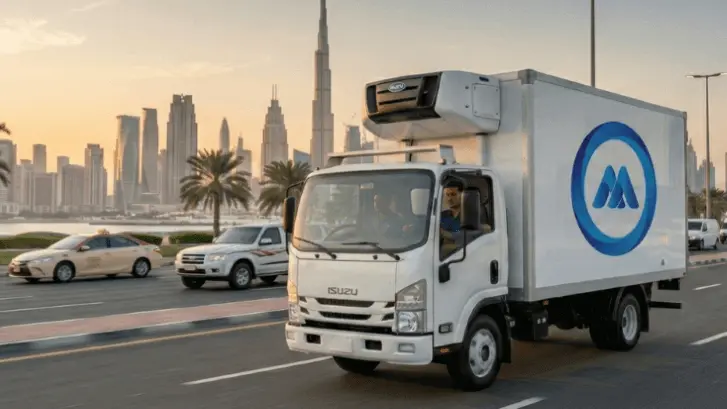
Chiller Truck Rental Abu Dhabi
ADAFSA and ASATEEL-compliant truck rentals for Mussafah, KIZAD, Khalifa City, and Al Ain.
View Service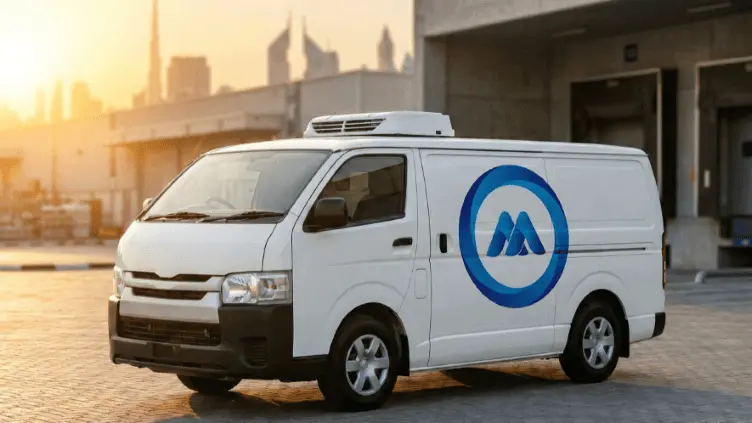 Last-Mile
Chiller Van Rental Dubai
1-Ton and 1.5-Ton chiller vans for last-mile cold chain, catering, and pharmacy routes.
View Service
Dubai
Chiller Truck Rental Dubai
3-Ton to 10-Ton refrigerated trucks for supermarket, pharma, and wholesale distribution.
View Service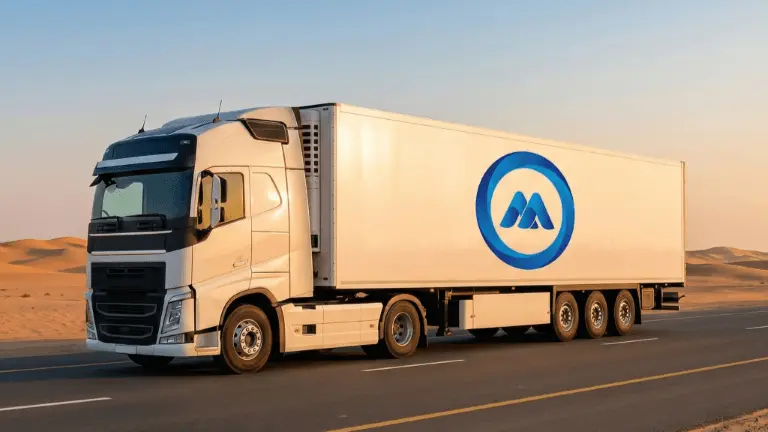 Cross-Border
Chiller Trailer Rental Dubai
20-Ton and 25-Ton reefer trailers for port clearances, warehouse transfers, and GCC routes.
View Service