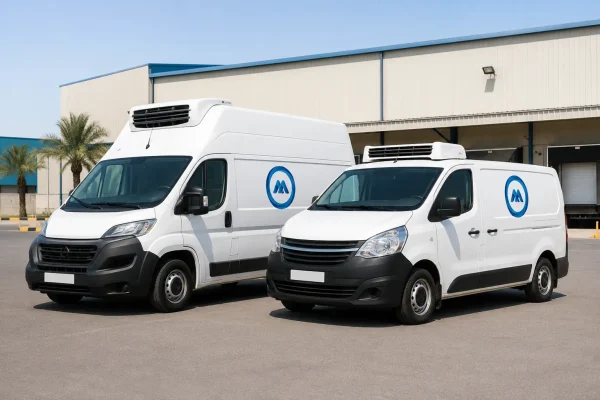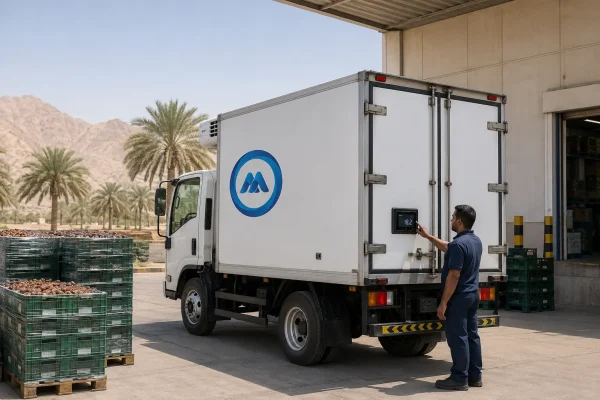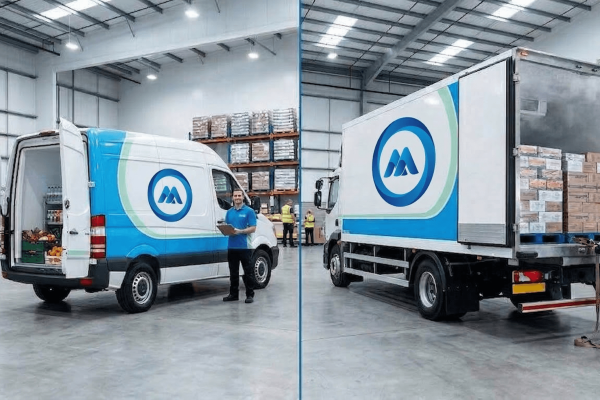
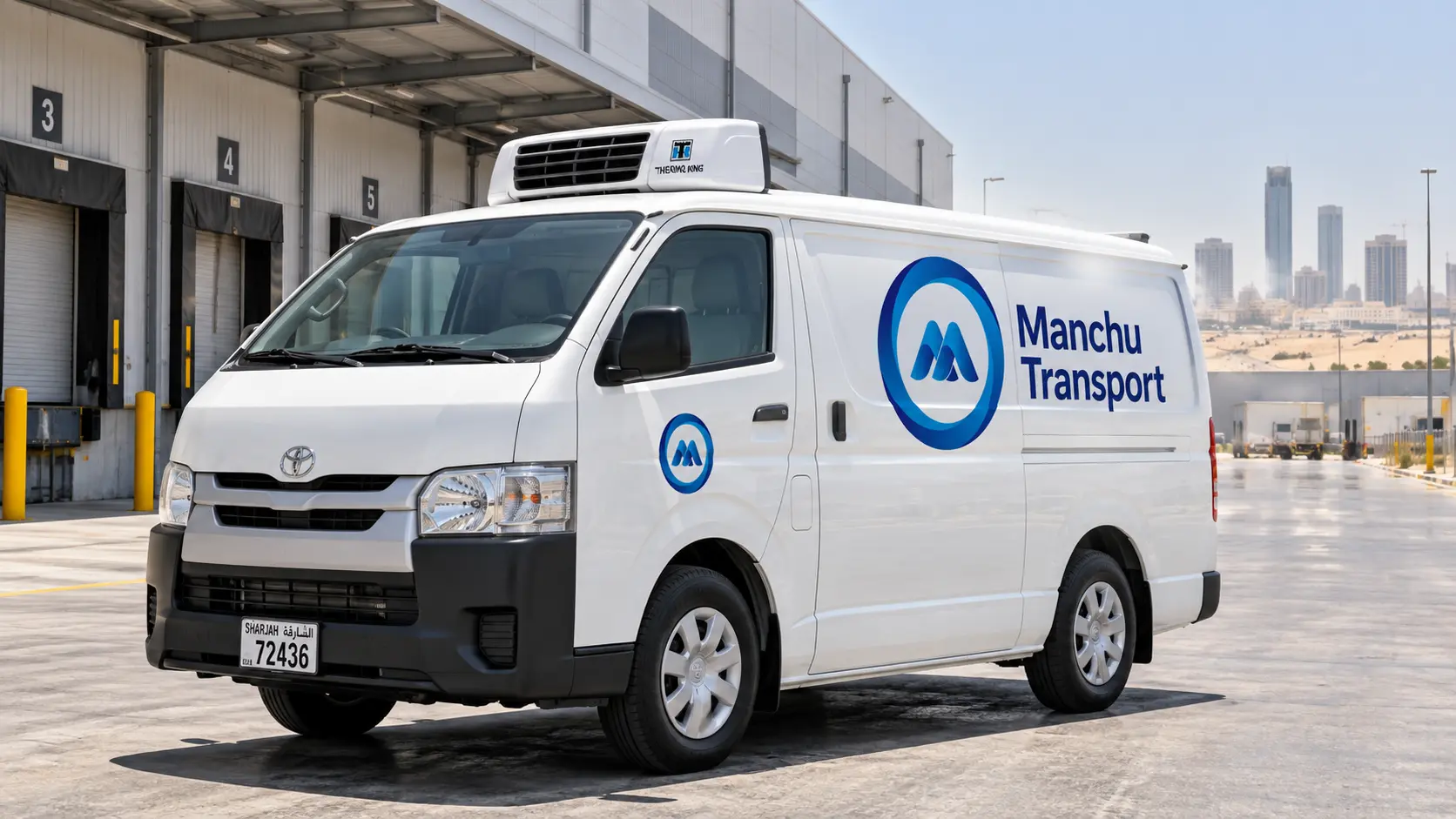
The Northern Emirates represent a critical, yet frequently underestimated logistics ecosystem. While global discourse on UAE cold chain infrastructure centers heavily on Dubai and Abu Dhabi, Sharjah, Ajman, Umm Al Quwain (UAQ), and Ras Al Khaimah (RAK) function as the vital manufacturing, warehousing, and primary distribution arteries of the entire country.
Sharjah acts as the geographical and commercial hinge between Dubai and the remaining Northern Emirates, serving as a sophisticated logistical theater with distinct regulatory frameworks, zone-specific deployment requirements, and dramatically lower operational costs compared to Dubai-based logistics. For food distributors, restaurant chains, pharmaceutical suppliers, and 3PL operators, establishing a fleet base in Sharjah offers profound structural cost advantages—while simultaneously introducing complexity in navigating fragmented municipal regulations, heavy vehicle movement bans, and cross-emirate delivery constraints.
This comprehensive guide explains the market dynamics, permit requirements, pricing economics, geographic zones, and operational strategies for chiller van and freezer truck rental across Sharjah and the Northern Emirates.
Sharjah as the Cost-Efficiency Hub
The commercial rental market for refrigerated vehicles in the UAE is highly competitive, yet significant structural price differentials exist between Dubai and Sharjah. Sharjah fundamentally operates as the more cost-effective logistics base, driven by significantly lower overhead costs for fleet operators, cheaper industrial parking infrastructure, and dramatically reduced commercial warehousing lease rates in critical sectors like Industrial Area 16.
Rental Rate Comparison: Sharjah vs. Dubai
| Rental Lease Term | Sharjah Average (with Driver) | Dubai Average (with Driver) | Cost Differential |
|---|---|---|---|
| Daily (1–1.5 Ton Standard) | AED 250–300 | AED 350–400 | ~25% Premium in Dubai |
| Weekly (1–1.5 Ton Standard) | AED 1,500–1,600 | AED 2,100–2,500 | ~35% Premium in Dubai |
| Monthly (1–1.5 Ton Standard) | AED 4,800–5,000 | AED 5,800–6,800 | ~20% Premium in Dubai |
| Monthly (Freezer/High-Roof) | AED 5,500–6,000 | AED 6,500–9,600 | ~25% Premium in Dubai |
Annualized Impact: A single standard-roof chiller van leased monthly in Sharjah generates a baseline operating cost of approximately AED 167 per day for the renter—compared to AED 230+ daily in Dubai. Over a 365-day contract, this differential totals approximately AED 23,000 in accumulated savings per vehicle. For logistics operations deploying 10+ vehicles, the total annual savings exceed AED 230,000, a figure that can be reallocated toward superior telematics, specialized equipment, or expanded fleet capacity.
Geographic Zones: Deployment Topology and Logistics Profiles
Sharjah’s geographic and infrastructural realities present severe routing challenges. Success in commercial rental is directly tied to a dispatching algorithm’s ability to navigate high-density residential nodes, industrial heavy-vehicle restrictions, and cross-border chokepoints.
Al Nahda and Al Qusais (Sharjah-Dubai Border)
Al Nahda (Sharjah) and Al Qusais (Dubai) form a contiguous, high-density residential and commercial mega-zone straddling the emirate border—representing one of the most challenging last-mile delivery environments in the UAE.
Operational Profile:
- Intense urban congestion and severe lack of dedicated commercial loading zones on surface streets
- High-rise residential towers equipped with basement parking featuring strict vehicle height restrictions
- Rental fleets service this area predominantly with standard-roof 1–1.5 ton chiller vans
- Lower clearance allows navigation of underground loading bays and multi-story parking structures, enabling direct offload to supermarket service elevators without punitive double-parking fines on surface streets
Regulatory Friction: A Sharjah-registered chiller van crossing into Dubai for deliveries must possess dual compliance—both Sharjah Department of Economic Development (SDED) distribution permits AND Dubai Municipality food transport permits. Drivers must contend with Salik (toll) gates, costs tracked and billed at month-end based on actual geographic usage by leasing agencies.
Muweilah (Educational and Commercial District)
Muweilah has rapidly transitioned into an expansive educational and commercial district, housing University City and a massive proliferation of localized cafes, restaurants, and catering businesses.
Logistics Profile:
- High-frequency, smaller-volume deliveries of highly perishable food and beverage (F&B) items: premium dairy, fresh produce, specialty baked goods
- Wider road networks but intense micro-peaks in congestion during school traffic hours
- Operators require agile, medium-wheelbase chiller vans maintaining constant +2°C to +5°C while idling in heavy traffic
- Thermal integrity of delicate catering supplies is non-negotiable—any temperature excursion risks product rejection and regulatory fines
Industrial Area 16 (Macroeconomic Hub and Cross-Docking Operations)
Sharjah’s Industrial Area 16 functions as a critical macroeconomic hub for regional warehousing, factory-level transport, and large-scale cross-docking operations. The infrastructure is engineered to support heavy-duty logistics, accommodating 10-ton to 40-ton refrigerated trucks utilized for primary distribution.
Operational Function:
- Massive reefer trailers transport bulk perishables directly from national entry points to central distribution centers
- Industrial Area 16 serves as primary staging ground where bulk shipments are broken down and cross-docked into smaller, agile chiller vans for secondary, last-mile distribution
- Rental companies operating out of this zone focus on providing large-scale corporate industrial leasing with high-output cooling units and reinforced thermal walls
Ajman Port and Seafood Import Logistics
Ajman Port serves as primary maritime entry point for temperature-sensitive imports, particularly deep-frozen seafood and bulk meat. Logistics networks supporting this port rely heavily on Sharjah’s nearby industrial zones as immediate staging and processing areas.
Routing Constraints: Moving goods from Ajman Port to Sharjah requires navigating precise routing corridors to avoid residential limits and municipal truck bans. Seafood operations demand specialized vehicle requirements; standard chiller vans are insufficient. Importers must rent heavy-duty freezer trucks capable of rapid temperature recovery, ensuring cargo hold returns to -18°C within seconds of doors closing after loading—preventing catastrophic partial thawing of frozen catch.
Fragmented Regulatory Frameworks and Municipal Permits
The commercial movement of perishable goods is fiercely governed by individual municipal authorities. Unlike a unified federal system where a single permit grants nationwide access, each emirate imposes its own distinct vehicle certification procedures, food control permits, and financial tariffs.
Sharjah Department of Economic Development (SDED) Protectionist Tariffs
To legally operate a commercial refrigerated vehicle within Sharjah, a business must obtain a highly specific vehicle validity permit, regulated by SDED and Sharjah Municipality. Sharjah enforces a highly protectionist pricing model designed explicitly to favor locally registered corporate entities and penalize external operators.
Permit Fees:
- Locally registered vehicles (Sharjah-based company): Food distribution permit = AED 500
- External vehicles (Dubai or Abu Dhabi registered): Food distribution permit = AED 3,000 (6x penalty)
- Cosmetics and pharmaceutical transport (external): AED 2,000
- Non-food distribution (locally registered): AED 1,000
- Non-food distribution (external): AED 3,000
Strategic Consequence: This massive regulatory pricing disparity forces large third-party logistics (3PL) providers to maintain specialized, strictly Sharjah-registered fleets solely for Northern Emirates distribution—avoiding the thousands of dirhams in punitive taxes that would be levied on Dubai-registered vehicles crossing the border daily.
Dubai Municipality DM-FSD-GU63 Framework (Cross-Emirate Compliance)
If a Sharjah-based chiller van intends to execute cross-emirate deliveries into Dubai, it must strictly comply with Dubai Municipality Food Safety Department guidelines, officially codified as DM-FSD-GU63. This comprehensive regulatory framework mandates that all food transport systems operating within Dubai’s borders possess an annual food transport vehicle permit—issued only after rigorous physical inspection at an Emirates International Accreditation Center (EIAC) approved testing center.
DM-FSD-GU63 Mandates:
- Absolute hygiene standards with physical proof of thermal mapping to identify cold spots
- Interior cargo hold featuring smooth, completely non-absorbent, rust-free ceilings and walls devoid of flaking paint or condensation buildup
- Ability to be sanitized with industrial chemicals without degrading
- Mandatory annual joint inspection (RTA for mechanical roadworthiness, authorized testing center for hygiene and TRU performance)
Northern Emirates Individual Compliance: Ajman, UAQ, RAK
Ras Al Khaimah (RAK): RAK Municipality Public Health Department requires securing a “No Objection Certificate (NOC) for Vehicles for Transport and Distribution of Public Health Products.” Minimal financial fees (AED 50 food control + AED 100 veterinary control) but rigorous documentation: utilize RAK Digital portal via UAE PASS, submit current calibration certificates for all freezing units, occupational health cards for every driver, proof of registered Business Partner account.
Umm Al Quwain (UAQ): Logistics operators within UAQ Free Trade Zone must adhere strictly to local infrastructure regulations dictating vehicles be fully roadworthy and compliant with UAE federal environmental laws regarding authorized refrigerant gases (HFC-245fa or modern HFO blowing agents used in polyurethane insulation).
Ajman: Health vehicle permits follow a digitized municipal process, requiring operators to submit occupational health cards for workers and validated cooling vehicle calibration certificates before a commercial food distribution license is granted to the fleet.
Critical Constraint: Heavy Vehicle Movement Bans on Primary Arterial Highways
The geographic layout of the UAE forces commercial transport vehicles into a handful of massive arterial highways, creating immense cross-border friction. Navigating from Sharjah to Dubai, or venturing northward to UAQ and RAK, requires dispatchers to choreograph deliveries around a punishing schedule of heavy vehicle movement bans designed to keep trucks off roads during commuter rush hours.
E311 and E611 Temporal Restrictions (Sharjah-Dubai Corridor)
The most profound logistical hurdle involves strictly enforced temporal bans on heavy vehicle movements. The Roads and Transport Authority (RTA) in Dubai and local police departments heavily restrict truck movements on primary arterial corridors connecting the emirates.
| Restriction Window | Restricted Timing | Impacted Route Segments |
|---|---|---|
| Morning Peak | 06:30 AM – 08:30 AM | E311 (Ras Al Khor to Sharjah), E611 |
| Midday Peak | 13:00 PM – 15:00 PM | E311 (Ras Al Khor to Sharjah) |
| Evening Peak | 17:30 PM – 20:00 PM | E311, E611 (towards Sharjah) |
January 2025 Expansion: The RTA expanded truck bans to include Emirates Road (E611) specifically for vehicles heading towards Sharjah during the evening peak (17:30–20:00) to alleviate catastrophic commuter bottlenecks.
Northern Emirates Bans (E11 and E311 Northbound): Vehicles continuing route northward into UAQ face entirely separate municipal bans on E11 and E311 approaches, locked down between 05:30–09:30 and 16:30–21:30.
Operational Implications
If a dispatcher miscalculates a route’s transit time, a heavy freezer truck may become trapped at a roadside staging area just outside a banned zone for hours. This forced delay pushes the refrigeration unit into extended continuous running mode while idling on hot asphalt, spiking fuel consumption and dramatically increasing mechanical thermal load on the compressor. Violating restricted windows incurs severe penalties of AED 1,000 per violation and 12 black points on driver’s license.
Strategic Solution: One-ton to three-ton chiller van rentals—which legally fall under light-commercial vehicle weight classes—are highly favored by logistics managers for time-sensitive, cross-emirate F&B and pharmaceutical deliveries. Because they are not classified as heavy vehicles, these agile vans frequently bypass tonnage restrictions entirely, ensuring continuous movement through the morning and evening E311 bans.
Urban Parking Infrastructure and Municipal Enforcement in Sharjah
Once a commercial vehicle navigates the highway bans and enters the urban centers of Sharjah, it faces rigorous parking enforcement. Sharjah implemented extended paid parking hours across almost all commercial and residential zones—operating from 8:00 AM to 12:00 Midnight, seven days a week in high-demand areas.
Parking Violation Penalties:
| Parking Violation | Municipal Fine Amount | Logistical Context |
|---|---|---|
| Overstaying Time Limit | AED 100 | Common when offloading at high-rise buildings |
| No Valid Parking Ticket | AED 150 | Failure to register via SMS or mobile app |
| Obstructing Traffic (Double Parking) | AED 500 | Frequent violation during rapid restaurant deliveries |
| Parking in Disabled Zones | AED 1,000 | Severe penalty for illegal staging |
Critical Contract Detail: Rental agencies explicitly write into their contracts that the lessee is fully liable for all traffic and parking violations incurred during the rental period. This necessitates rigorous route planning, aggressive driver training, and mandatory use of smart digital parking payment systems (e.g., SMS formatting plate code and duration: “SHJ 12345 2”, sent to 5566) to ensure legal staging during offloading.
Temporal and Seasonal Oscillations: Summer Thermal Burden and Ramadan Logistics
Summer Thermal Burden (April – September)
During prolonged peak summer months, ambient temperatures generate severe external heat loads on commercial vehicle exterior panels. A refrigerated vehicle’s compressor must run almost continuously to combat relentless heat transfer penetrating the PU foam insulation.
Operational Discipline Required:
- All vehicles undergo strict 60-minute pre-cooling phase before any cargo is loaded from warehouse
- Opening cargo doors for just 60 seconds during summer delivery allows massive influx of hot, humid air, raising internal temperature significantly
- Requires 10–15 minutes of continuous compressor activity to re-stabilize environment
- Increased workload pushes summer fuel consumption to absolute upper limit (1.5 gallons per hour for 40-ft trailer), drastically eroding profit margins for dry-lease operators
- Extreme thermal stress causes statistical spike in mechanical breakdowns—premium rental fleets offer guaranteed 24/7 breakdown response with immediate replacement loaner vans
The Ramadan Logistics Shift
The Holy Month of Ramadan radically alters the temporal demand matrix across the UAE. Consumption of fresh food, meat, and beverages surges dramatically in preparation for Iftar and Suhoor, while simultaneously consumer activity shifts from daylight to night.
Sharjah RTA Response (Ramadan): Heavy vehicles face strict bans on all Sharjah city roads from 6:30 AM to 10:00 AM and again from 2:00 PM to 8:00 PM. Furthermore, a strict nightly ban is placed on the vital E311 highway from 12:00 AM (midnight) to 5:30 AM to facilitate early morning commuter traffic.
Operational Impact: This regulatory shift forces cold chain rental fleets to execute the vast majority of supermarket replenishment, restaurant supply, and catering deliveries during incredibly tight operational windows—primarily between 8:00 PM and midnight. This concentrated burst of activity requires peak vehicle availability, flawless dispatching, and exceptional fleet readiness from leasing providers, as any vehicle downtime during these brief nocturnal windows results in failed deliveries and empty supermarket shelves the following day.
Market Demand Dynamics by Industry Verticals
F&B, Restaurants, and Supermarket Replenishment
The broader F&B sector—encompassing restaurants, industrial catering companies, and hypermarkets—is the primary driver of chiller van rental Sharjah operations. Supermarkets require continuous daily replenishment of fresh produce, dairy, chilled meat, and beverage products. For these applications, chiller vans maintaining highly stable +2°C to +8°C environment are mandatory.
Rental Preferences: High-roof chiller vans (1.65 m internal height, 8.5 m³ cargo volume) are heavily preferred by supermarket supply chains. Additional internal height allows stacked crates and upright roll cages, eliminating need for double-handling at delivery point and drastically reducing offloading time on the first run.
SME Catering Preference: For restaurant and catering sub-sector, demand skews toward daily or weekly wet-lease rentals (including driver), as many SMEs prefer outsourcing cold chain liability entirely rather than maintaining permanent, depreciating fleet of delivery vehicles.
Seafood, Meat, and Deep-Frozen Commodities
The Northern Emirates command a massive share of the UAE’s meat processing and seafood import industries. Raw meat, processed poultry, and deep-frozen seafood cannot be transported in standard chiller vans; they require industrial freezer trucks capable of maintaining temperatures strictly between -18°C and -22°C.
Vehicle Physics: If a seafood importer attempts to utilize an underpowered vehicle, ambient summer heat will penetrate the cargo hold, leading to bacterial growth and immediate revocation of municipal health permits. Rental agencies catering to this demographic often lease 5–10 ton freezer trucks featuring standby electrical plugs, allowing refrigeration units to run on external power while docked at processing facilities, thereby saving diesel fuel.
Pharmaceutical and Healthcare Logistics (GDP Compliance)
Transport of pharmaceuticals, vaccines, and biologics is governed by the most stringent regulatory frameworks in the country: Ministry of Health and Prevention (MOHAP) guidelines and global Good Distribution Practices (GDP). Modern medicines are exceptionally sensitive to minute temperature and humidity fluctuations.
Specialized Requirements: Pharmaceutical logistics demand specialized refrigerated vans capable of precise temperature logging, thermal mapping, and continuous telematics monitoring. Pharmaceutical storage categories are rigidly defined and legally enforced—Refrigerated products (2–8°C) and Controlled Room Temperature (CRT) products (20–25°C) with highly regulated allowances for temporary thermal excursions.
Qualification Standards: Vehicles leased for pharma distribution undergo exhaustive Performance Qualification (PQ) and Installation Qualification (IQ) procedures, validating cooling equipment performance across extreme ambient variations (-30°C to +45°C), often utilizing 25+ discrete sensors within a single vehicle to ensure absolute uniform temperature distribution without cold spots that could freeze and destroy sensitive vaccines. Rental companies must provide fully calibrated, GDP-compliant fleets equipped with multi-temperature zones and tamper-proof digital recorders compliant with standard EN 12830.
Applied Case Studies: Real-World Operations in Northern Emirates
Cross-Emirate Pharmaceutical Distribution (Sharjah Hub Model)
Scenario: Mid-sized pharmaceutical distributor based in Dubai must execute daily, temperature-critical replenishment of vaccines (2–8°C) to clinics and hospitals across Sharjah, Ajman, and Ras Al Khaimah while maintaining absolute MOHAP GDP compliance with zero temperature excursions.
Challenge: Heavy truck bans on E311 (06:30–08:30) and UAQ municipal approach bans (05:30–09:30) severely restrict early morning delivery windows required by hospitals.
Solution: Company abandons heavy trucks and dry-leases 1.5-ton high-roof chiller vans from Sharjah-based provider on long-term yearly contract. By utilizing light commercial vehicles, distributor legally bypasses RTA tonnage restrictions entirely, ensuring uninterrupted, fluid transit through E311 morning bans and guaranteeing on-time hospital deliveries. Leased vehicles equipped with 3-point calibrated sensors mapping cargo hold to prove GDP compliance. Crucially, by leasing Sharjah-registered vehicles, distributor avoids punitive AED 3,000 “external vehicle” SDED distribution permit fee, qualifying for local AED 500 rate—saving thousands of dirhams annually per vehicle.
Seafood Importer via Ajman Port (Hybrid Fleet Strategy)
Scenario: Wholesale seafood importer receives bulk shipments of deep-frozen cargo (-18°C) at Ajman Port and must rapidly distribute it to hypermarket chains in dense urban zones (Al Nahda, Muweilah).
Challenge: Deep-frozen seafood is highly vulnerable to catastrophic temperature excursions. Unloading at Ajman Port exposes cargo to ambient temperatures exceeding 40°C. Delivering to Al Nahda involves navigating heavy residential traffic, underground loading bays with low clearance, and rigorous urban parking enforcement (AED 500 double-parking fine).
Solution: Importer utilizes hybrid rental strategy. Wet-leases heavy 5–10 ton freezer trucks for primary port-to-warehouse run, leveraging massive reinforced PU foam insulation (K-factor 0.022 W/m²·K) to combat immense summer thermal load and stabilize cargo immediately off ship. Once cargo reaches importer’s facility in Industrial Area 16, it is rapidly cross-docked into leased standard-roof 1-ton freezer vans. These smaller vans easily clear height restrictions of Al Nahda basement loading bays, allowing drivers to offload safely underground, entirely avoiding surface street congestion and parking fines.
Competitor Landscape: Fleet Operators in Sharjah and Northern Emirates
The chiller van and freezer truck rental market in Sharjah is highly fragmented, featuring a dynamic mix of large-scale corporate logistics providers and specialized SME fleet operators:
Fresh and Cool Freezer Truck: Dominant player operating massive standardized fleet of 80+ HACCP-certified Toyota HiAce vans. Aggressively prices standard-roof vans from AED 300/day (including professional driver) with seamless cross-emirate operations without hidden driver overtime fees.
Eagle Chiller Van LLC: Known for comprehensive telematics integration, GPS tracking, emergency breakdown assistance. Tiered pricing: daily spot-market (AED 250), comprehensive monthly corporate solutions (AED 4,800), targeting businesses requiring intense asset oversight.
ChillFreez: Focuses on market accessibility and speed with 24/7 same-day dispatch from depots. Aggressive dry-lease (self-drive) options starting AED 250/day, wet-lease (with driver) from AED 400/day, capturing large segment of urgent, ad-hoc rental market.
Chiller Truck Rental: Specializes in industrial-scale distribution and pharmaceutical compliance with dual ISO 22000 and HACCP certifications. Fleet scales from 1-ton urban vans to 10-ton reefer trucks with dual refrigeration zones and rapid door-recovery technology engineered for deep-freeze seafood and meat operations.
Dynamic Fleets, Safe Fleet, Frost Dubai Truck: Highly specialized operators filling vital niche requirements. Supply multi-temperature vehicles, pharmaceutical-grade hygienic interiors with non-toxic surfaces, heavy-duty 40-ton trailers for port logistics, boasting rapid 1–2 hour dispatch times within Sharjah and Ajman city limits.
Unified Competitive Characteristic: All successful modern competitors mandate real-time GPS tracking and continuous digital temperature data loggers. The market has fundamentally evolved—leasing providers are no longer simply renting cold boxes on wheels, but providing tamper-proof, fully auditable cold chain compliance reports mandated by municipal authorities like Dubai Municipality and MOHAP.
Strategic Conclusions and Deployment Recommendations
Regulatory Arbitrage Dictates Fleet Strategy
The profound difference in municipal permit fees—most notably Sharjah’s protectionist AED 3,000 fee for external food transport vehicles versus the AED 500 fee for locally registered vehicles—creates a massive structural advantage for fleet operators headquartered in Sharjah. Savvy logistics companies fundamentally save immense capital by establishing their rental hubs and vehicle registrations in the Northern Emirates, even if their ultimate distribution network heavily encompasses Dubai.
Algorithmic Routing is a Necessity, Not a Luxury
The fragmented, overlapping web of heavy vehicle movement bans—including RTA restrictions in Dubai, UAQ morning and evening bans, and Ramadan temporal shifts—means that raw vehicle capacity is secondary to intelligent route optimization. Rental companies that provide integrated telematics, predictive route planning, and agile light-commercial vehicles capable of legally bypassing heavy truck bans offer substantially higher value to clients than those simply renting hardware.
The Thermal Premium Governs Profitability
The harsh GCC climate dictates fundamental economics of the rental market. Vehicle profitability is inextricably linked to insulation degradation (monitored via mandated ATP certification) and exponential increase in fuel consumption during summer months. Fleet operators who enforce rigorous continuous pre-cooling protocols, strict door-opening discipline, and meticulous mechanical maintenance of Thermo King and Carrier refrigeration units are the only entities capable of protecting operating margins from debilitating summer thermal load effects.
Sharjah Chiller Van Rental Checklist
- Verify vehicle registration (Sharjah-registered to avoid AED 3,000 SDED penalty for external vehicles)
- Confirm SDED food distribution permit status and current validity
- If operating into Dubai: verify DM-FSD-GU63 compliance and Dubai Municipality Foodwatch registration
- If operating into RAK/UAQ: confirm NOC (No Objection Certificate) and municipal health vehicle permits
- Request EN 12830 calibrated temperature logger certificates
- Verify real-time GPS tracking integration and cloud-based temperature data accessibility
- Confirm 24/7 breakdown response guarantee and replacement vehicle availability (critical in summer)
- Understand heavy vehicle ban schedules for planned routes (E311, E611, E11, UAQ approaches)
- Request pre-cooling protocol: minimum time required before cargo loading
- Clarify fuel, toll, mileage, parking violation, and damage responsibilities
- Verify ASATEEL registration requirement status (if any cross-border Abu Dhabi operations)
Frequently Asked Questions
Why is Sharjah rental 25% cheaper than Dubai?
Significantly lower overhead costs for fleet operators, cheaper industrial parking infrastructure, and dramatically reduced commercial warehousing lease rates in sectors like Industrial Area 16. These savings are passed directly to consumers. Sharjah’s goal is to attract and retain logistics operations within the emirate.
Can I use a Dubai-registered vehicle to deliver in Sharjah?
Technically yes, but you will face punitive SDED fees of AED 3,000 (versus AED 500 for Sharjah-registered vehicles). For any regular cross-emirate operations, establishing a Sharjah-registered fleet is economically imperative.
What happens if I violate a heavy vehicle ban on E311?
Immediate fine of AED 1,000 per violation and 12 black points on driver’s license. A freezer truck trapped at a roadside staging area for hours will suffer severe fuel and compressor thermal load increases, risking cargo loss. Proper route planning and timing are non-negotiable.
Do I need different vehicles for summer vs. winter operations?
No, but summer discipline is mandatory: 60-minute pre-cooling, strict door-opening protocols, PVC strip curtain maintenance, and rigorous defrost cycle verification (for freezer trucks). Same vehicles operate year-round but require heightened operational attention in summer.
Is it worth renting a high-roof van versus standard roof?
Only if your cargo is voluminous but light (bakery items, floral arrangements, catering trays). If your cargo is dense (frozen seafood, bulk meat), a standard-roof van reaches weight capacity long before upper volume, making the premium wasteful. Calculate: does 30% more volume eliminate an entire second trip? If yes, high-roof is justified.
Can I rent one vehicle and operate across all emirates?
Not without navigating distinct municipal permits for each. A single Sharjah-registered vehicle may require SDED permit (AED 500 in Sharjah), DM-FSD-GU63 compliance for Dubai, and separate NOC documents for RAK/UAQ. Consolidated, multi-emirate vehicles require consolidated, multi-emirate permit packages with your rental provider.
Book Your Sharjah Chiller Van or Freezer Truck
To request a chiller van or freezer truck for Sharjah and Northern Emirates operations, contact Ghabt Al Manchu Transport L.L.C. Call +971 54 7171 345, email manchutransport@gmail.com, use WhatsApp, or get a refrigerated truck quote.
Sharjah’s cost-efficient rental market is underpinned by complex regulatory frameworks, heavy vehicle restrictions, and strategic geographic deployment requirements. Success requires not just a cold box on wheels, but a dispatch partner who understands municipal permits, route optimization around RTA bans, and the operational discipline required to maintain cold chain integrity in the UAE’s extreme climate. Verify all permits, compliance certifications, and route clearances before deployment.
Need Reliable Refrigerated Transport?
Get a free quote for chiller van, truck, or trailer rental in Dubai and across the UAE.
Get a Free QuoteRecommended Services
Our Refrigerated Transport Services
Choose the vehicle that matches your route, payload, and temperature requirements.
 Last-Mile
Chiller Van Rental Dubai
1-Ton and 1.5-Ton chiller vans for last-mile cold chain, catering, and pharmacy routes.
View Service Cross-Border
Chiller Trailer Rental Dubai
20-Ton and 25-Ton reefer trailers for port clearances, warehouse transfers, and GCC routes.
View Service Dubai
Dubai
Chiller Truck Rental Dubai
3-Ton to 10-Ton refrigerated trucks for supermarket, pharma, and wholesale distribution.
View Service
Abu Dhabi
Chiller Truck Rental Abu Dhabi
ADAFSA and ASATEEL-compliant truck rentals for Mussafah, KIZAD, Khalifa City, and Al Ain.
View Service