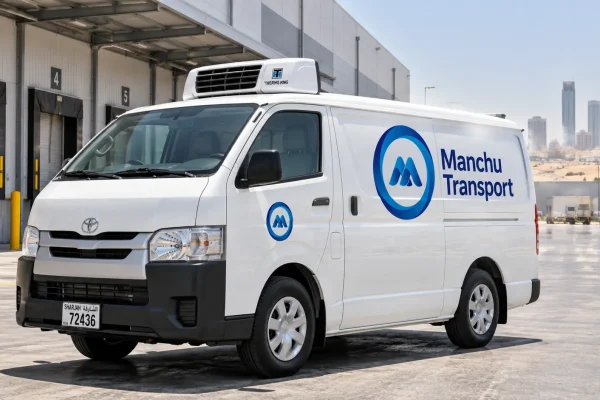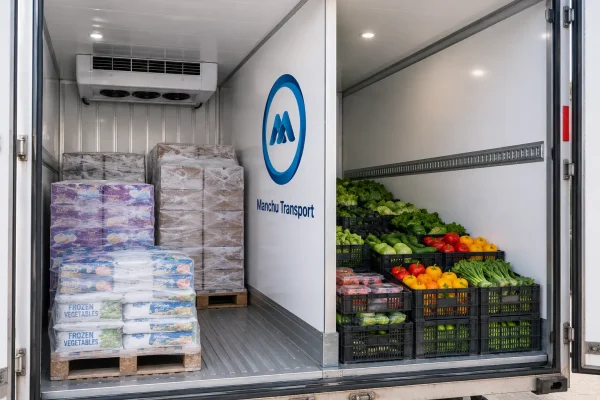
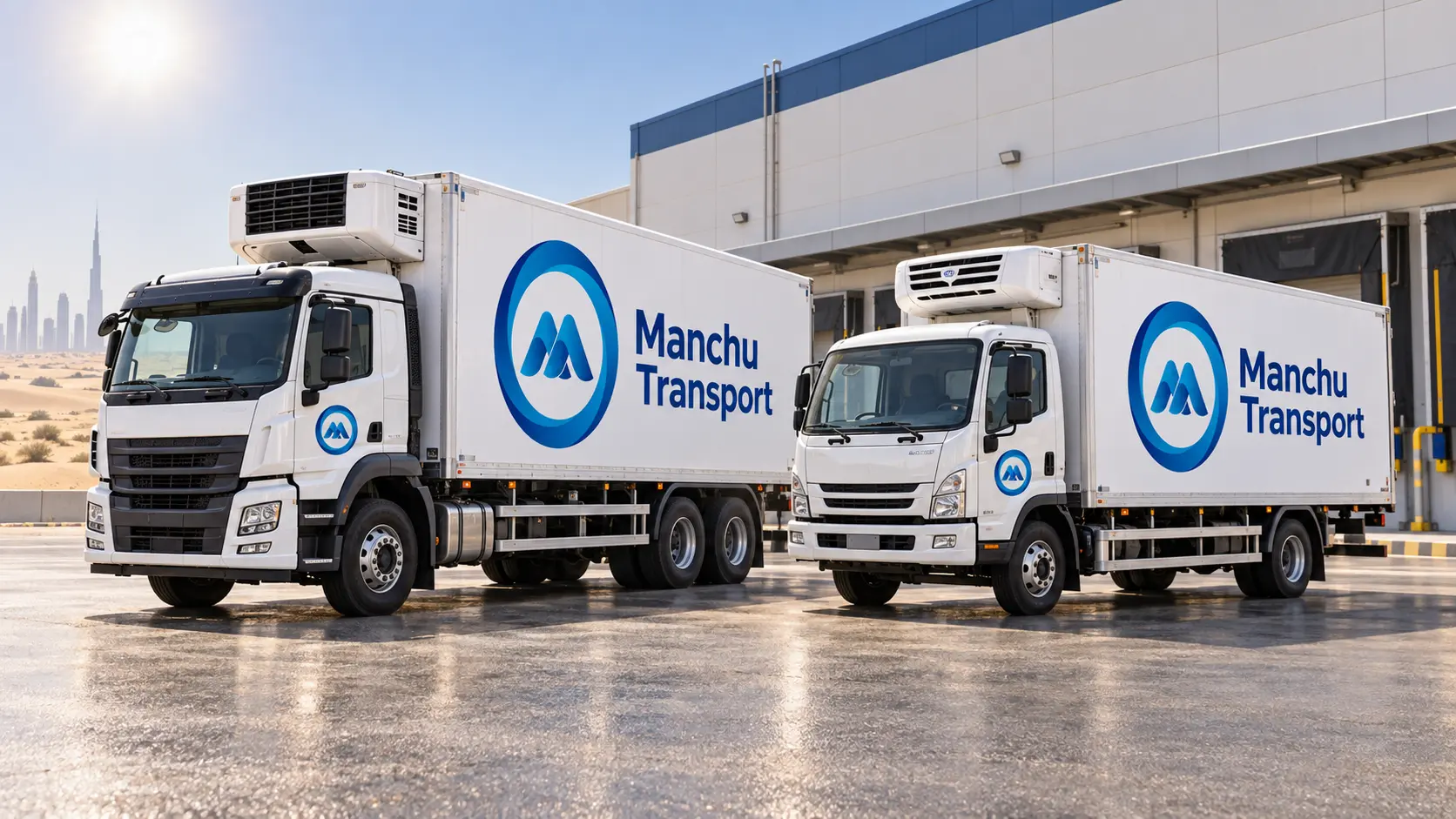
The United Arab Emirates imports eighty-five percent of its food supply, establishing one of the most critical cold chain logistics networks globally. Compounding this reliance is the region’s extreme climate: summer temperatures routinely exceed 50°C, with coastal humidity creating severe thermodynamic challenges to mobile refrigeration systems.
For food distributors, pharmaceutical suppliers, and 3PL operators across Dubai, Abu Dhabi, and the wider emirates, the foundational decision in fleet management is selecting the correct vehicle type: a freezer truck or a chiller truck. While these terms are frequently conflated, they represent entirely distinct asset classes engineered for vastly different thermal applications. Selecting the wrong vehicle inevitably leads to catastrophic product spoilage.
This guide explains the technical, biological, regulatory, and economic distinctions between freezer trucks and chiller trucks in the UAE market—so you deploy the correct vehicle and maintain absolute regulatory compliance.
Technical Distinctions: Temperature Ranges and Refrigeration Systems
The fundamental difference lies in their operating parameters and the engineering required to sustain those parameters against extreme external heat loads.
Chiller Trucks: 0°C to +8°C
Chiller vehicles are engineered to maintain a moderate cold environment, typically operating within a set point range of 0°C to 8°C. Specialized applications such as fresh dairy or pharmaceuticals often narrow this to +2°C to +5°C. At these temperatures, biological degradation slows dramatically without crossing the freezing threshold that would damage cellular structures.
Chiller trucks feature:
- Single-stage or moderate compressors drawing power from the vehicle engine or independent diesel units
- Cooling capacity of 3,000 to 7,000 watts
- Insulation wall thickness of 50–80 mm polyurethane foam
- K-value (thermal conductivity) less than 0.7 W/m²·K
Freezer Trucks: -18°C to -25°C
Freezer trucks function as mobile deep-freeze units designed to operate at severe sub-zero temperatures, standardly maintained between -18°C and -25°C. At these negative temperatures, all liquid water within cargo undergoes phase change to solid ice, placing microbial multiplication into absolute suspension.
To achieve and sustain these extreme temperatures against a 50°C external ambient load—representing a 75°C thermal delta—freezer trucks require fundamentally different configurations:
- Dual-stage or advanced scroll compressors
- Cooling capacity exceeding 10,000 watts
- Insulation wall thickness of 80–100+ mm high-density polyurethane
- K-value less than 0.4 W/m²·K for maximum thermal efficiency
- Heavy-duty, reinforced flooring up to 100 mm thick
Advanced freezer TRUs (Transport Refrigeration Units) deployed in the UAE, such as Thermo King Spectrum or Carrier Vector series, can rapidly pull down internal compartment temperature from ambient +10°C to -20°C in under 15 minutes—essential in the UAE’s unforgiving climate.
| Technical Parameter | Chiller Truck | Freezer Truck |
|---|---|---|
| Operating Temperature | 0°C to +8°C | -18°C to -25°C |
| Insulation Thickness | 50–80 mm | 80–100+ mm |
| Compressor Type | Single-stage | Dual-stage / Scroll |
| Cooling Capacity | 3,000–7,000 watts | 10,000+ watts |
| Energy Consumption | Moderate | High / Intensive |
| Target K-Value | < 0.7 W/m²·K | < 0.4 W/m²·K |
The Science: Temperature Danger Zone and Cell Damage
The choice between chiller and freezer is not discretionary—it is strictly dictated by the biology of your cargo.
The Temperature Danger Zone (TDZ)
The TDZ is defined as 5°C to 60°C—the exact conditions where foodborne pathogens including Salmonella, Listeria monocytogenes, and E. coli multiply exponentially. In UAE summer ambient warmth, bacterial populations can double every twenty minutes.
Chilling (0–8°C) slows microbial replication dramatically, extending shelf life from hours to weeks. However, freezing is not a sterilization process—pathogens survive in a dormant state and resume replication immediately upon thawing.
Freezing (-18°C and below) halts all microbial replication by locking water into solid ice. But freezing expands ice crystals within cellular structures, rupturing cell walls and destroying texture, flavor, and commercial value of products not engineered to be frozen.
Chiller Truck Applications
Use a chiller truck for products that require strict thermal control but would be irreparably damaged by freezing:
- Dairy: Milk, yogurt, cheese, creams—freezing causes separation and graininess
- Fresh Produce: Fruits and vegetables—ice crystal rupture causes mushiness
- Fresh Meat and Poultry: For immediate retail or HORECA use at 0–4°C
- Pharmaceuticals: Vaccines, insulin, biologics requiring 2–8°C; freezing denatures active proteins
- Flowers: Cut flowers require chilled transport; freezing instantly destroys petals
Freezer Truck Applications
Use a freezer truck exclusively for long-term preservation and cargo already in frozen state:
- Frozen Meats and Seafood: Intercontinental imports or bulk distribution requiring uninterrupted -18°C
- Ice Cream and Confectionery: High sugar/fat content melts at warmer than -18°C temperatures
- Frozen Ready-Meals and Vegetables: Industrially blast-frozen products
- Advanced Healthcare Logistics: mRNA vaccines, blood plasma requiring ultra-low -20°C or colder
Critical Warning: Transporting frozen goods in a chiller van results in rapid thawing and severe bacterial spoilage. Transporting chilled goods in a freezer truck causes instantaneous cellular destruction.
The 50°C Summer Challenge: UAE Heat and Thermal Shock
Between June and September, ambient daytime temperatures consistently breach 50°C, with coastal humidity reaching 90%. This creates two critical operational challenges:
Pre-Cooling Mandate
Dubai Municipality and ADAFSA strictly mandate pre-cooling. Never load cargo into a truck that has been sitting in the desert sun. The residual heat trapped in the walls will instantly transfer into your cargo, initiating surface spoilage and condensation that compromises packaging.
Empty truck compartments must be activated and brought to the target set-point before any product crosses the threshold:
- Chiller trucks: minimum 15–20 minutes pre-cooling
- Freezer trucks: minimum 30–45 minutes pre-cooling due to expanded thermal mass
Evaporator Icing and Defrost Cycles
The extreme humidity of the UAE presents a critical engineering challenge: evaporator icing. Every time cargo doors open during delivery, hot, moisture-laden air rushes in and freezes solid on the evaporator coils. Over multiple urban deliveries, ice builds into an impenetrable block that acts as a thermal insulator, preventing the TRU from extracting heat from the cargo.
Paradoxically, a freezer truck with a heavily iced evaporator begins to rapidly warm, causing catastrophic temperature excursion even while the compressor runs at maximum capacity.
To combat this, modern freezer trucks are equipped with sophisticated defrost cycles using hot gas bypass or electric heating to periodically melt accumulated ice. If a defrost timer fails, the vehicle becomes useless until manually cleared—risking total product loss.
Best Practice: Minimize door openings with PVC strip curtains, overhead air curtains, and strict “First-In, Last-Out” loading protocols.
Regulatory Frameworks: ADAFSA, ASATEEL, Dubai Municipality
Operating a refrigerated fleet in the UAE is not merely logistical—it requires navigating one of the world’s most stringent regulatory environments.
Abu Dhabi: ASATEEL and ADAFSA
ASATEEL Platform: All commercial freight transport in Abu Dhabi requires installation of an ASATEEL-certified On-Board Unit (OBU) tracking device. Operating without it incurs immediate fines of AED 1,000 per vehicle, plus potential vehicle impoundment.
ADAFSA Compliance: The Abu Dhabi Agriculture and Food Safety Authority enforces Hazard Analysis and Critical Control Points (HACCP) guidelines. ADAFSA inspectors verify:
- Continuous temperature monitoring
- Proper vehicle sanitization
- Physical segregation of different meat and produce products
- Valid food transport permits
Dubai Municipality: Foodwatch Platform
All food transport vehicles must be registered on Dubai Municipality’s digital Foodwatch platform. Requirements include:
- Mandatory annual joint inspection (RTA for mechanical roadworthiness, authorized testing center for hygiene and TRU performance)
- Approved vehicles receive a permit sticker designating them exclusively for chilled, frozen, or dry transport
- Every delivery driver must hold a valid Occupational Health Card (DM Card)
- Every logistics operation must designate a certified Person-in-Charge (PIC) responsible for HACCP compliance
Severe Penalties: Operating a food vehicle without a valid permit incurs fines up to AED 10,000. General food safety violations: AED 3,000 to AED 50,000. Severe violations (spoiled or adulterated food): AED 2,000,000 fines, vehicle confiscation, and imprisonment.
| Regulatory Body | Emirate / Level | Key Platform | Primary Focus |
|---|---|---|---|
| ESMA / Ministry of Economy | Federal | GSO 323 | Vehicle hardware & manufacturing standards |
| ASATEEL / ITC | Abu Dhabi | Certified OBU tracking | Fleet tracking, routing, safety compliance |
| ADAFSA | Abu Dhabi | Self Inspection App / HACCP | Food safety, hygiene, contamination prevention |
| Dubai Municipality | Dubai | Foodwatch / Food Code 2.0 | Food safety, HACCP, precise temperature logs |
Payload and Capacity: The Volume Penalty of Insulation
Because freezer trucks require vastly superior insulation (up to 100 mm of high-density PU foam) compared to chiller trucks (50–80 mm), the internal usable cubic volume of a freezer box is inherently smaller than a chiller box built on the same external chassis.
Furthermore, heavy-duty dual-stage compressors, large condenser units, and robust evaporator coils add significant tare weight. This subtracts directly from maximum payload capacity.
Example: A 5-ton freezer truck carries slightly less net product weight and fewer total cubic meters of product than a 5-ton chiller truck built on the same base chassis.
Airflow mechanics also matter. In densely packed vans, airflow restriction creates “hot spots” where center cargo rides significantly warmer than edges. Freezer trucks’ larger box bodies offer superior vertical height and spacing for free air circulation around palletized loads, ensuring even cooling across the entire shipment and Foodwatch compliance.
Economic Modeling: Fuel Consumption and Total Cost of Ownership
Reefer Fuel Consumption in UAE Heat
A freezer truck’s compressor runs at a significantly higher duty cycle and consumes substantially more fuel than a chiller truck maintaining mild 4°C. When ambient temperatures exceed 40°C, the thermodynamic effort to maintain sub-zero cargo increases exponentially.
Fuel Consumption Estimate (gallons per hour under continuous run):
- Chilled goods (+1°C) in hot UAE ambient: 0.88 gal/hr
- Frozen goods (-18°C) in hot UAE ambient: 1.22 gal/hr
- Deep frozen (-23°C) in hot UAE ambient: 1.35 gal/hr
Pre-cooling cargo within the warehouse (before loading into the truck) drastically reduces fuel consumption. If warm cargo is loaded, the reefer unit must extract latent heat from the product itself, forcing maximum compressor output and spiking diesel consumption by 50%+.
Rental vs. Purchase Economics
A new freezer truck requires initial investment 10–20% higher than an equivalently sized chiller truck. Freezer trucks experience faster depreciation due to narrower secondary market demand.
For SMEs and seasonal operators: Leasing preserves working capital, shifts maintenance and depreciation liability to the lessor, and guarantees rapid replacement vehicle dispatch if the reefer unit fails—protecting cold chain integrity.
UAE Rental Rates (2026):
- Chiller Vans (1-1.5 ton): AED 400/day or AED 3,500/month
- Chiller Trucks (3-10 ton): AED 450–1,500+/day depending on size
- Freezer Trucks (same sizes): AED 500–1,800+/day
Liability and Insurance Costs
Standard commercial auto insurance does not cover cargo loss from TRU failure or temperature excursion. Specialized Third-Party Logistics (3PL) Liability and Freight Legal Liability policies are mandatory. Freezer operations carrying luxury goods (Wagyu beef, advanced biologics) command insurance premiums significantly higher than standard chilled produce operations due to exponentially higher spoilage velocity and risk profile.
Real-World Fleet Strategies in the UAE
Urban Last-Mile Delivery (HORECA & Retail)
For daily, high-frequency ingredient restocking to restaurants and hotels in dense urban areas, chiller vans are overwhelmingly dominant. They provide maneuverability for tight loading bays and adequate cooling for fresh produce, dairy, and ready-to-eat meals over short durations. Using a large box truck results in unused capacity and routing inefficiencies.
Long-Haul Inter-Emirate Transport
When moving bulk perishables from Jebel Ali Port to Abu Dhabi or RAK distribution centers, freezer trucks or heavy chiller trucks are utilized. Larger trucks feature superior dense insulation and high-capacity TRUs that provide exceptional thermal stability over long highway miles unaffected by intense solar radiation.
Multi-Temperature Consolidation
Modern large-scale logistics providers utilize Multi-Temperature Refrigerated Trucks with internal movable bulkheads and dual evaporators. The front half can operate as -18°C freezer while the rear operates as 4°C chiller simultaneously. This maximizes fleet utilization and drastically reduces total vehicles required for consolidated supermarket deliveries.
Future: UAE Net Zero 2050 and Electric Refrigeration Challenges
As the UAE pursues its Net Zero 2050 Strategy, the logistics sector faces pressure to decarbonize. However, electrification of the cold chain presents a unique challenge: refrigeration compressors draw immense power from onboard batteries. Running a compressor to maintain -18°C against 50°C ambient drains battery reserves at incredible rates, frequently reducing effective operational range to just 200–300 kilometers per charge.
Electric refrigerated fleets currently remain restricted to predictable, short-haul urban delivery routes. Inter-emirate long-haul operations continue to rely on traditional diesel-powered TRUs until battery energy density technology improves significantly.
Fleet Selection Checklist
- Verify cargo’s required temperature—does it need chilling (0–8°C) or freezing (-18°C)?
- Request proof that the assigned vehicle is configured and certified for your specific temperature requirement
- Confirm the vehicle’s registered gross vehicle weight and available payload after accounting for refrigerated body weight
- Verify ADAFSA, ASATEEL, or Dubai Foodwatch compliance and current permit status
- Request calibrated EN 12830 temperature loggers on the vehicle
- Confirm pre-cooling protocol: minimum time required before cargo loading
- Review defrost cycle capability (critical for freezer trucks in UAE humidity)
- Verify driver occupational health card and person-in-charge (PIC) HACCP certification
- Understand fuel, toll, breakdown, and cargo protection responsibilities
Frequently Asked Questions
Can I use a chiller truck for frozen cargo?
No. A chiller truck cannot maintain -18°C. Frozen cargo will partially thaw, leading to bacterial growth and total spoilage. You must use a vehicle specifically configured and certified as a freezer truck.
Can I use a freezer truck for chilled cargo?
Technically yes, but economically wasteful. Freezer trucks consume 30%+ more fuel than chiller trucks. Reserve freezer capacity for cargo that actually requires it.
What is “pre-cooling” and why is it mandatory?
Pre-cooling means running the empty truck’s refrigeration unit to the target temperature before loading cargo. This prevents warm truck walls from transferring heat into your product, which causes spoilage and compliance violations. Dubai Municipality and ADAFSA require it.
Do I need different vehicles for Dubai vs. Abu Dhabi?
Not necessarily the same vehicle, but regulatory requirements differ. Abu Dhabi requires ASATEEL GPS tracking; Dubai requires Foodwatch registration and annual food transport permits. Consult your provider on cross-emirate compliance.
What happens if my freezer truck’s TRU fails during a delivery?
This is catastrophic. Rental agreements should specify immediate 24/7 breakdown response and replacement vehicle dispatch. Standard commercial insurance does not cover cargo loss—you need specialized 3PL Liability and Freight Legal Liability policies.
Book the Correct Vehicle
To request a chiller or freezer truck matched to your specific cargo and route, contact Ghabt Al Manchu Transport L.L.C. Call +971 54 7171 345, email manchutransport@gmail.com, use WhatsApp, or get a refrigerated truck quote.
Selecting the correct vehicle type—chiller vs. freezer—is not optional. It directly determines whether your cargo survives intact, complies with UAE food safety regulations, and reaches customers in the state intended. Verify the assigned vehicle’s configuration and certified temperature capability before loading any cargo.
Need Reliable Refrigerated Transport?
Get a free quote for chiller van, truck, or trailer rental in Dubai and across the UAE.
Get a Free QuoteRecommended Services
Our Refrigerated Transport Services
Choose the vehicle that matches your route, payload, and temperature requirements.
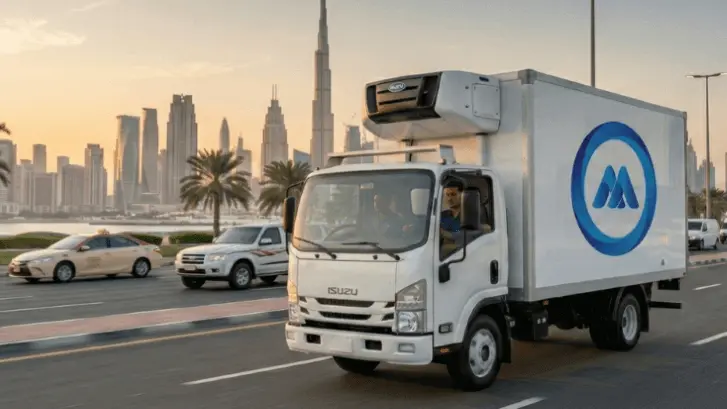 Dubai
Dubai
Chiller Truck Rental Dubai
3-Ton to 10-Ton refrigerated trucks for supermarket, pharma, and wholesale distribution.
View Service
Abu Dhabi
Chiller Truck Rental Abu Dhabi
ADAFSA and ASATEEL-compliant truck rentals for Mussafah, KIZAD, Khalifa City, and Al Ain.
View Service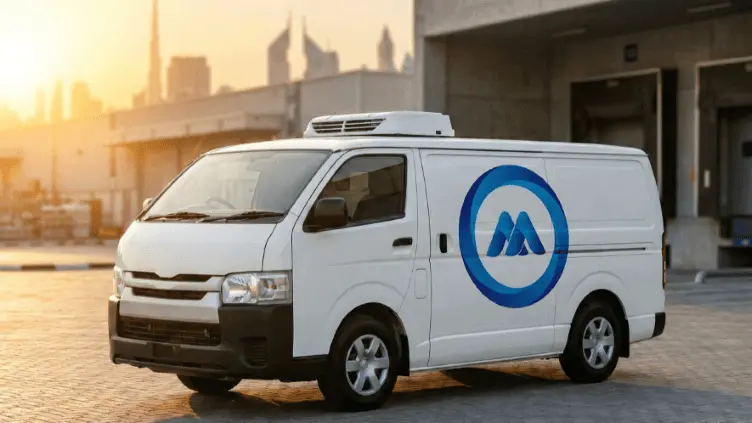 Last-Mile
Chiller Van Rental Dubai
1-Ton and 1.5-Ton chiller vans for last-mile cold chain, catering, and pharmacy routes.
View Service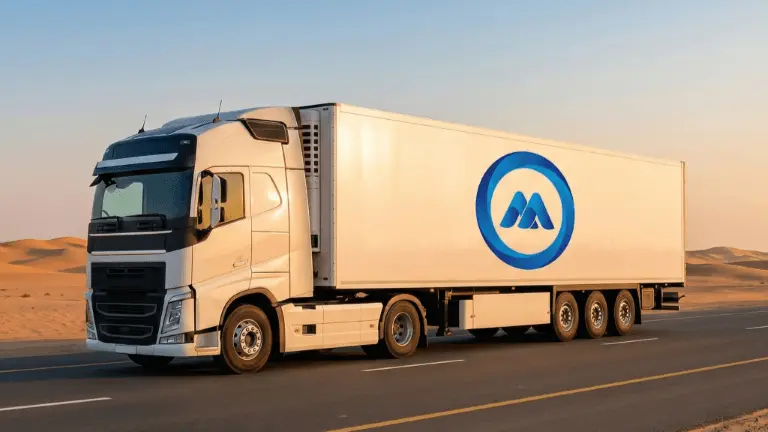 Cross-Border
Chiller Trailer Rental Dubai
20-Ton and 25-Ton reefer trailers for port clearances, warehouse transfers, and GCC routes.
View Service