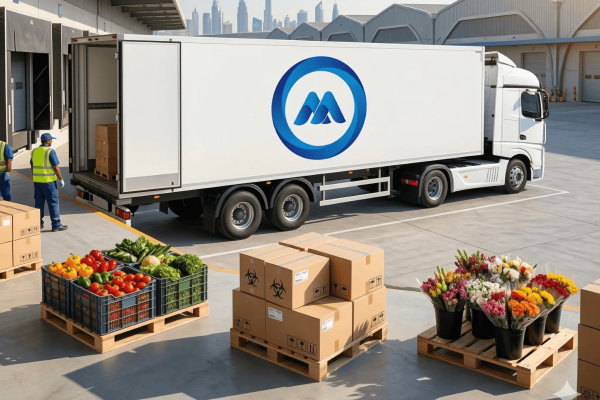

Dubai imports over 85% of its food supply, and with summer temperatures regularly exceeding 45 degrees Celsius, a single break in the cold chain can turn a truckload of fresh produce into a public health hazard within hours. Temperature-controlled transport is not a convenience in this market. It is a legal requirement enforced by Dubai Municipality, backed by federal law, and monitored through an increasingly digital inspection system. This guide explains the regulatory framework, mandatory temperature ranges, certification requirements, and penalties that every food business operating in Dubai needs to understand.
The Legal Framework: Federal Law and the Dubai Food Code
Food safety transport in Dubai is governed by a two-tier legal structure. At the federal level, UAE Federal Law No. 10 of 2015 on Food Safety establishes the foundational requirements that apply across all seven emirates. This law defines food safety as the assurance that food does not cause harm to the consumer when handled or consumed according to its intended use, and it grants enforcement authority to both the Ministry of Climate Change and Environment (MOCCAE) and local municipal bodies.
At the emirate level, the Dubai Food Code 2.0 translates federal law into specific operational requirements. Published by the Dubai Municipality Food Safety Department and updated through 2023 and 2024, the Food Code is not a set of guidelines. It is a mandatory framework where the terms “shall” and “must” denote absolute legal requirements. Every entity in the food chain, from international logistics providers to last-mile delivery riders, must comply or face enforcement action.
Supporting this framework are additional instruments including Cabinet Resolution No. 26 of 2017 (executive regulations), Local Order No. 11 of 2003 (public health and meat handling), and Ministerial Decree No. 239 of 2018 (the ZAD food registration system). Together, these create one of the most comprehensive food safety regulatory environments in the Middle East.
Why Temperature Control Matters: The Science Behind the Rules
The regulations exist because of microbiology. Most foodborne pathogens, including Salmonella, Listeria monocytogenes, and Staphylococcus aureus, thrive in what Dubai Municipality defines as the Temperature Danger Zone: between 5 and 63 degrees Celsius. Within this range, bacterial populations can double every 20 minutes. A delivery truck stuck in traffic on Sheikh Zayed Road with a malfunctioning refrigeration unit is not just losing product quality. It is creating conditions for a foodborne illness outbreak.
Dubai’s climate makes this risk particularly acute. When ambient temperatures reach 48 degrees Celsius in July and August, the thermal load on a refrigerated vehicle during loading and unloading is enormous. A refrigeration unit is designed to maintain temperature, not reduce it. This is why pre-cooling, both of the cargo and the vehicle’s interior, is a critical requirement that many operators overlook. Loading warm produce into a cold truck creates a thermal imbalance that the unit may not compensate for, leading to surface spoilage, accelerated bacterial growth, and reduced shelf life.
Mandatory Temperature Ranges by Food Category
The Dubai Food Code and supplementary guidelines from the Dubai Healthcare City Authority specify precise temperature requirements for different food categories during transport and storage. These are not recommendations. Deliveries that arrive outside these ranges must be rejected.
| Food Category | Required Temperature | Critical Notes |
|---|---|---|
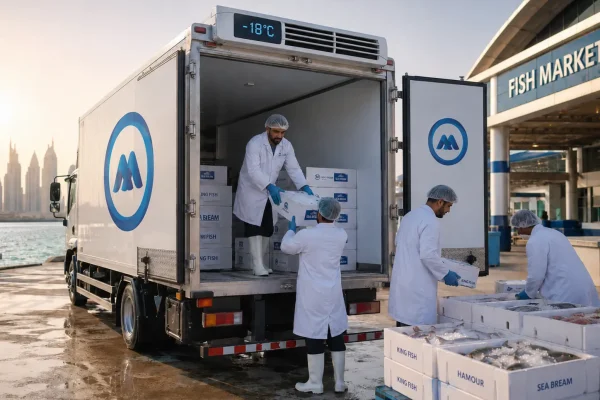
| Deep frozen foods | -18 degrees C or below | Reject delivery if core temperature rises above -15 degrees C |
| Chilled poultry and meat | 0 to 5 degrees C | Raw meats must remain below 5 degrees C at all times to prevent bacterial multiplication |
| Dairy products and eggs | 0 to 5 degrees C | Fats absorb surrounding odors; sealed packaging required during transport |
| Fresh seafood | 0 to 4 degrees C | Should be transported on ice or at near-freezing temperatures |
| Fresh fruits and vegetables | 1 to 13 degrees C | Varies by produce type; monitor for wilting and dehydration |
| Hot held ready-to-eat food | 63 degrees C or above | If holding equipment unavailable, consume within 2 hours |
| Dry and ambient goods | Below 25 degrees C | Humidity must be controlled to prevent mold growth |
For businesses that transport mixed cargo, this means a single-temperature vehicle is often insufficient. A chiller van rental in Dubai set to 3 degrees Celsius works well for dairy and poultry, but frozen goods require a dedicated unit running at -18 degrees or a multi-compartment vehicle with independent temperature zones.
The 2-Hour and 4-Hour Rule for Ready-to-Eat Food
For ready-to-eat food that is removed from temperature control during delivery, Dubai Municipality enforces a strict time-based safety window:
- Under 2 hours outside temperature control: The food is safe to consume and can be returned to refrigeration for later use.
- Between 2 and 4 hours: The food remains safe but must be consumed immediately. It cannot be re-chilled or saved.
- Over 4 hours: The food is classified as hazardous and must be discarded.
This rule has direct implications for catering companies, dark kitchens, and event management businesses in Dubai. If your delivery logistics cannot guarantee that hot or chilled ready-to-eat items reach the customer within the 2-hour window, you need a temperature-controlled vehicle, not an insulated bag in the back of a sedan.
Vehicle Requirements Under the Dubai Food Code
The Dubai Food Code 2.0 does not just regulate temperature. It specifies detailed construction and operational standards for every vehicle used to transport food.
Construction Standards
- Internal surfaces must be non-toxic, non-absorbent, and smooth enough to withstand frequent chemical disinfection
- Refrigeration capacity must match the thermal load of the cargo and the expected ambient conditions
- Airflow design must allow unobstructed circulation. Overloading a vehicle or stacking pallets against walls creates hot spots where temperature rises into the danger zone despite the unit running properly
- Hygienic separation is mandatory. Vehicles are restricted to the food type permitted by their license. Non-food items are strictly prohibited unless in separate, identified compartments
- Cargo containers must be marked “For Food Only” to prevent their use for chemicals or other hazardous materials
Annual Vehicle Inspection and Permitting
Before any vehicle can legally transport food in Dubai, it must pass an annual inspection conducted jointly by the Roads and Transport Authority (RTA) and the Dubai Municipality Food Safety Department. The RTA evaluates mechanical safety and roadworthiness, while DM-authorized testing centers assess refrigeration performance and hygiene standards.
The inspection costs approximately AED 220 and is available at approved testing centers including Tasjeel (Al Barsha, Al Qusais, JAFZA), Tamam (Al Aweer), Wasel (Al Jaddaf, Al Mizhar), and AG Cars (Mamzar, DIP). Upon passing, the vehicle receives a food transport permit and a sticker that must be visibly displayed. Inspectors can check for this sticker at any time during roadside checks or at delivery points.
The DM Card: Certification for Every Food Handler
Vehicle compliance alone is not enough. Every person who handles food in Dubai, including warehouse staff, loading crews, and delivery drivers, must hold a valid DM Card (Occupational Health Card) issued by the Dubai Health Authority.
The DM Card certification process involves:
- Application: Submit copies of passport, visa, and Emirates ID to a DHA-approved medical center
- Medical examination: Blood specimen collection and chest X-ray to screen for communicable diseases including Tuberculosis and Hepatitis B
- Evaluation: Results reviewed by DHA-licensed physicians
- Issuance: Card issued with a validity of one year
The card must be renewed annually. Businesses operating without valid DM Cards for their staff face fines ranging from AED 500 to AED 5,000 per employee, and repeated violations can lead to temporary suspension of operations. For a chiller truck rental in Dubai provider, this means every driver assigned to food transport must carry a current card.
The Person-in-Charge (PIC) Requirement
Beyond individual DM Cards, every food establishment in Dubai must designate at least one certified Person-in-Charge (PIC) who is present during all operating hours. The PIC is responsible for developing food safety policies, training staff, and monitoring compliance with the Dubai Food Code. PIC certification is awarded by EIAC-accredited training bodies and must be registered in the Foodwatch portal.
HACCP Compliance for Cold Chain Operations
The Dubai Municipality mandates Hazard Analysis and Critical Control Points (HACCP) implementation for all high-risk food businesses, and cold chain logistics qualifies. Unlike traditional inspection that detects problems after the fact, HACCP is a preventive system that identifies where contamination is most likely to occur and establishes controls to prevent it.
For a temperature-controlled transport operation, HACCP implementation means:
- Hazard analysis: Identifying risks such as temperature fluctuations during loading, door openings during multi-drop deliveries, or refrigeration unit failure during transit
- Critical control points: Defining the moments where temperature must be actively monitored, such as vehicle pre-cooling, cargo loading, in-transit checkpoints, and delivery handoff
- Critical limits: Setting maximum acceptable temperatures for each cargo type (for example, a core temperature of 5 degrees C maximum for chilled seafood)
- Monitoring procedures: Using calibrated thermometers, GPS-enabled real-time temperature sensors, and automated alerting systems
- Corrective actions: Defining what happens when limits are breached, such as rejecting a shipment, re-routing to a closer cold storage facility, or switching to a backup vehicle
- Verification: Internal audits, thermometer calibration, and periodic review of temperature logs
- Documentation: Maintaining records of temperature logs, vehicle cleaning schedules, and staff training as required by UAE authorities
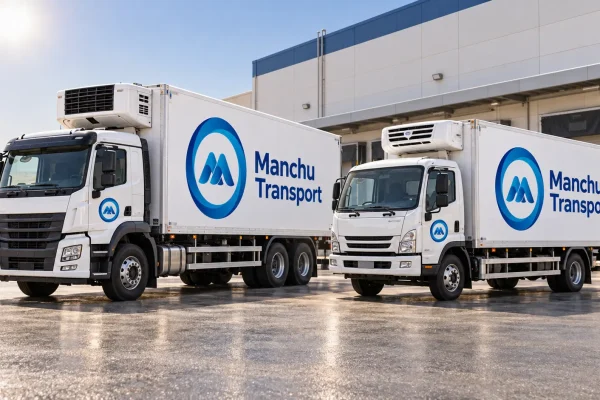
HACCP certification is increasingly a prerequisite for working with international corporate clients, five-star hotels, and government-linked entities in the UAE. At Manchu Transport, our fleet operations follow HACCP principles with documented temperature monitoring on every delivery run across Dubai and Abu Dhabi.
The Foodwatch Platform: Digital Enforcement
Dubai’s food safety enforcement is moving rapidly toward a fully digital model through the Foodwatch platform. Operated by the Dubai Municipality, Foodwatch is a digital ecosystem that connects regulators with every food establishment and transport provider in the emirate.
All food transportation vehicles must be registered on Foodwatch. This enables:
- Digital verification: Inspectors can instantly verify the hygiene status, PIC certification, and vehicle permit of any delivery using the Foodwatch Connect App
- Real-time incident reporting: Food safety incidents, illness reports, or equipment failures can be reported immediately for rapid containment
- Supplier accountability: Establishments are prohibited from using transport providers that are not registered and verified on the platform
For food businesses, this means you cannot simply hire any vehicle for a delivery. Your transport provider must be Foodwatch-registered, their vehicles must have valid permits, and their drivers must hold current DM Cards. Using an unregistered provider puts your own food establishment license at risk.
Penalties for Non-Compliance: Fines Up to AED 2 Million
The UAE takes a zero-tolerance approach to food safety violations. The penalty structure under Federal Law No. 10 of 2015 and local Dubai regulations is designed to be proportionate but highly deterrent.
| Violation | Fine (AED) | Additional Consequences |
|---|---|---|
| Trading in adulterated or spoiled food | 100,000 to 2,000,000 | Minimum 3 months imprisonment; product seizure |
| Violating technical regulations | Up to 100,000 | Potential license suspension |
| Trading non-licensed food products | 50,000 to 500,000 | Minimum 1 month imprisonment |
| Misleading consumers with false descriptions | 10,000 to 100,000 | Withdrawal of items from market |
| Operating a food outlet without a permit | Up to 10,000 | Immediate closure |
| General food safety violations | Minimum 10,000 | Fines doubled for repeated offenses |
| Operating without valid DM Cards | 500 to 5,000 per employee | Temporary suspension of business activities |
Beyond financial penalties, Dubai Municipality follows a multi-tiered enforcement approach. A non-functional refrigeration unit in a meat delivery truck can result in immediate vehicle grounding through removal of the food transport permit sticker. Serious or repeated violations can lead to temporary closure for up to six months or permanent revocation of the trade license.
2025 Regulatory Changes: What is Coming
The UAE’s food safety framework continues to evolve. Key changes taking effect in 2025 include:
- Nutri-Mark labeling system: Effective June 1, 2025, a mandatory A-to-E nutrition grading must appear on packaged food labels. Dairy, oils, and baked goods are in the first phase. Products without the grade will be withdrawn from sale.
- E-commerce and cloud kitchen oversight: Online food businesses, cloud kitchens, and third-party delivery aggregators will face the same risk-based inspection frequency as physical restaurants.
- Sustainable traceability: New mandates for plant-based product traceability will require transporters to maintain digital records of origins and production quantities.
- ZAD registration enforcement: No food product can be legally traded or transported in the UAE without registration in the ZAD smart platform, and enforcement is tightening.
For transport operators, the e-commerce expansion is the most significant change. As dark kitchens and delivery aggregators proliferate across Dubai, the demand for compliant temperature-controlled transport is growing. Businesses that previously relied on informal delivery arrangements will need to formalize their cold chain logistics to pass inspection.
How to Choose a Compliant Cold Chain Partner
Whether you are a restaurant owner, pharmaceutical distributor, or event caterer, the transport provider you choose directly affects your own compliance status. When evaluating a cold chain partner in Dubai, verify the following:
- Vehicle permits: Every vehicle should have a valid Dubai Municipality food transport permit with the sticker displayed
- Foodwatch registration: The provider must be registered and verified on the Foodwatch platform
- DM Cards: All drivers must hold current Occupational Health Cards
- Temperature monitoring: Vehicles should have calibrated thermometers and, ideally, GPS-enabled real-time temperature logging
- HACCP documentation: The provider should maintain temperature logs, cleaning schedules, and staff training records
- Vehicle range: Ensure they can provide the right vehicle for your cargo type, whether that is a 1-ton chiller van for dairy deliveries or a 10-ton freezer truck for frozen imports
Manchu Transport maintains full compliance across all of these requirements for our chiller van and chiller truck fleet operating in Dubai, Abu Dhabi, Sharjah, and across the UAE. Every vehicle is inspected, permitted, and monitored to meet Dubai Food Code standards.
Frequently Asked Questions
Is temperature-controlled transport legally required for food in Dubai?
Yes. UAE Federal Law No. 10 of 2015 on Food Safety and the Dubai Food Code 2.0 make temperature-controlled transport a mandatory legal requirement, not a recommendation.
What is a DM Card and who needs one?
A DM Card (Occupational Health Card) is issued by the Dubai Health Authority to every person who handles food, including delivery drivers. It requires a medical exam and must be
renewed annually.
What is the Foodwatch platform?
Foodwatch is Dubai Municipality’s digital registration system connecting regulators with every food establishment and transport provider. Businesses cannot legally use a transport
provider that is not Foodwatch-registered.
What are the penalties for food safety violations in Dubai?
Penalties range from AED 10,000 for general violations up to AED 2,000,000 for trading adulterated or spoiled food, with minimum prison terms attached to the most serious
offences.
Does HACCP apply to cold chain transport in Dubai?
Yes. Dubai Municipality mandates HACCP implementation for high-risk food businesses, which includes cold chain logistics, requiring documented hazard analysis and temperature
monitoring at every critical control point.
B) Also check this post’s Rank Math/Yoast SEO Title and Meta Description fields — if they still say “Hot & Cold Holding Temperatures Dubai 2026: DM Rules & Fines,” update them to match
the functions.php fix:
– SEO Title: Food Transport Temperature Rules Dubai 2026: DM Card & Fines
– Meta Description: Dubai food transport vehicles need certified temperature control: DM Card insulation standards, monitoring rules, and fines up to AED 50,000 for violations.
Need a compliant chiller vehicle for your food transport operations? Request a quote from Manchu Transport and get a DM-permitted, temperature-monitored vehicle delivered to your location.
Need Reliable Refrigerated Transport?
Get a free quote for chiller van, truck, or trailer rental in Dubai and across the UAE.
Get a Free QuoteRecommended Services
Our Refrigerated Transport Services
Choose the vehicle that matches your route, payload, and temperature requirements.
 Dubai
Dubai
Chiller Truck Rental Dubai
3-Ton to 10-Ton refrigerated trucks for supermarket, pharma, and wholesale distribution.
View Service Last-Mile
Chiller Van Rental Dubai
1-Ton and 1.5-Ton chiller vans for last-mile cold chain, catering, and pharmacy routes.
View Service
Abu Dhabi
Chiller Truck Rental Abu Dhabi
ADAFSA and ASATEEL-compliant truck rentals for Mussafah, KIZAD, Khalifa City, and Al Ain.
View Service Cross-Border
Chiller Trailer Rental Dubai
20-Ton and 25-Ton reefer trailers for port clearances, warehouse transfers, and GCC routes.
View Service