Choosing the wrong chiller truck is one of the most expensive mistakes a business can make in the UAE. An undersized vehicle means multiple trips, wasted fuel, and cargo that arrives warm. An oversized one means you are paying for capacity you do not use. Whether you are a restaurant owner sourcing produce from Deira or a pharmaceutical distributor running deliveries across Abu Dhabi, selecting the right refrigerated vehicle comes down to four factors: cargo type, payload weight, temperature requirements, and regulatory compliance. This guide breaks down each factor so you can make an informed decision before you sign a rental contract or purchase order.
Understanding UAE Chiller Truck Categories by Size
The UAE market classifies refrigerated vehicles primarily by payload capacity, measured in tons. Each category serves a different operational purpose, and the jump between sizes affects everything from the driving license you need to the type of refrigeration unit fitted on the vehicle.
1-Ton and 1.5-Ton Chiller Vans
The 1-ton chiller van, typically built on a Toyota Hiace or Nissan Urvan platform, is the backbone of last-mile delivery in Dubai and Abu Dhabi. These vehicles offer 6 to 8 cubic metres of cargo space and can navigate tight urban streets, underground parking ramps, and residential compound entrances that larger trucks cannot access.
The high-roof variant increases capacity to approximately 1.5 tons, making it the preferred choice for high-volume, low-weight cargo such as bread, leafy greens, and packaged dairy. A key advantage of this category is that it falls under the Category 3 Light Motor Vehicle (LMV) driving license, meaning most drivers with a standard UAE license can operate one without additional certification.
The refrigeration unit in a 1-ton van is typically vehicle-powered, meaning the compressor runs off the engine. This keeps the upfront cost low but requires the engine to remain running to maintain temperature. For short urban routes under 2 hours, this is perfectly adequate. For longer hauls or multi-stop routes with extended loading times, consider a vehicle with Electric Standby capability. If this size fits your operation, explore our chiller van rental in Dubai options for daily and monthly packages.
3-Ton Chiller Trucks
The 3-ton segment, represented by models like the Mitsubishi Canter and Isuzu NMR, is the most versatile option for SMEs in the catering, restaurant supply, and pharmaceutical sectors. It handles the volume that a van cannot, while remaining compact enough for city driving.
This is the threshold where vehicles move into the heavy vehicle category, requiring operators to hold a Category 4 UAE driving license. Applicants must be at least 20 years old and complete specialised training that covers loading rules and vehicle handling.
Many 3-ton trucks come equipped with independent refrigeration systems or Electric Standby (ESB) capability. ESB allows the cooling unit to run on building power while the engine is off, cutting fuel costs by up to 70% during loading dock operations or overnight storage. This feature alone can justify the price difference over a basic vehicle-powered unit.
7-Ton Chiller Trucks
The 7-ton truck, such as the Isuzu FRR or Fuso Fighter, is built for bulk distribution between regional warehouses and large supermarkets. These vehicles are frequently equipped with hydraulic tail lifts ranging from 500kg to 2,000kg capacity, which are essential for palletised goods at locations without dedicated loading docks.
If your business handles regular deliveries of heavy items like frozen meat, bottled water, or seafood, the 7-ton category provides the balance between payload capacity and manoeuvrability that the 10-ton class sacrifices for sheer volume.
10-Ton Chiller Trucks
The 10-ton chiller truck sits at the top of the rigid refrigerated fleet, offering up to 45 cubic metres of capacity. These vehicles are optimised for inter-emirate logistics: transporting goods from Jebel Ali Port to distribution centres in Al Ain, Ras Al Khaimah, or Fujairah.
Due to the enormous thermal mass of a full 10-ton load, these trucks use heavy-duty independent diesel-powered refrigeration units from manufacturers like Thermo King or Carrier. These units maintain consistent cooling even during long desert hauls where external surface temperatures on the vehicle body can exceed 70 degrees Celsius. For heavy-duty requirements, see our full range of chiller truck rental in Dubai options.
Quick Comparison: Which Size Do You Need?
| Vehicle Size | Payload | License Required | Best For |
|---|---|---|---|
| 1-Ton Van | 1,000 kg | Category 3 (LMV) | Last-mile restaurant and retail delivery |
| 1.5-Ton Van (High Roof) | 1,500 kg | Category 3 (LMV) | High-volume, low-weight goods (bakeries, florists) |
| 3-Ton Truck | 3,000 kg | Category 4 (Heavy) | Catering supply, small wholesale, pharma |
| 7-Ton Truck | 7,000 kg | Category 4 (Heavy) | Supermarket distribution, port-to-warehouse |
| 10-Ton Truck | 10,000 kg | Category 4 (Heavy) | Inter-emirate bulk transport, cold storage restocking |
Matching Your Cargo to the Right Temperature Range
Selecting the right size is only half the equation. The other half is ensuring the vehicle can maintain the exact temperature range your cargo requires. Not all chiller trucks are created equal in this regard. A vehicle rated for chilled goods (+2 to +8 degrees) will fail catastrophically if loaded with frozen seafood that needs -18 degrees or colder.
Chilled Cargo (+2 to +8 Degrees Celsius)
This range covers fresh produce, dairy, eggs, processed meats, and most pharmaceutical products. Chiller trucks in this category need high-volume airflow to remove the heat of respiration from fruits and vegetables. Standard 75mm polyurethane insulation is sufficient for maintaining chilled temperatures in the UAE climate.
Frozen Cargo (-18 to -23 Degrees Celsius)
Frozen seafood, ice cream, and deep-frozen meat require vehicles specifically rated as freezer trucks. These vehicles use insulation exceeding 100mm of high-density foam and more powerful compressors to reach and hold sub-zero temperatures despite ambient heat that regularly exceeds 45 degrees in summer. If you need both chilled and frozen capability, look for dual-compartment vehicles with independent temperature zones.
Pharmaceutical and Medical Cargo (+2 to +8 Degrees Celsius)
While the temperature range overlaps with standard chilled goods, pharmaceutical logistics demand a higher standard of precision. Vaccines and biological products can be rendered ineffective by even a momentary temperature excursion. Vehicles used for pharma transport must have digital temperature logging and real-time GPS monitoring to provide an auditable chain of custody. In Abu Dhabi, this data integrates directly with the ASATEEL tracking platform for regulatory compliance.
Specialty Cargo: Flowers, Electronics, and Fine Art
The UAE is a major re-export hub for cut flowers, which are classified as respiring cargo. Chiller vans for flowers must manage temperature, humidity, and ethylene gas simultaneously. High-end electronics and fine art require a stable climate-controlled environment, typically 15 to 22 degrees, to prevent cracking, battery damage, or material warping during transit.
Regulatory Compliance: What You Must Have Before Operating
Operating a refrigerated vehicle in the UAE is a heavily regulated activity. Missing any of these requirements can result in fines, vehicle impoundment, or loss of your food transport permit.
Dubai Municipality (DM) Vehicle Inspection and Sticker System
Every vehicle intended for food transport in Dubai must pass a specialised hygiene inspection at an authorised centre such as ENOC Tasjeel. Inspectors evaluate interior surfaces (must be non-toxic, smooth, and easy to sanitise), door seal integrity, and refrigeration unit performance.
Upon passing, the vehicle receives a colour-coded sticker that must be displayed prominently:
- Green sticker — authorised for chilled and refrigerated goods (+2 to +8 degrees)
- Orange sticker — authorised for frozen goods (-18 degrees or below)
- Yellow sticker — authorised for dry, non-perishable goods only
- Red sticker — authorised for hot food transport (catering)
Loading cargo that does not match your sticker classification is a violation that can result in an immediate fine and suspension of your transport permit.
The DM Card (Occupational Health Card)
Every driver and handler working with food transport must hold a valid Occupational Health Card (OHC), commonly called the DM Card. Issued by the Dubai Health Authority, the card certifies that the individual is medically fit and free from communicable diseases.
Key facts about the DM Card:
- Requires a medical examination including blood tests, chest X-ray, and sometimes stool analysis
- New employees must apply within 30 days of arrival or visa status change
- Valid for one year; failure to renew within 30 days of expiration triggers an automatic AED 310 fine
- Standard fee is approximately AED 290, though total costs can reach AED 500 depending on the medical centre
FoodWatch Registration
FoodWatch is Dubai Municipality’s digital compliance and traceability platform. All food-related entities, including transport providers, must register. The platform tracks permits, vehicle inspection records, and Person in Charge (PIC) certifications. It replaces manual paperwork with a digital system that allows Dubai Municipality to monitor compliance in real time.
Abu Dhabi: ADAFSA and ASATEEL Requirements
If your operations extend to Abu Dhabi, you face an additional layer of compliance. The Abu Dhabi Agriculture and Food Safety Authority (ADAFSA) regulates food transport in the emirate, and the ASATEEL GPS tracking platform requires all commercial vehicles to carry an approved On-Board Unit (OBU) with integrated temperature sensors for refrigerated vehicles. Drivers must also hold an EFST (Essential Food Safety Training) certificate. Non-compliance with ASATEEL carries fines up to AED 10,000 per violation.
Refrigeration Technology: What to Look For
The refrigeration unit is the most critical component of any chiller truck. In the UAE, where ambient temperatures push cooling systems to their limits for six months of the year, the quality of the unit directly determines whether your cargo arrives intact.
Thermo King vs Carrier
These two manufacturers dominate the UAE market. Thermo King units use scroll compressor technology, which offers fast cooling pull-down times and lower maintenance due to fewer moving parts. They are the preferred choice for operations that involve frequent door openings, such as multi-stop urban delivery routes.
Carrier Transicold units, particularly the PrimeLINE series, are recognised for energy efficiency and precise airflow management. They incorporate advanced diagnostics that can detect potential failures before they occur, making them popular with long-term fleet operators focused on fuel costs and uptime.
Both brands perform well in the UAE climate. The deciding factor is usually service network accessibility: check which brand has an authorised service centre closer to your base of operations.
Electric Standby (ESB): A Must-Have for Urban Operations
Electric Standby allows the refrigeration unit to run on building power (typically a 3-phase outlet) while the vehicle engine is off. The benefits are significant:
- Cost savings: Electricity costs up to 70% less than diesel for the equivalent cooling output
- Noise reduction: Critical for night-time deliveries in residential zones where engine noise causes complaints
- Reduced engine wear: Decoupling cooling from the engine extends vehicle lifespan and stretches maintenance intervals
If your operation involves loading dock time exceeding 30 minutes, overnight pre-staging, or deliveries to noise-sensitive locations such as hotels and hospitals, ESB should be a non-negotiable requirement when selecting a chiller truck.
Rental vs Ownership: Which Makes Financial Sense?
For businesses entering the cold chain space or scaling operations, the rent-vs-buy decision has a clear answer for most SMEs: rental provides better economics and lower risk.
| Cost Factor | Owned Fleet (Annual) | Rental Fleet (Annual) |
|---|---|---|
| Initial capital outlay | AED 150,000 to 250,000 per truck | AED 0 |
| Monthly payment | Variable (loan or cash) | AED 7,500 to 9,500 (3-ton) |
| Maintenance and servicing | AED 15,000 to 25,000 | Included |
| Insurance and registration | AED 8,000 to 12,000 | Included |
| Breakdown replacement | Self-managed | Guaranteed same-day |
| Annual depreciation | 20 to 25% | Not applicable |
Rental preserves working capital and converts a large fixed cost into a predictable monthly expense. Most importantly, reputable rental companies provide a replacement vehicle within hours if your truck breaks down, something an independent fleet owner cannot replicate easily. For businesses with seasonal demand peaks during Ramadan, summer, or the winter tourism season, the ability to scale your fleet up or down without asset risk is a decisive advantage.
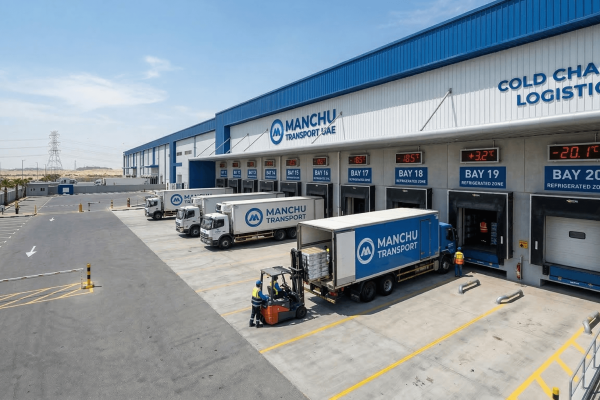
At Manchu Transport, we offer daily, weekly, and monthly chiller truck rental in Dubai and Abu Dhabi with driver, insurance, and maintenance included. Whether you need a single 1-ton van for a week or a fleet of 10-ton trucks on a long-term contract, the pricing is transparent and the vehicle arrives DM-inspected and compliant.
Five Common Mistakes That Destroy Cargo
Even with the right vehicle, operational errors can undo everything. These are the most frequent mistakes we see businesses make in the UAE market:
1. Loading Cargo Into a Warm Truck
A refrigeration unit is a temperature maintenance device, not a cooling device. If the truck interior has been sitting in 50-degree heat, the walls will radiate stored heat into the cargo for hours after the unit reaches set temperature. Always pre-cool the vehicle to target temperature for 30 to 60 minutes before loading begins.
2. Blocking Airflow Inside the Compartment
Stacking goods to the ceiling or against the evaporator’s air intake prevents cold air from circulating. This creates hot spots where products spoil even though the thermostat reads the correct temperature. Leave at least 10cm of clearance around the walls and ceiling, and never block the evaporator fan.
3. Ignoring Door Seal Condition
In a multi-stop delivery route, doors open and close dozens of times per day. Worn or compressed door seals allow warm air to leak in continuously, forcing the evaporator to work overtime and eventually ice up. Check door seals weekly and replace them at the first sign of compression or cracking.
4. Skipping Condenser Coil Cleaning
The UAE’s dust and sand clog condenser coils rapidly. A blocked condenser forces the compressor to overwork, increasing fuel consumption and accelerating mechanical failure. Clean condenser coils with compressed air at least every two weeks during summer months.
5. Mixing Incompatible Cargo
Loading strong-smelling goods like onions alongside dairy, or placing ethylene-producing fruits next to ethylene-sensitive flowers, causes cross-contamination and accelerated spoilage. If you must transport mixed cargo, use physical barriers and ensure the vehicle has multi-zone temperature capability.
How to Choose: A Step-by-Step Decision Framework
Use this checklist to narrow down the right chiller truck for your specific operation:
- Calculate your payload: Weigh your typical load. Add 20% for growth. Choose the vehicle category that comfortably handles this weight.
- Identify your temperature range: Determine whether your cargo is chilled, frozen, or pharmaceutical-grade. This dictates insulation thickness and refrigeration unit power.
- Map your delivery routes: Urban last-mile delivery favours 1-ton vans. Inter-emirate bulk transport requires 7-ton or 10-ton trucks. Mixed routes may need multiple vehicle sizes.
- Check your license status: Vehicles above 2.5 tons require a Category 4 license. If your drivers only hold Category 3, stick with 1-ton and 1.5-ton vans or use a rental company that provides licensed drivers.
- Confirm regulatory requirements: DM Card, FoodWatch registration, vehicle inspection sticker for Dubai. ADAFSA permit, EFST certificate, and ASATEEL registration for Abu Dhabi.
- Evaluate rental vs ownership: If you need fewer than 5 vehicles and have been operating for less than 3 years, rental almost always makes better financial sense.
Choosing the right truck also means choosing the right ownership model — our rent vs buy ROI analysis for UAE refrigerated trucks shows when renting wins.
Get the Right Vehicle for Your Operation
The right chiller truck is the one that matches your cargo requirements, fits your route profile, meets every regulatory requirement, and does not drain your capital on assets that depreciate 25% per year. Whether you are launching a new cold chain operation or expanding an existing one across Dubai and Abu Dhabi, the decision framework above will help you avoid the costly mistakes that trip up most businesses in this sector.
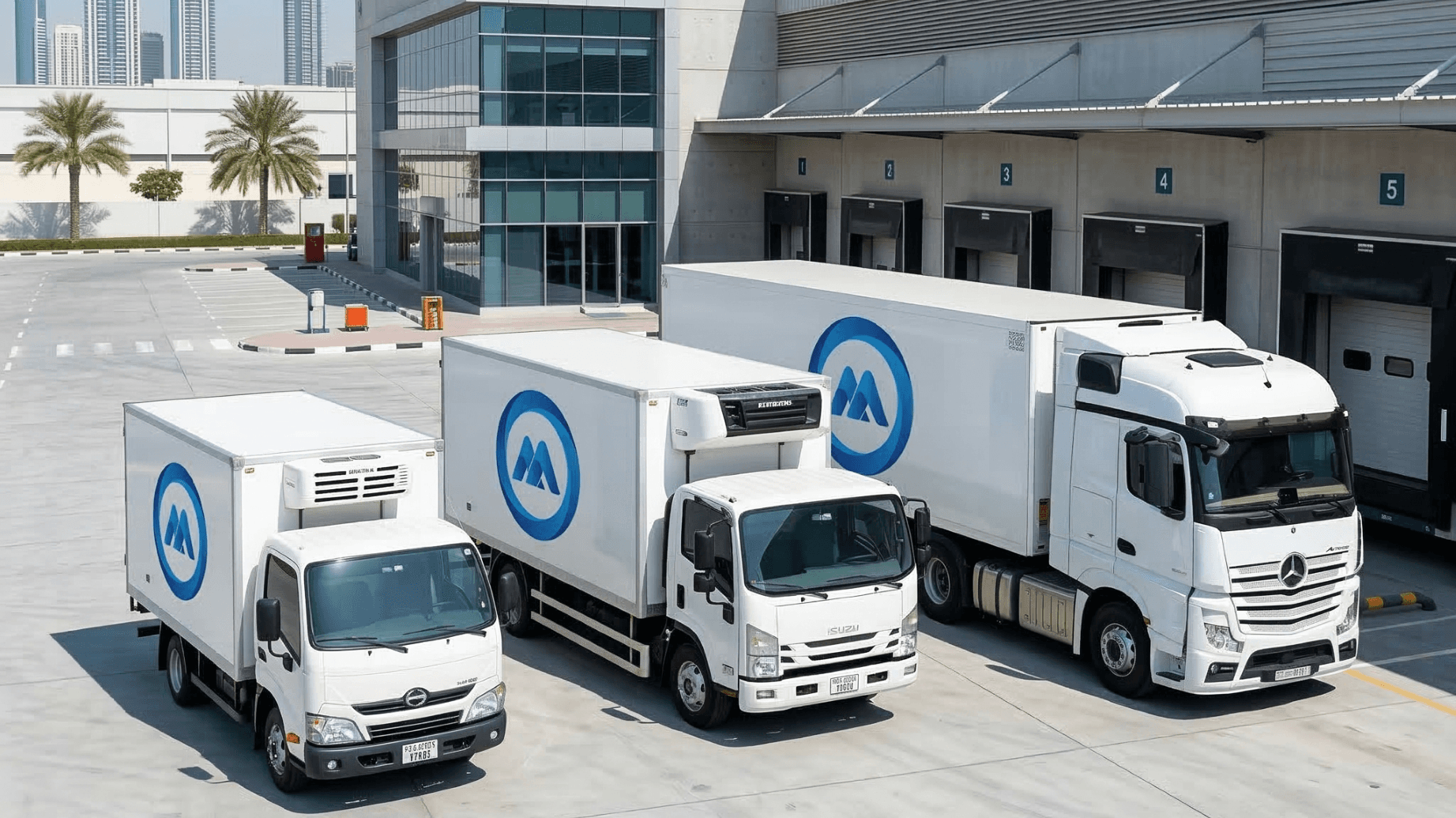
Manchu Transport operates a fleet of DM-certified chiller vans, trucks, and trailers ranging from 1-ton to 25-ton capacity, all available for daily, weekly, or monthly rental with driver and insurance included. Request a free quote and tell us about your cargo, route, and schedule. We will recommend the exact vehicle configuration for your needs.
Need Reliable Refrigerated Transport?
Get a free quote for chiller van, truck, or trailer rental in Dubai and across the UAE.
Get a Free QuoteRecommended Services
Our Refrigerated Transport Services
Choose the vehicle that matches your route, payload, and temperature requirements.
 Dubai
Dubai
Chiller Truck Rental Dubai
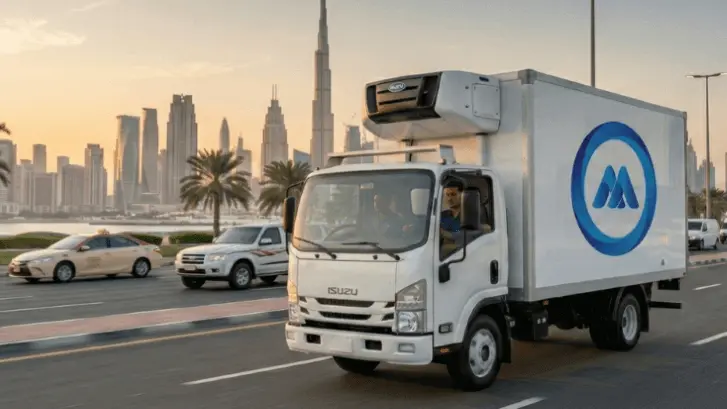
3-Ton to 10-Ton refrigerated trucks for supermarket, pharma, and wholesale distribution.
View Service
Abu Dhabi
Chiller Truck Rental Abu Dhabi
ADAFSA and ASATEEL-compliant truck rentals for Mussafah, KIZAD, Khalifa City, and Al Ain.
View Service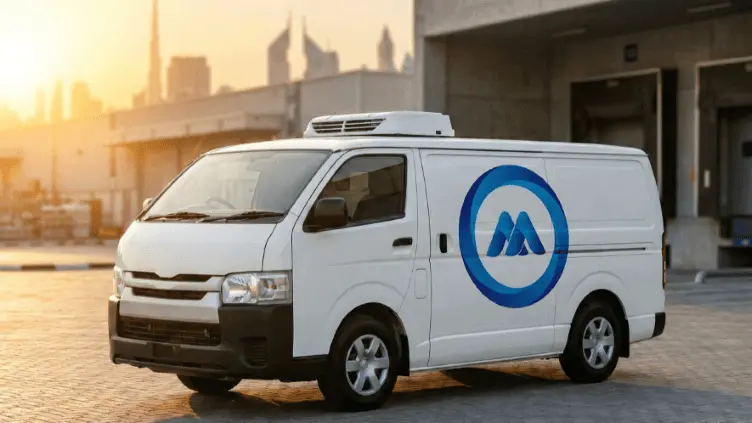 Last-Mile
Chiller Van Rental Dubai
1-Ton and 1.5-Ton chiller vans for last-mile cold chain, catering, and pharmacy routes.
View Service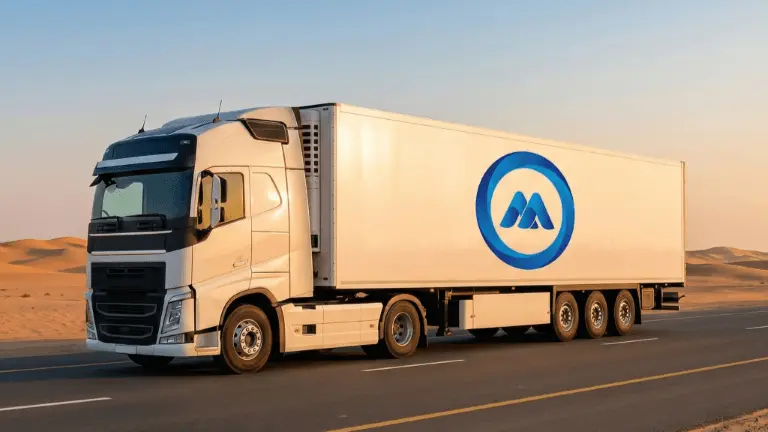 Cross-Border
Chiller Trailer Rental Dubai
20-Ton and 25-Ton reefer trailers for port clearances, warehouse transfers, and GCC routes.
View Service