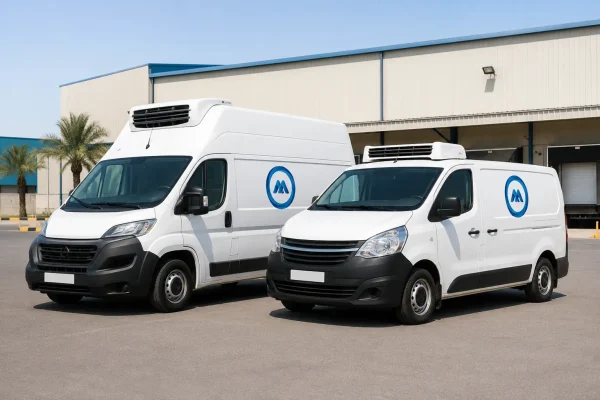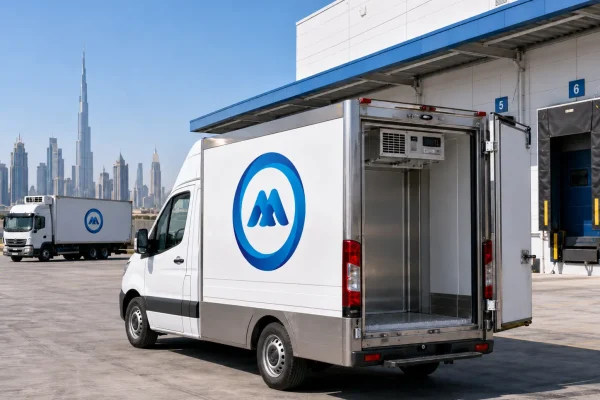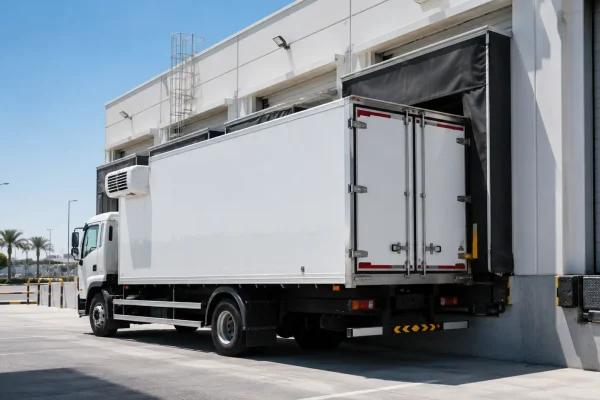
Choosing between a chiller van and a freezer truck is one of the most consequential logistics decisions a business can make in the UAE. Pick the wrong vehicle and you risk spoiled cargo, regulatory fines, or paying far more than necessary for capacity you do not need. The two vehicle types look similar on the outside, but they are engineered for fundamentally different temperature ranges, cargo types, and delivery patterns. This guide breaks down every factor that matters so you can make the right choice for your operation.
The Core Difference: Temperature Range
The difference between a chiller van and a freezer truck comes down to one thing: how cold the cargo box gets.
A chiller van maintains temperatures between 0 and 8 degrees Celsius. Think of it as a mobile refrigerator. The goal is to keep products cool enough to slow bacterial growth and preserve freshness without freezing them. Fresh produce, dairy, flowers, and most pharmaceuticals fall into this range.
A freezer truck operates at -18 degrees Celsius or lower, with heavy-duty units reaching -25 degrees even during loading operations at high-traffic ports like Jebel Ali. This is a mobile deep freezer, designed to maintain the solid frozen state of goods like meat, seafood, ice cream, and frozen prepared meals.
This temperature gap drives every other difference between the two vehicles: insulation thickness, refrigeration unit power, energy consumption, maintenance requirements, and cost.
Technical Specifications Compared
| Feature | Chiller Van | Freezer Truck |
|---|---|---|
| Temperature range | 0 to +8 degrees C | -18 to -25 degrees C |
| Insulation thickness | 50 to 80 mm polyurethane | 100 to 150 mm polyurethane |
| Cooling unit type | Direct drive (engine-powered) | Self-powered (independent diesel) |
| Typical payload | 1 to 1.5 tonnes | 3 to 10 tonnes |
| Cargo volume | 6 to 9 cubic metres | 15 to 50 cubic metres |
| Humidity control | Passive or evaporative | Active defrost cycle |
| Pull-down speed | Fast (15 minutes) | Slower (requires thermal mass) |
| Fuel consumption | Lower | Higher (independent diesel engine) |
Insulation: Why Thickness Matters in the UAE
In Dubai’s summer heat, the gap between outside air temperature and cargo temperature can exceed 60 degrees. The insulation has to work continuously against that thermal pressure. Chiller vans use 50 to 80 mm polyurethane sandwich panels, which is sufficient for maintaining above-zero temperatures. Freezer trucks need 100 to 150 mm panels because the temperature differential is far greater, and any thermal leakage causes surface thawing that compromises cargo safety.
Thicker insulation also means a heavier vehicle body, which is why freezer trucks are built on medium and heavy-duty chassis (Isuzu N-Series, Mitsubishi Canter) rather than van platforms. The reinforced frame handles both the cargo weight and the structural stress of the insulation panels during long-distance highway transport.
Refrigeration Units: Direct Drive vs Self-Powered
Chiller vans typically use direct drive refrigeration units like the Thermo King V-220, where the vehicle’s engine powers the compressor. This is efficient and cost-effective for urban routes, but has one weakness in UAE conditions: when the vehicle idles in heavy traffic, engine RPM drops, reducing compressor output. Internal temperature can rise during extended stops unless the driver manages engine speed or the vehicle has a standby motor.
Freezer trucks use self-powered diesel refrigeration units (Thermo King T-Series, Carrier Supra) with their own independent engines. The cooling system operates at full capacity whether the truck engine is running or not. This independence is critical for inter-emirate deliveries where transit times through congested corridors like Sharjah to Dubai can stretch well beyond schedule.
Vehicle Classes Available in the UAE
The UAE market segments refrigerated vehicles into distinct classes based on payload and use case. Understanding these categories helps you avoid both under-specifying and over-spending.
1-Ton and 1.5-Ton Chiller Vans
The Toyota Hiace dominates this category. A standard 1-ton chiller van offers approximately 1,000 kg payload and 6 to 9 cubic metres of cargo space. High-roof 1.5-ton variants (Mercedes Sprinter, high-roof Hiace) provide additional volume and are often fitted with air-curtain systems to minimise cold air loss during frequent stops.
These are the workhorses for last-mile delivery in urban areas. Their compact size lets them navigate Dubai Marina, Downtown Abu Dhabi, and the narrow streets of older Sharjah neighbourhoods where larger commercial vehicles face access restrictions.
Best for: restaurant restocking, pharmacy deliveries, floral transport, catering runs, dark kitchen supply chains.
3-Ton to 5-Ton Trucks (Chiller or Freezer)
This is where the line between chiller and freezer diverges most sharply. A 3-ton chiller or freezer truck provides 15 to 25 cubic metres of volume and can be configured with dual-temperature zones, carrying chilled and frozen goods simultaneously in a single trip. The Mitsubishi Canter and Isuzu NMR are the most common platforms in this range.
A single 3-ton truck effectively replaces three to four chiller van trips, which dramatically reduces per-unit delivery costs for wholesale distribution and supermarket replenishment.
Best for: supermarket distribution, hotel supply chains, wholesale food delivery, medium-scale catering operations.
7-Ton to 10-Ton Heavy-Duty Trucks
The Isuzu F-Series (FSR, FVR) defines this category. The FSR 10-ton model carries a gross vehicle weight of 13,500 kg with 40 to 50 cubic metres of cargo volume. These are industrial-scale vehicles for bulk frozen seafood, meat, and large pharmaceutical shipments. The high-performance engines (up to 240 PS) handle the combined load of heavy cargo and continuous operation of demanding freezer units.
Best for: bulk frozen goods, cross-border GCC transport, industrial-scale pharmaceutical logistics, Jebel Ali port to warehouse transfers.
When to Choose a Chiller Van
A chiller van is the right choice when your cargo needs to stay cool but not frozen, and your delivery pattern involves frequent stops within a city. Specific scenarios where chiller vans outperform freezer trucks:
- Fresh produce delivery to restaurants, hotels, and retail stores where product must arrive unfrozen
- Dairy distribution (milk, yoghurt, cheese) requiring strict 1 to 5 degree temperatures
- Floral transport where freezing destroys cellular structure and visual quality
- Pharmaceutical last-mile delivery of vaccines and medications in the 2 to 8 degree range
- Catering and event supply where prepared food needs refrigeration but not freezing
- High-frequency urban routes with 10 or more stops per trip, where the van’s quick pull-down speed compensates for repeated door openings
The smaller internal volume of a chiller van actually works in its favour for multi-stop routes. A higher air-change rate means cold air is replenished more effectively after each door opening compared to a large truck with a much bigger interior space to re-cool.
When to Choose a Freezer Truck
A freezer truck is necessary when cargo must remain at sub-zero temperatures throughout transit, or when the delivery involves long distances, heavy loads, or both. Key use cases:
- Frozen meat and seafood transport from ports (Jebel Ali, Mina Zayed) to distribution centres
- Ice cream and frozen desserts that require unbroken -18 degree chains
- Inter-emirate bulk transport from Dubai to Al Ain, Abu Dhabi, or Ras Al Khaimah where transit exceeds 2 hours
- Supermarket frozen aisle restocking at wholesale volumes
- Pharmaceutical cold chain for temperature-sensitive biologics that need the thermal buffer of freezer-grade insulation, even when stored at chiller temperatures
- Cross-border GCC shipments to Oman, Bahrain, or Saudi Arabia where transit times are measured in days
Pharmaceutical transport deserves special mention. While many medications only require 2 to 8 degree temperatures, they are often transported in freezer-capable vehicles because the 100 mm+ insulation provides a critical safety buffer. If the refrigeration unit fails mid-transit, freezer-grade insulation can maintain acceptable temperatures for up to 12 hours, giving operators an emergency window that thinner chiller insulation cannot provide.
Rental Costs in the UAE: Chiller Van vs Freezer Truck
Freezer trucks cost more to rent than chiller vans across every pricing structure. The premium reflects the more powerful refrigeration units, thicker insulation, heavier chassis, higher fuel consumption, and more intensive maintenance schedules.
| Vehicle | Daily Rate (AED) | Monthly Without Driver (AED) | Monthly With Driver (AED) |
|---|---|---|---|
| 1-ton chiller van | 250 to 500 | 3,500 to 5,500 | 5,000 to 8,500 |
| 1-ton freezer van | 350 to 600 | 4,500 to 6,500 | 6,500 to 9,500 |
| 3-ton chiller truck | 600 to 800 | 5,500 to 11,000 | 8,000 to 13,500 |
| 3.5-ton freezer truck | 700 to 950 | 6,500 to 13,000 | 9,000 to 15,000 |
| 7 to 10-ton freezer truck | 1,200 to 1,800 | 12,000 to 20,000 | 13,000 to 22,000 |
Long-term contracts (yearly) typically offer 25 to 30 percent discounts over monthly rates, often including vehicle branding and dedicated support. For businesses testing a new route or managing seasonal demand spikes such as Ramadan catering or summer hospitality surges, short-term rental eliminates the capital outlay and maintenance burden of ownership.
Dubai Municipality Compliance: The Colour-Coded Sticker System
Both chiller vans and freezer trucks operating in Dubai must pass the Dubai Municipality food transport vehicle inspection and receive the correct colour-coded sticker:
- Green sticker — authorised for chilled (refrigerated) food products
- Orange sticker — authorised for frozen food products
- Yellow sticker — dry product transport only
- Red sticker — heated food transport
Operating without the correct sticker or violating the temperature requirements of your sticker category results in fines starting at AED 1,000, potential vehicle impoundment, and possible suspension of your commercial trade license. Inspections are conducted at authorised centres like ENOC Tasjeel, which verify that the vehicle interior is non-absorbent, easy to sanitise, and that the refrigeration system is properly calibrated.
In Abu Dhabi, food transport vehicles must comply with ADAFSA (Abu Dhabi Agriculture and Food Safety Authority) standards, and commercial vehicles require ASATEEL GPS tracking registration through the ITC. Drivers handling food cargo in the capital must also hold a valid EFST (Essential Food Safety Training) certificate.
Maintenance Differences in the UAE Climate
The UAE’s combination of extreme heat (exceeding 50 degrees in summer) and fine desert sand creates maintenance demands that go well beyond manufacturer recommendations designed for temperate climates. These demands are more intensive for freezer trucks due to their more complex refrigeration systems.
Condenser Coil Cleaning
Sand and dust penetrate condenser coil fins, creating an insulating layer that inhibits heat exchange. This forces the compressor to run continuously, increasing fuel consumption by up to 25 percent and cutting compressor lifespan in half. Weekly high-pressure air cleaning (90+ PSI) is essential for both vehicle types, but freezer trucks suffer more from neglect because their compressors already run under higher load.
Battery Replacement
Batteries in the UAE lose approximately 40 percent of their effective life compared to temperate climates. Standard replacement is every 18 to 24 months rather than the typical 4-year cycle. This is especially critical for freezer trucks with independent diesel refrigeration engines that depend on reliable battery starts.
Door Seal Inspections
Coastal humidity in Dubai, Sharjah, and Abu Dhabi accelerates rubber seal degradation. A minor air leak forces the refrigeration unit into short-cycling (turning on and off every few minutes), causing rapid compressor wear and temperature fluctuations. Monthly gasket inspections are mandatory for both vehicle types, with EPDM rubber seals preferred for their resistance to the extreme temperature differentials between cargo box and ambient air.
Making the Right Choice for Your Business
The decision framework is straightforward once you identify three variables: what temperature your cargo requires, how much volume you need to move per trip, and how far you need to move it.
- If your cargo must stay above zero and your routes are urban with frequent stops, a chiller van is the right tool
- If your cargo must stay frozen or you need to move large volumes over long distances, a freezer truck is necessary
- If you handle both chilled and frozen goods, a dual-zone truck in the 3 to 5-ton range can consolidate two trips into one
- If you are unsure about demand or testing a new market, rental lets you match vehicle type and size to actual needs without a capital commitment
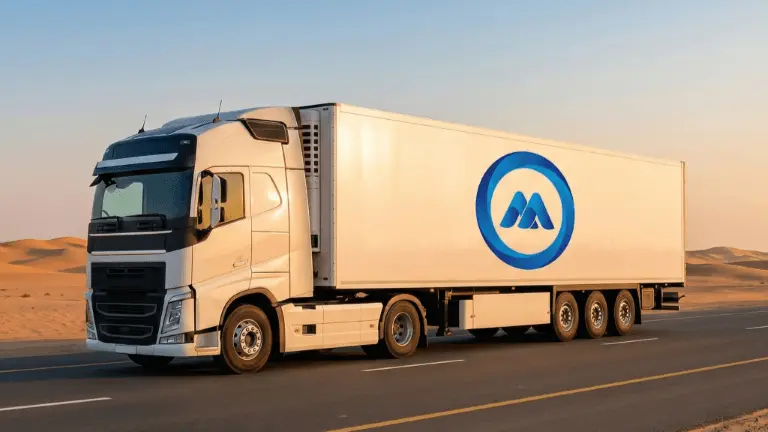
At Manchu Transport, our fleet includes 1-ton and 1.5-ton chiller vans for urban delivery, 3-ton to 10-ton trucks for wholesale distribution and inter-emirate logistics, and refrigerated trailers for heavy-duty industrial transport. Every vehicle is DM Card certified, fully maintained, and available for daily, monthly, or long-term rental across Dubai, Abu Dhabi, Sharjah, and the wider UAE.
Not sure which vehicle fits your operation? Request a free quote and our team will recommend the right vehicle type and size based on your cargo, route, and schedule.
Need Reliable Refrigerated Transport?
Get a free quote for chiller van, truck, or trailer rental in Dubai and across the UAE.
Get a Free QuoteRecommended Services
Our Refrigerated Transport Services
Choose the vehicle that matches your route, payload, and temperature requirements.
 Cross-Border
Chiller Trailer Rental Dubai
20-Ton and 25-Ton reefer trailers for port clearances, warehouse transfers, and GCC routes.
View Service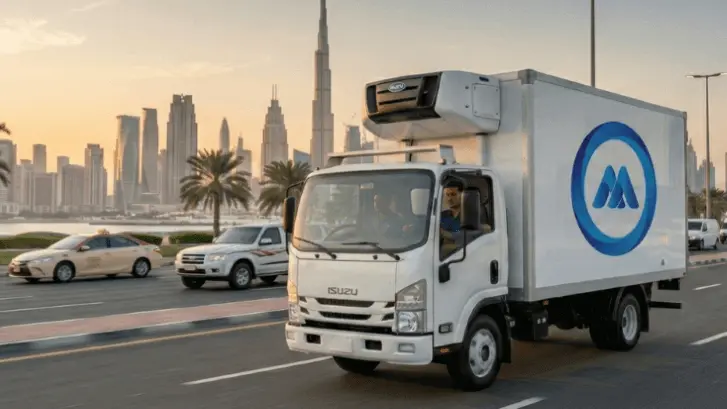 Dubai
Dubai
Chiller Truck Rental Dubai
3-Ton to 10-Ton refrigerated trucks for supermarket, pharma, and wholesale distribution.
View Service Last-Mile
Chiller Van Rental Dubai
1-Ton and 1.5-Ton chiller vans for last-mile cold chain, catering, and pharmacy routes.
View Service
Abu Dhabi
Chiller Truck Rental Abu Dhabi
ADAFSA and ASATEEL-compliant truck rentals for Mussafah, KIZAD, Khalifa City, and Al Ain.
View Service