Every food distributor, catering company, and pharmaceutical wholesaler in the UAE eventually asks the same question: should we buy a refrigerated truck outright, or keep renting one? On the surface, ownership feels like the responsible long-term move. Run the actual numbers, and the picture reverses for most operators. A refrigerated truck is not one asset. It is a chassis, an insulated body, and a refrigeration unit that each depreciate on their own schedule, plus a driver, a compliance stack, and a cargo-spoilage liability that lands entirely on your balance sheet the moment you sign the purchase order.
This 2026 analysis breaks down the true total cost of ownership (TCO) for 3-Ton, 7-Ton, and 10-Ton reefer trucks in the UAE, class by class, new versus used, and puts each against the equivalent annual rental cost at Manchu Transport’s real published rates. The result is a clear breakeven number in days per year that tells you exactly when buying starts to make sense, and when it quietly bleeds cash.
Why a Refrigerated Truck Is Not One Purchase, It Is Four
Before any TCO table makes sense, you have to understand what you are actually buying. A dry cargo truck is a single depreciating asset. A refrigerated truck is a stack of them:
- The chassis (Mitsubishi Fuso Canter, Isuzu N-series, Hino 500) is the base vehicle. A new 3-Ton light-duty chassis with a basic reefer body lands around AED 115,000. A new 7-Ton runs about AED 210,000, and a new 10-Ton heavy-duty around AED 290,000, hauling 22 to 33 pallets.
- The insulated body is a rigid polyurethane foam structure with an FRP or steel skin, 60 to 80mm panels for chiller work and 100mm or thicker for freezer duty. A basic body costs AED 35,000 to AED 80,000. A high-performance multi-temperature freezer body pushes past AED 150,000 on its own.
- The refrigeration unit (TRU) from Carrier Transicold or Thermo King is a major capital asset with its own depreciation curve. Gulf-spec units need oversized condensers and heavy-duty compressors to hold temperature in 50°C ambient heat, adding anywhere from AED 70,000 to AED 250,000 depending on multi-temp capability.
- The driver and the compliance stack are recurring costs that never stop, whether the truck moves or sits idle in your yard.
When you rent instead, all four of these become someone else’s capital problem. That single shift is the heart of the rent-versus-buy decision. If you want a size primer before you cost it out, our guide on how to choose the right chiller truck in the UAE covers matching payload to route.
The Annual Cost of Owning a Refrigerated Truck in the UAE
Ownership cost is not the sticker price divided by five. It is the sum of seven annualized line items that most operators underestimate until the invoices arrive. Here is what each one covers.
1. Depreciation
Reefer trucks depreciate faster than dry trucks because the refrigeration unit ages under constant thermal load. A new truck typically writes down to a 25% residual value over five years. A new 10-Ton at AED 290,000 sheds roughly AED 43,500 every year. A used truck starts cheaper, so its absolute depreciation is lower, but that saving is usually swallowed by higher corrective maintenance in the back half of its life.
2. Financing and interest
UAE commercial truck loans for new vehicles run a flat 2.69% to 4.5% per year, which is roughly 5% to 8.5% on a reducing basis, with a Central Bank minimum 20% down payment. Used trucks carry higher rates, flat 3.0% to 5.5%, typically 30% down, and lenders will not finance a vehicle that would be over 7 to 10 years old at loan maturity. That down payment alone locks up AED 23,000 to AED 87,000 of working capital before the truck earns a dirham.
3. Insurance
Commercial reefer insurance runs 1.5% to 3.0% of the vehicle’s market value per year. A new 10-Ton worth AED 290,000 costs around AED 10,150 to insure in year one, dropping slowly as the asset value falls.
4. Compliance OPEX
Each vehicle and driver carries a recurring compliance bill: ASATEEL (ITC) or SecurePath (RTA) telematics at AED 400 to AED 880, a Dubai FoodWatch or ADAFSA food transport permit at AED 350 to AED 2,000, a DHA Occupational Health Card at AED 290 to AED 600 per driver, and a hygiene certificate (ADAFSA EFST or DM Basic Food Safety Level 1) at AED 100 to AED 300 per driver. Miss any of these and the penalties bite hard: AED 1,000 per month for an expired ASATEEL permit, and DM food temperature violations ranging from AED 5,000 to AED 50,000.
5. Maintenance
A new 3-Ton costs about AED 7,200 a year to maintain across chassis and TRU. A new 10-Ton runs around AED 14,000. A used 10-Ton in years four to eight climbs past AED 22,000, driven by the five refrigeration failure modes that plague Gulf fleets: compressor overheating from dust-caked condenser coils, drive belts snapping from thermal fatigue, micro refrigerant leaks from constant vibration, electrical corrosion from coastal humidity, and condenser fan motor burnout.
6. Driver, fully loaded
A driver is far more than a monthly salary. Loaded with visa, Emirates ID, health insurance, accommodation, transport allowance, and end-of-service gratuity, a driver costs roughly AED 54,000 a year for a 3-Ton operation, AED 69,600 for a 7-Ton, and AED 75,600 for a 10-Ton where heavier licenses command a premium.
7. Downtime and cargo-spoilage risk
This is the line item that sinks ownership math. When a TRU fails mid-route, HACCP protocol condemns the entire load on a single temperature excursion. A rejected cargo can be worth AED 30,000 to AED 100,000, and then you still have to source an emergency spot-rental to finish the run. Annualized, this risk runs about AED 5,000 a year for a new light truck and up to AED 18,000 for an aging heavy used one.
Total Cost of Ownership vs Rental: The Numbers by Weight Class
Below are the fully annualized TCO figures for each weight class, new and used, set against the equivalent cost of renting the same truck from Manchu Transport for a full working year. Rental figures use our real daily rates (3-Ton AED 600/day, 7-Ton AED 700/day, 10-Ton AED 800/day) and indicative monthly-contract rates, with our best rates reserved for longer commitments.
3-Ton Chiller Truck: Annual TCO (AED)
| Cost Component | Buy New | Buy Used |
|---|---|---|
| Depreciation | 17,250 | 12,000 |
| Interest | 4,140 | 1,733 |
| Insurance | 3,220 | 2,400 |
| Compliance (permits, telematics, cards) | 3,030 | 3,030 |
| Maintenance | 7,200 | 12,000 |
| Driver (fully loaded) | 54,000 | 54,000 |
| Downtime / spoilage risk | 5,000 | 10,000 |
| Total annual cost of ownership | 93,840 | 95,163 |
Note the counter-intuitive result: for the 3-Ton class, buying used actually costs slightly more than buying new, because the higher maintenance and spoilage risk of an older light-duty truck outweighs its cheaper purchase price. If you are choosing between capacities rather than rent-versus-buy, our breakdown of the 3-Ton, 7-Ton, and 10-Ton chiller truck options explains the payload tradeoffs.
7-Ton Chiller Truck: Annual TCO (AED)
| Cost Component | Buy New | Buy Used |
|---|---|---|
| Depreciation | 31,500 | 17,600 |
| Interest | 7,560 | 2,541 |
| Insurance | 5,880 | 3,520 |
| Compliance (permits, telematics, cards) | 3,530 | 3,530 |
| Maintenance | 10,000 | 16,000 |
| Driver (fully loaded) | 69,600 | 69,600 |
| Downtime / spoilage risk | 7,000 | 14,000 |
| Total annual cost of ownership | 135,070 | 126,791 |
10-Ton Chiller Truck: Annual TCO (AED)
| Cost Component | Buy New | Buy Used |
|---|---|---|
| Depreciation | 43,500 | 24,000 |
| Interest | 10,440 | 3,465 |
| Insurance | 8,120 | 4,800 |
| Compliance (permits, telematics, cards) | 4,030 | 4,030 |
| Maintenance | 14,000 | 22,000 |
| Driver (fully loaded) | 75,600 | 75,600 |
| Downtime / spoilage risk | 10,000 | 18,000 |
| Total annual cost of ownership | 165,690 | 151,895 |
The Breakeven Point: How Many Days Must You Actually Run?
Ownership only wins if you run the truck enough days per year to spread those fixed costs thin. Rental has no idle cost: you pay for the days you use, and nothing when the truck sits. The breakeven point is the number of utilized days per year at which annual ownership cost equals the cost of renting for that same number of days. Below the breakeven, renting is cheaper. Above it, and only if you can hit it reliably, ownership pulls ahead.
| Weight Class | Manchu Daily Rental | Buy New Breakeven | Buy Used Breakeven |
|---|---|---|---|
| 3-Ton chiller truck | AED 600/day | 156 days/yr (~7.8 months) | Used costs more than new |
| 7-Ton chiller truck | AED 700/day | 193 days/yr (~7.5 months) | 181 days/yr (~7 months) |
| 10-Ton chiller truck | AED 800/day | 207 days/yr (~7.5 months) | 190 days/yr (~7 months) |
Read that table carefully. To justify buying a 10-Ton chiller truck, you need to run it roughly 200 days a year, every year, without long idle stretches. That is a genuinely high bar. A UAE work calendar has around 260 working days, so 200 utilized days means the truck is on the road more than three-quarters of every working week with almost no gaps. If your demand dips during summer lulls, between catering contracts, or outside Ramadan and event peaks, your real utilization is almost certainly below these thresholds, which means renting is the cheaper choice on pure cash cost alone.
Not sure where your utilization lands? Count the days you actually needed a refrigerated truck last year. If it was under 160 for a 3-Ton or under 200 for a 10-Ton, renting almost certainly wins on cost, and it removes the maintenance, compliance, and spoilage risk entirely.
Rent a chiller truck in Dubai · Rent a chiller truck in Abu Dhabi · Get a tailored rental quote ›
What Your Rental Rate Actually Buys: The Integrated Paradigm
A common mistake is comparing a bare rental rate to a bare ownership cost, as if the two are the same product. They are not. When you buy a truck, you also buy a second full-time job: fleet management. When you rent from an integrated provider like Manchu Transport, that entire job is bundled into the rate. Our AED 600 to AED 800 daily figure is not just metal and diesel. It includes:
- An EFST-certified driver option, fully loaded, so you avoid the AED 54,000 to AED 75,600 annual per-driver cost and the visa, gratuity, and accommodation admin that comes with it.
- ASATEEL and SecurePath GPS registration already active on the vehicle, so you never face the AED 4,000 no-active-GPS fine or the AED 1,000 per month expired-permit penalty.
- DM Card and ADAFSA food transport permits current on every truck, valid across Dubai, Abu Dhabi, and Al Ain.
- Temperature logging and calibrated monitoring so your delivery documentation stands up to a DM or ADAFSA inspection.
- Rapid-response replacement on breakdown, which transfers the single most dangerous ownership risk, cargo spoilage from a mid-route TRU failure, off your books and onto ours.
That last point is worth sitting with. When you own the truck and the compressor dies at 3am on the E11, the condemned AED 60,000 load is your loss and the emergency spot-rental is your scramble. When you rent, a replacement vehicle is our obligation. You are not just renting a truck. You are renting the entire compliance and continuity function that ownership forces you to build in-house. Explore the full scope of what is included on our refrigerated transport services page.
The 2026 Corporate Tax Angle: Rental as a Tax Shield
Since the introduction of UAE Corporate Tax, there is a financial dimension to this decision that did not exist a few years ago. The 9% tax applies to taxable income above AED 375,000, and how you account for a truck changes when you get the deduction.
- Rental is operating expenditure (OPEX). Every dirham you pay in rental is fully and immediately deductible in the same period. It reduces your taxable income now, acts as a frictionless tax shield, and preserves liquidity because there is no 20% to 30% down payment locking up your capital.
- Purchase is capital expenditure (CAPEX). The truck is capitalized on your balance sheet, and you only recover the cost through depreciation spread across multiple years. Loan interest is deductible, but the benefit is deferred and administratively heavier.
For a growing business that would rather deploy capital into stock, marketing, or headcount than sink it into a depreciating specialist asset, the OPEX treatment of rental is a real, quantifiable advantage on top of the raw cost comparison.
So When Does Buying Actually Make Sense?
Ownership is not always the wrong answer. It becomes the right one under a specific and demanding set of conditions:
- Relentless year-round utilization above roughly 200 days. Think daily hospital pharmaceutical routes, continuous supermarket replenishment, or a fixed distribution contract that guarantees the truck is booked solid every working week.
- In-house maintenance and compliance capability. You need staff or a contract that can service Gulf-spec TRUs, manage ASATEEL and FoodWatch renewals, and keep driver certifications current without missing a deadline.
- Predictable, non-seasonal demand. If your volume is flat and dependable, ownership lets you amortize the fixed cost efficiently. If it spikes and dips, those idle days are pure loss.
Renting is the smarter default for everyone else, and that is most UAE food and logistics businesses. If your demand is seasonal or volatile (event catering, harvest windows, Ramadan and summer peaks), or your utilization sits below the breakeven thresholds by class, renting keeps your costs variable, transfers the TRU-maintenance and compliance burden, and shields you from cargo-loss liability. For a deeper look at current market pricing, see our chiller truck rental prices in the UAE for 2026.
The Bottom Line
For the large majority of food distributors, caterers, and cold-chain operators in Dubai and Abu Dhabi, the ROI math points firmly toward renting. Ownership demands 190 to 210 utilized days a year just to break even on the heavier classes, plus a fleet-management function you have to staff and a spoilage risk you have to absorb. Rental converts all of that into a single predictable, tax-deductible daily rate, from AED 600 for a 3-Ton to AED 800 for a 10-Ton, with the driver, permits, telematics, and breakdown cover already inside the number.
Buy only if you can promise a truck relentless, year-round work and you already run an in-house maintenance and compliance operation. Otherwise, rent, and put the capital you would have tied up in a depreciating asset to work growing the business instead. Compare our chiller truck rental in Dubai options across the full 3-Ton to 10-Ton range, or get a tailored rental quote for your exact routes and duration.
Frequently Asked Questions
Is it cheaper to rent or buy a refrigerated truck in the UAE?
For most operators, renting is cheaper. Owning a chiller truck only breaks even against rental at roughly 156 utilized days per year for a 3-Ton, 193 days for a 7-Ton, and 207 days for a 10-Ton. Below those utilization levels, renting at AED 600 to AED 800 per day costs less and removes maintenance, compliance, and cargo-spoilage risk.
How many days a year must a chiller truck run before buying beats renting?
Around 156 days for a new 3-Ton, 181 to 193 days for a 7-Ton, and 190 to 207 days for a 10-Ton. Since a UAE work year has roughly 260 working days, buying only makes sense if the truck runs three-quarters of the year or more with almost no idle gaps.
What does a chiller truck rental in Dubai include?
At Manchu Transport, the daily rate can include an EFST-certified driver, active ASATEEL and SecurePath GPS registration, current DM Card and ADAFSA food transport permits, calibrated temperature logging, and rapid-response replacement if the vehicle breaks down mid-route. You rent the full compliance and continuity function, not just the vehicle.
How much does a new refrigerated truck cost in the UAE?
A new 3-Ton light-duty chiller truck with a basic reefer body costs around AED 115,000, a new 7-Ton around AED 210,000, and a new 10-Ton heavy-duty around AED 290,000. High-performance freezer bodies and Gulf-spec refrigeration units can add AED 70,000 to AED 250,000 or more on top of the chassis.
Does renting a refrigerated truck help with UAE corporate tax?
Yes. Rental payments are operating expenditure, fully and immediately deductible in the same period against the 9% corporate tax on income above AED 375,000. Buying is capital expenditure, so you only recover the cost through depreciation spread over several years, and a large down payment ties up working capital in the meantime.
Is buying a used refrigerated truck a good deal in the UAE?
Not always. For the 3-Ton class, the higher maintenance and spoilage risk of an older light-duty truck can make used ownership cost slightly more per year than buying new. Used trucks only show a clear annual saving in the 7-Ton and 10-Ton classes, and even then only if utilization is high enough to justify ownership at all.
Need Reliable Refrigerated Transport?
Get a free quote for chiller van, truck, or trailer rental in Dubai and across the UAE.
Get a Free QuoteRecommended Services
Our Refrigerated Transport Services
Choose the vehicle that matches your route, payload, and temperature requirements.
 Abu Dhabi
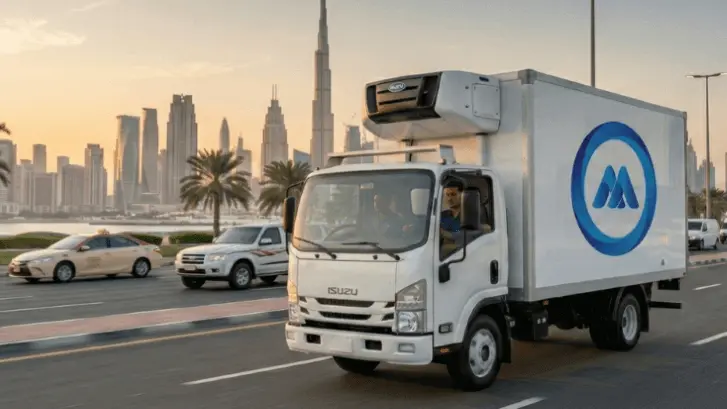
Chiller Truck Rental Abu Dhabi
ADAFSA and ASATEEL-compliant truck rentals for Mussafah, KIZAD, Khalifa City, and Al Ain.
View Service
Dubai
Chiller Truck Rental Dubai
3-Ton to 10-Ton refrigerated trucks for supermarket, pharma, and wholesale distribution.
View Service Last-Mile
Chiller Van Rental Dubai
1-Ton and 1.5-Ton chiller vans for last-mile cold chain, catering, and pharmacy routes.
View Service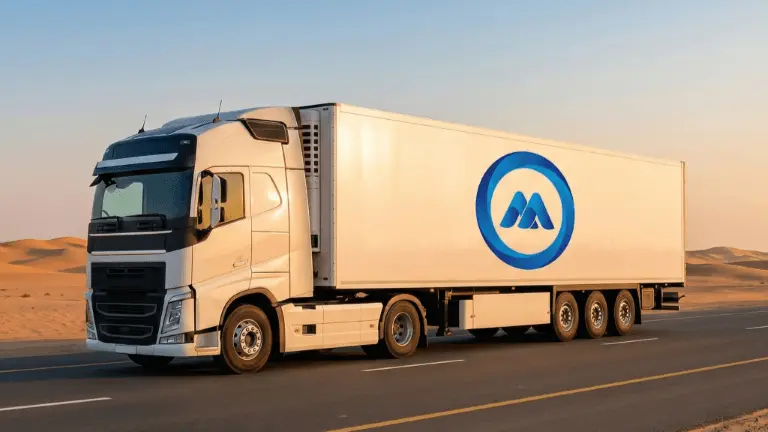 Cross-Border
Chiller Trailer Rental Dubai
20-Ton and 25-Ton reefer trailers for port clearances, warehouse transfers, and GCC routes.
View Service