The UAE imports over 90% of its food supply, maintains one of the fastest-growing pharmaceutical markets in the Middle East, and hosts a floriculture industry worth tens of millions of dollars annually. All of these sectors share one critical dependency: an unbroken refrigerated transport chain operating in ambient temperatures that regularly exceed 45 degrees Celsius.
The UAE cold chain market is valued at between USD 0.68 billion and USD 1.65 billion as of 2025, with projections showing compound annual growth rates of 8.9% to 10.3% through 2030. This growth is not abstract. It is driven by five specific industries that cannot function without temperature-controlled vehicles moving goods from ports, farms, and factories to warehouses, retailers, and end consumers across Dubai, Abu Dhabi, Sharjah, and the wider GCC.
This guide breaks down each industry, the temperature requirements regulators enforce, and what businesses in each sector need from their cold chain logistics partners.
1. Food and Beverage: The Largest Segment of the Cold Chain
The food and beverage sector is the backbone of refrigerated transport demand in the UAE. With a population projected to reach 10 million by the end of 2025 and a tourism sector that serves millions of visitors annually, the volume of perishable food moving through the country’s supply chain is enormous.
Dubai Municipality and the Abu Dhabi Agriculture and Food Safety Authority (ADAFSA) enforce strict temperature standards for every category of food product in transit. These are not guidelines. They are legally enforceable requirements backed by fines starting at AED 1,000 per violation, vehicle impoundment, and potential suspension of business licenses under Dubai’s Local Order No. 11 of 2003.
Mandatory Temperature Ranges for Food Transport
| Product Category | Required Temperature | Regulator |
|---|---|---|
| Raw meat and seafood | -2 to 2 degrees C | Dubai Municipality / ADAFSA |
| Dairy products | 1 to 3 degrees C | Dubai Municipality / ADAFSA |
| Frozen goods | -18 degrees C or lower | Dubai Municipality / ADAFSA |
| Fresh fruits and vegetables | 0 to 13 degrees C | ADAFSA / Dubai Municipality |
All food transportation vehicles in Dubai must be registered with Dubai Municipality and pass technical inspections verifying insulation quality, refrigeration capacity, and hygiene standards. Vehicles must maintain digital temperature logs available for inspection at any time, and delivery units must be cleaned and disinfected after every delivery using approved biocides.
For businesses in Abu Dhabi, ADAFSA adds requirements around product category separation to prevent cross-contamination and specific humidity controls for agricultural products. Operators also need ASATEEL GPS fleet registration and EFST (Essential Food Safety Training) certificates for all drivers handling food cargo.
Whether you run a restaurant chain, a catering company, or a dark kitchen, the food you serve depends on a chiller van or chiller truck maintaining the correct temperature from the supplier’s cold store to your kitchen door. A single break in the chain, even 30 minutes of exposure to Dubai’s summer heat, can render an entire shipment unsafe.
2. Pharmaceuticals and Life Sciences: Zero Tolerance for Error
The pharmaceutical sector is the most technically demanding segment of the UAE’s cold chain. As the country positions itself as a regional healthcare and biotech manufacturing hub, the volume and complexity of temperature-sensitive medical products moving through the supply chain continues to grow.
Modern biopharmaceuticals, including mRNA vaccines, monoclonal antibodies, and advanced cell therapies, require micro-climates maintained with zero deviation from the point of manufacture to the patient. The Ministry of Health and Prevention (MOHAP) enforces Good Storage and Distribution Practices (GSDP) that govern every aspect of pharmaceutical transport.
What MOHAP GSDP Requires
- Temperature-controlled vehicles with real-time GPS tracking and redundant cooling systems
- Temperature mapping of vehicle interiors to identify hot spots near loading doors and the roof, with sensors placed at the most vulnerable locations
- Immediate incident reporting for any temperature excursion, documented to both the receiving and dispatching parties
- A designated Responsible Pharmacist overseeing the quality management system
- Continuous staff training on safety regulations and handling protocols
Vaccine distribution carries the highest level of scrutiny. Equipment must meet WHO Prequalification standards, and shipments are often accompanied by 30-day temperature indicators and shake indicators to detect freeze-thaw damage. If a temperature excursion occurs, the product must be isolated and segregated until a root cause analysis is completed.
Abu Dhabi and Dubai have invested heavily in pharma-grade infrastructure. Etihad Cargo’s hub at Abu Dhabi International Airport and Emirates SkyCargo’s facilities in Dubai South are both IATA CEIV Pharma certified, with specialized cold rooms featuring automated rapid-recovery doors to minimize temperature shock during goods movement.
For pharmaceutical distributors operating ground transport between these facilities, hospitals, and pharmacies, the standard is clear: validated refrigerated vehicles with continuous monitoring, no exceptions.
3. Seafood: High Volume, Extreme Sensitivity
The UAE’s seafood market reached USD 1.41 billion in 2024, with over 70% of demand met through imports from approximately 127 countries. Seafood is biologically one of the most challenging products to transport. High water activity and proteolytic enzymes cause rapid muscle fiber breakdown at elevated temperatures, meaning even a brief lapse in cooling can make the product unsafe.
Temperature Requirements by Seafood Category
| Category | Transport Requirement | Shelf Life |
|---|---|---|
| Live seafood | Oxygen-rich water, reduced metabolic rate | Highly time-sensitive |
| Chilled fresh fish | Constant icing at 0 degrees C | 7-8 days post-catch |
| Frozen seafood | Stable at -18 degrees C or lower | Up to 12 months |
Fresh fish must be maintained at 0 degrees Celsius using ice from the point of catch, and any rise in temperature beyond 2 degrees is technically considered a cold chain break that can lead to spoilage and toxin development. For chilled fresh fish, the window between catch and consumer is measured in days, not weeks.
The logistics challenges extend beyond temperature. Geopolitical tensions in the Red Sea have forced container operators to reroute, increasing transit times and shipping rates by as much as 50% for refrigerated containers arriving from Asia. Those extra days in transit directly reduce the remaining shelf life when seafood arrives at UAE ports, placing even more pressure on domestic cold chain operators to move product quickly and without any temperature deviation.
Energy costs compound the challenge. Maintaining sub-zero temperatures during UAE summers can account for 25% to 35% of total operational expenses for seafood logistics providers, making efficient routing and well-maintained refrigeration units essential rather than optional.
4. Dairy: Short Shelf Life, High Volume, No Room for Delay
The UAE dairy market is valued at USD 4.8 billion as of 2024, projected to reach USD 7.0 billion by 2033. Milk, yogurt, laban, and cheese are dietary staples, and consumers expect freshness. Psychrotrophic bacteria, which cause off-flavors and accelerate spoilage, can thrive even during slight refrigeration lapses, making the dairy cold chain one of the most time-sensitive in the country.
Cabinet Decree No. 29 of 2018, the “UAE Regulations for Control on Milk and Dairy Products,” provides the legal framework. Under this decree, no dairy product can be imported or sold unless it is registered under the UAE conformity assessment scheme (ECAS) and carries the UAE Quality Mark. Authorities actively monitor compliance by collecting samples at retail outlets to verify that products were not compromised during transit.
How Dairy Distribution Works in the UAE
Dairy products must be transported at 1 to 3 degrees Celsius. The distribution model follows a hub-and-spoke pattern: products move from centralized farms in Al Ain or Sharjah to urban distribution centers in Dubai and Abu Dhabi within hours of production. Speed matters because every hour a dairy product spends above its required temperature range reduces its usable shelf life at the retail level.
The market is also evolving. Demand for dairy alternatives has risen by 36%, and organic product lines are expanding. In 2025, the Meliha Dairy Farm in Sharjah launched a new organic laban line to meet this shift. For logistics providers, this means more complex inventory management with strict First-In, First-Out (FIFO) rotation to ensure products reach shelves with maximum remaining life.
For dairy producers and distributors in the UAE, a reliable fleet of temperature-controlled vehicles is not a competitive advantage. It is a regulatory requirement and a business necessity. A single batch of yogurt that arrives at a supermarket above 3 degrees can be rejected, resulting in total write-off of the shipment.
5. Floriculture: Delicate, High-Value, and Completely Dependent on Cooling
The UAE’s floriculture industry is smaller than food or pharma but operates with equally tight temperature requirements. Flowers begin to deteriorate the moment they are cut. Without proper cooling, they wilt, lose color, and develop mold, especially given the UAE’s high humidity levels along coastal areas.
The UAE imports the vast majority of its flowers, with Kenya and the Netherlands as the primary sources. In 2023, fresh cut flower imports reached approximately USD 76.25 million, representing over 12.2 million kilograms of product. This volume supports a thriving events industry, luxury hospitality sector, and a robust gifting culture.
Top Flower Exporters to the UAE (2023)
| Country | Trade Value (USD) | Quantity (Kg) |
|---|---|---|
| Kenya | 29.2 million | 5.3 million |
| Netherlands | 22.5 million | 1.9 million |
| India | 4.2 million | 1.4 million |
| Ethiopia | 4.0 million | 753,000 |
| Ecuador | 2.8 million | 582,000 |
Most fresh cut flowers require a stable temperature range of 2 to 5 degrees Celsius during transport. Roses, which account for over 40% of the global floral trade, are particularly sensitive to temperature fluctuations that trigger ethylene gas release, accelerating the aging process. A delivery of 500 rose stems for a hotel lobby arrangement that was exposed to 30 degrees for even a short period during last-mile transport will show visible deterioration within hours.
Florists, event companies, and hotel procurement teams across Dubai and Abu Dhabi rely on chiller vans for both bulk wholesale shipments from airport cargo facilities and direct deliveries to venues. The physical sensitivity of flowers also demands careful handling to prevent bruising and breakage, meaning the vehicle and the driver both matter.
The Engineering Challenge: Why Refrigerated Transport Is Harder in the UAE
Operating a cold chain anywhere is complex. Operating one in the UAE is significantly harder due to the extreme thermal loads the climate imposes on refrigeration equipment.
When the outside temperature is 50 degrees Celsius and the cargo compartment must maintain -18 degrees for frozen goods, the temperature differential is 68 degrees. This puts enormous strain on insulation, compressor units, and door seals. Industry leaders use vacuum-panel walls and 120mm thick sandwich panels to manage heat ingress, but even the best-insulated vehicle loses temperature rapidly when doors are opened for loading and unloading.
The last-mile delivery challenge is particularly acute. With UAE online grocery sales expected to reach USD 4.5 billion by 2025, delivery vans are opening and closing their doors dozens of times per route in extreme heat. Companies are increasingly turning to phase change materials (PCMs) and micro cold units that maintain stable temperatures for up to three hours without active refrigeration, protecting cargo during those critical door-open moments.
Coastal humidity adds another layer of complexity. Moisture buildup inside cargo holds can cause “invisible losses,” subtle changes in product texture or surface bacteria development that consumers only notice days later. Advanced cargo bodies now feature moisture-resistant panels and climate-optimized ventilation systems to address this.
Technology Driving the Industry Forward
The UAE cold chain sector is transitioning from reactive operations to predictive, data-driven logistics. Approximately 34-35% of UAE logistics companies have already implemented IoT sensor systems that provide minute-by-minute data on temperature, humidity, and door-opening events, transmitting to cloud dashboards with instant alert capabilities.
AI-powered route optimization platforms are reducing time on road by factoring in real-time traffic, weather patterns, and the thermal decay rates of specific cargo types. For a chiller truck carrying dairy in July, the difference between a 45-minute route and a 90-minute route through traffic is not just a fuel cost issue. It is a cargo integrity issue.
Sustainability is also reshaping the sector. In line with the UAE’s Net Zero 2050 strategy, electric reefer fleets and solar-powered refrigeration units are entering the market. Reflective roofing and advanced insulation materials can reduce cooling costs by up to 25%, making the business case for technology investment clear.
What This Means for Your Business
If your business operates in any of these five industries, refrigerated transport is not a line item you can cut corners on. Dubai Municipality, ADAFSA, and MOHAP are actively enforcing temperature standards, conducting inspections, and pulling samples at retail level. A cold chain failure does not just mean spoiled product. It means fines, license risk, and reputational damage.
The key factors to evaluate in a cold chain logistics partner are fleet condition, regulatory compliance (DM registration, ASATEEL for Abu Dhabi, EFST-certified drivers), real-time temperature monitoring, and the ability to serve your delivery geography consistently. At Manchu Transport, our fleet of chiller vans and chiller trucks serves all five of the industries covered in this guide, across Dubai, Abu Dhabi, and the wider UAE.
Whether you need daily deliveries for a restaurant chain, weekly pharmaceutical distribution runs, or event-day flower logistics, the starting point is the same: a vehicle that holds the right temperature, driven by someone who understands the cargo. Request a quote to discuss your specific requirements.
Need Reliable Refrigerated Transport?
Get a free quote for chiller van, truck, or trailer rental in Dubai and across the UAE.
Get a Free QuoteRecommended Services
Our Refrigerated Transport Services
Choose the vehicle that matches your route, payload, and temperature requirements.
 Abu Dhabi
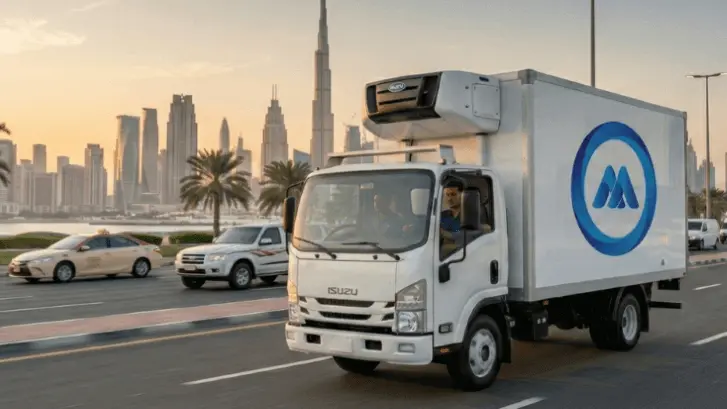
Chiller Truck Rental Abu Dhabi
ADAFSA and ASATEEL-compliant truck rentals for Mussafah, KIZAD, Khalifa City, and Al Ain.
View Service Last-Mile
Chiller Van Rental Dubai
1-Ton and 1.5-Ton chiller vans for last-mile cold chain, catering, and pharmacy routes.
View Service
Dubai
Chiller Truck Rental Dubai
3-Ton to 10-Ton refrigerated trucks for supermarket, pharma, and wholesale distribution.
View Service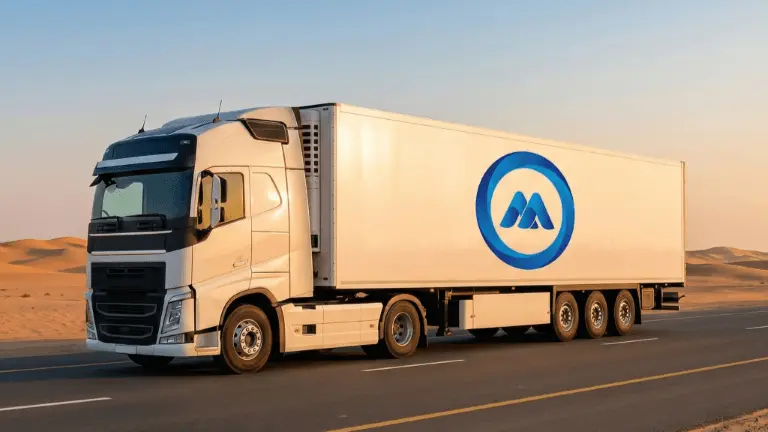 Cross-Border
Chiller Trailer Rental Dubai
20-Ton and 25-Ton reefer trailers for port clearances, warehouse transfers, and GCC routes.
View Service