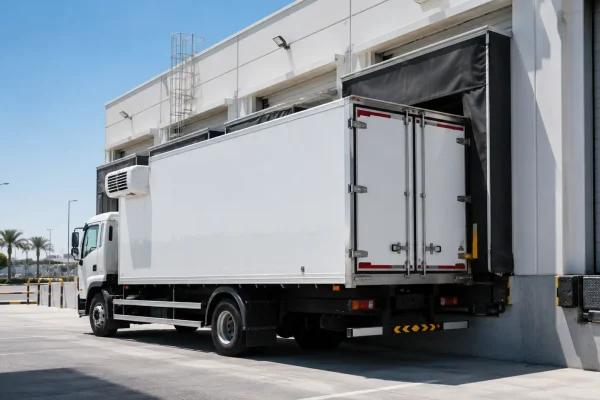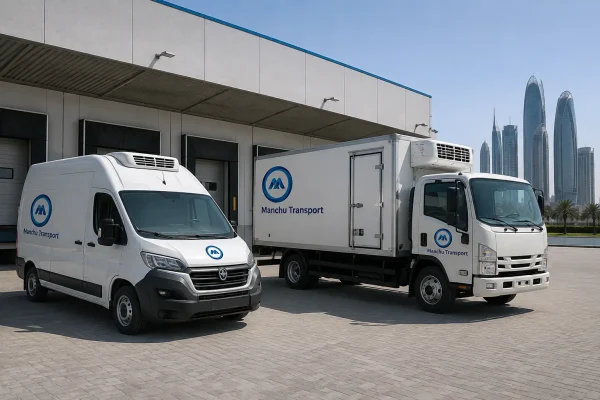

If you operate commercial vehicles in Abu Dhabi, ASATEEL compliance is not optional. The Integrated Transport Centre (ITC) requires every freight vehicle, passenger bus, and refrigerated truck operating within the emirate to be registered on the ASATEEL platform with an approved GPS tracking device. Failure to comply can result in fines up to AED 10,000 per violation. This guide covers everything fleet managers and transport business owners need to know about ASATEEL GPS tracking in Abu Dhabi, from registration and approved OBU suppliers to costs, penalties, and the specific requirements for chiller trucks and cold chain vehicles.
What is ASATEEL and Why Does It Matter?
ASATEEL is the Integrated Automated Vehicle Management and Electronic Permits (IAVMEP) platform operated by the Integrated Transport Centre under the Abu Dhabi Department of Municipalities and Transport (DMT). Launched under Resolution No. (74) of 2021 for goods transport and Resolution No. (33) of 2021 for passenger transport, the platform serves as the central monitoring system for all commercial vehicles in Abu Dhabi.
The system works through an On-Board Unit (OBU), a GPS tracking device installed in each vehicle that transmits real-time location, speed, and operational data to the ITC’s central servers. For refrigerated vehicles, the OBU also integrates with IoT temperature sensors to monitor cold chain integrity continuously.
ASATEEL exists to improve road safety, increase fleet accountability, and ensure regulatory compliance across Abu Dhabi’s commercial transport sector. It is also increasingly becoming a prerequisite for winning Abu Dhabi government tenders.
Which Vehicles Must Be ASATEEL-Registered?
The short answer: every commercial vehicle operating in Abu Dhabi. The requirement applies to a wide range of vehicle categories:
- Heavy freight vehicles — articulated trucks, heavy lorries, and trailers exceeding 3.5 tonnes GVW
- Light freight vehicles — delivery vans, pickup trucks, and smaller commercial transport units
- Chiller and refrigerated trucks — mandatory registration plus additional IoT temperature sensor requirements
- Specialized tankers — water tankers, sewage trucks, and fuel tankers
- Commercial passenger buses — vehicles with 7 or more seats used for staff transport, tourism, or public service
- School transportation — the most heavily regulated category
- Last-mile delivery vehicles — including motorbikes and e-delivery devices
If your vehicle has a commercial registration and operates within Abu Dhabi’s borders, it needs to be on ASATEEL. This includes Dubai-registered and Sharjah-registered vehicles that regularly travel into the emirate.
ASATEEL Registration: The 3-Stage Process
Registration is completed through the IAVMEP portal at asateel.itc.gov.ae/iavmep. The process has three distinct stages, and each must be completed before moving to the next.
Stage 1: Company Enrollment
The first step is creating your company profile on the ASATEEL portal. You will need to submit:
- Valid trade license
- Company logo (for the portal profile)
- Focal point contact details (a designated person who will receive OTP verification codes and manage the account)
After submission, you will receive an OTP code to verify your account. One important note: keep your focal point contact number updated. An outdated phone number is one of the most common reasons applications stall, since the OTP cannot be delivered.
Stage 2: Vehicle Integration
Once your company profile is active, you register individual vehicles. Enter each vehicle’s Traffic Code (TC) Number, and the system will automatically pull the vehicle details from the Abu Dhabi Police database. From there, you:
- Select an ITC-approved OBU vendor from the list
- Schedule OBU installation at the vendor’s facility
- Receive a Certificate of Installation once the OBU is active and transmitting
A common pitfall at this stage is Mulkiya data mismatch. If the vehicle details in the Abu Dhabi Police database do not match your submitted documents, the application will be rejected. Verify your vehicle registration card details before starting.
Stage 3: Driver Permitting
Every driver operating an ASATEEL-registered vehicle must also be registered on the platform. The requirements include:
- Valid UAE driving license (appropriate class for the vehicle)
- Emirates ID
- Medical health certificate from SEHA
- Training courses for specialized vehicle categories (e.g., hazmat, school buses)
For cold chain operators, drivers transporting food products in Abu Dhabi must also hold a valid EFST (Essential Food Safety Training) certificate, which is a separate requirement from ADAFSA (Abu Dhabi Agriculture and Food Safety Authority).
Cold Chain Specific Requirements
ASATEEL compliance for refrigerated vehicles goes beyond standard GPS tracking. If you operate a chiller van rental in Abu Dhabi or a chiller truck rental in Abu Dhabi, your vehicles must meet additional IoT sensor integration requirements that link directly to the OBU.
The temperature monitoring requirements vary by cargo type:
- Frozen goods (-23 to -18 degrees C) — IoT sensors must integrate with the OBU for real-time temperature alerting. Any deviation triggers an immediate notification to both the operator and ITC.
- Dairy products (1 to 3 degrees C) — Mandatory temperature logging for ADAFSA and HACCP audits via the ASATEEL data link.
- Pharmaceuticals (2 to 8 degrees C) — Strict deviation alerts required. Pharma cold chain breaches are treated as critical compliance failures.
- Fresh produce (0 to 13 degrees C) — Multi-zone monitoring capability required for vehicles carrying mixed cargo at different temperatures.
The OBU effectively serves as a digital logbook for cold chain integrity. This data is accessible to ADAFSA inspectors and can be used during food safety audits. A non-transmitting OBU or a gap in temperature data can trigger ADAFSA enforcement action in addition to ITC penalties.
At Manchu Transport, our entire Abu Dhabi fleet is ASATEEL-registered with integrated IoT temperature sensors, meeting the requirements for frozen, chilled, and pharmaceutical cargo transport across the emirate.
Approved OBU Suppliers and Costs
You cannot install any generic GPS tracker. The OBU must come from an ITC-approved vendor and be a certified device model. The current list of approved suppliers includes:
| Supplier | Location | Device Models | Best For |
|---|---|---|---|
| Advance Telematics Solutions | Abu Dhabi | Teltonika FMC130, FMC230 | General fleet |
| Cartrack Technologies | Dubai | Teltonika FMC130, CTG3 | General fleet |
| Dubai Technologies | Abu Dhabi | Ruptela Trace5, Galileosky | Chiller trucks, cold chain |
| En Route Technologies | Dubai / Abu Dhabi | Teltonika FMC130 | General fleet |
| FAMS Intelligent Solutions | Abu Dhabi | Teltonika FMC130 | General fleet |
| Location Solutions | Abu Dhabi | Ruptela HCV5, FMC640 | Hazmat, heavy trucks |
| Truckoom Global | Abu Dhabi | Teltonika FMC130, FMC230 | General fleet |
For chiller and refrigerated vehicles, Dubai Technologies (Ruptela Trace5, Galileosky) is commonly recommended due to their IoT temperature sensor integration capabilities. Location Solutions is another strong option for heavy refrigerated trailers.
ASATEEL registration matters most for operators running dense routes through Abu Dhabi’s industrial zones — for a zone-by-zone breakdown, read our guide to KIZAD and Mussafah cold chain logistics.
What Does ASATEEL Cost?
- Initial OBU purchase and installation: AED 800 to AED 1,500 per vehicle (one-time cost)
- Annual renewal (SIM card and software subscription): AED 400 to AED 700 per vehicle per year
For a fleet of 10 chiller trucks, expect an initial outlay of AED 8,000 to AED 15,000 and annual recurring costs of AED 4,000 to AED 7,000. While not insignificant, these costs are far less than the penalties for non-compliance.
Penalties for Non-Compliance
Resolution No. (74) of 2021 establishes clear penalties for goods transport violations:
| Violation | Fine (AED) |
|---|---|
| Operating freight without a permit | 10,000 |
| Operating a vehicle without a permit from the Centre | 1,000 per vehicle |
| Failure to install, link, or switch on GPS/OBU | 4,000 |
| Operating with an expired activity permit | 1,000 per month |
| Failure to provide documents to ITC | 500 |
| Tampering with or disabling the OBU | 4,000 |
| Overweight violations | 200 to 700 per tonne |
A 25% discount applies if the fine is paid within 30 days. All fines must be fully cleared before you can renew your ASATEEL registration.
Annual Renewal and Ongoing Obligations
ASATEEL registration is not a one-time task. Key requirements for successful annual renewal:
- The OBU must be actively transmitting data — an offline device blocks renewal
- All outstanding fines must be cleared through TAMM
- Vehicle registration and trade license must be valid and up to date
- Driver permits must be current
Operators should also be aware of the ongoing 2G network shutdown. If your OBUs are running on older 2G SIM cards, you must migrate to 4G/LTE-M compatible devices immediately.
ASATEEL vs SecurePath: Abu Dhabi vs Dubai
ASATEEL (Abu Dhabi, ITC) and SecurePath (Dubai, SIRA/RTA) are separate systems and are not automatically interoperable. A vehicle registered on ASATEEL is not considered compliant in Dubai, and vice versa.
For operators who service both emirates regularly, some OBU vendors offer dual-homed devices that transmit data to both platforms simultaneously, avoiding the need for two separate hardware installations.
Common Challenges and How to Avoid Them
Dubai or Sharjah-Registered Vehicles
Vehicles registered outside Abu Dhabi are often rejected during registration. If your fleet operates regularly in Abu Dhabi, you may need to establish an Abu Dhabi branch or transfer a sub-fleet to an Abu Dhabi Traffic Code.
Document Quality Issues
The portal uses OCR to process uploaded documents. Always upload clear, high-resolution scans of trade licenses, vehicle registration cards, and driver documents to avoid rejections.
Focal Point Contact Updates
If your designated focal point person leaves or changes their number, update it immediately on the portal. All OTP codes and compliance notifications go to this contact.
2025 Updates: What is Changing
- 2G network shutdown: All OBUs must now be 4G/LTE-M compatible
- Weight-in-Motion sensors: Automated weighing stations being deployed, linked directly to ASATEEL for automated overweight fines
- EV fleet tracking: New requirements being developed for electric commercial vehicles
- Government tender prerequisite: ASATEEL certification now mandatory for many Abu Dhabi government logistics tenders
How Manchu Transport Handles ASATEEL Compliance
When you rent a chiller van in Abu Dhabi or a chiller truck in Abu Dhabi from Manchu Transport, the vehicle comes fully ASATEEL-registered and equipped with an approved OBU and integrated temperature sensors. You do not need to handle OBU procurement, installation, or annual renewals yourself.
Whether you are a restaurant group expanding into Abu Dhabi, a pharmaceutical distributor serving ADAFZ and Mussafah, or a catering company supplying events on Saadiyat Island, our fleet covers the entire emirate with full regulatory compliance. Request a quote to get started.
Need Reliable Refrigerated Transport?
Get a free quote for chiller van, truck, or trailer rental in Dubai and across the UAE.
Get a Free QuoteRecommended Services
Our Refrigerated Transport Services
Choose the vehicle that matches your route, payload, and temperature requirements.
 Abu Dhabi
Chiller Truck Rental Abu Dhabi
ADAFSA and ASATEEL-compliant truck rentals for Mussafah, KIZAD, Khalifa City, and Al Ain.
View Service Last-Mile
Chiller Van Rental Dubai
1-Ton and 1.5-Ton chiller vans for last-mile cold chain, catering, and pharmacy routes.
View Service
Dubai
Chiller Truck Rental Dubai
3-Ton to 10-Ton refrigerated trucks for supermarket, pharma, and wholesale distribution.
View Service Cross-Border
Chiller Trailer Rental Dubai
20-Ton and 25-Ton reefer trailers for port clearances, warehouse transfers, and GCC routes.
View Service