“Just send the bigger van” sounds like the safe call — until it cannot fit into the basement loading bay at JLT, or it is running half-empty on a route that needed payload, not headroom. The choice between a high-roof and a standard-roof chiller van is not a matter of upgrading for the sake of it. It changes how much you can legally carry, whether the van can physically reach the delivery point, how fast your driver can work a multi-stop route, and how well the refrigeration unit holds temperature once the doors start opening. This guide breaks down exactly when each configuration wins, using real UAE route conditions in Dubai, Abu Dhabi, and Al Ain.
The Core Difference: It Is Not Just About Extra Space
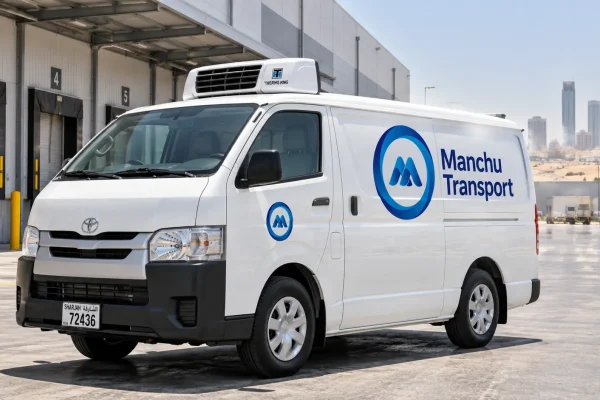
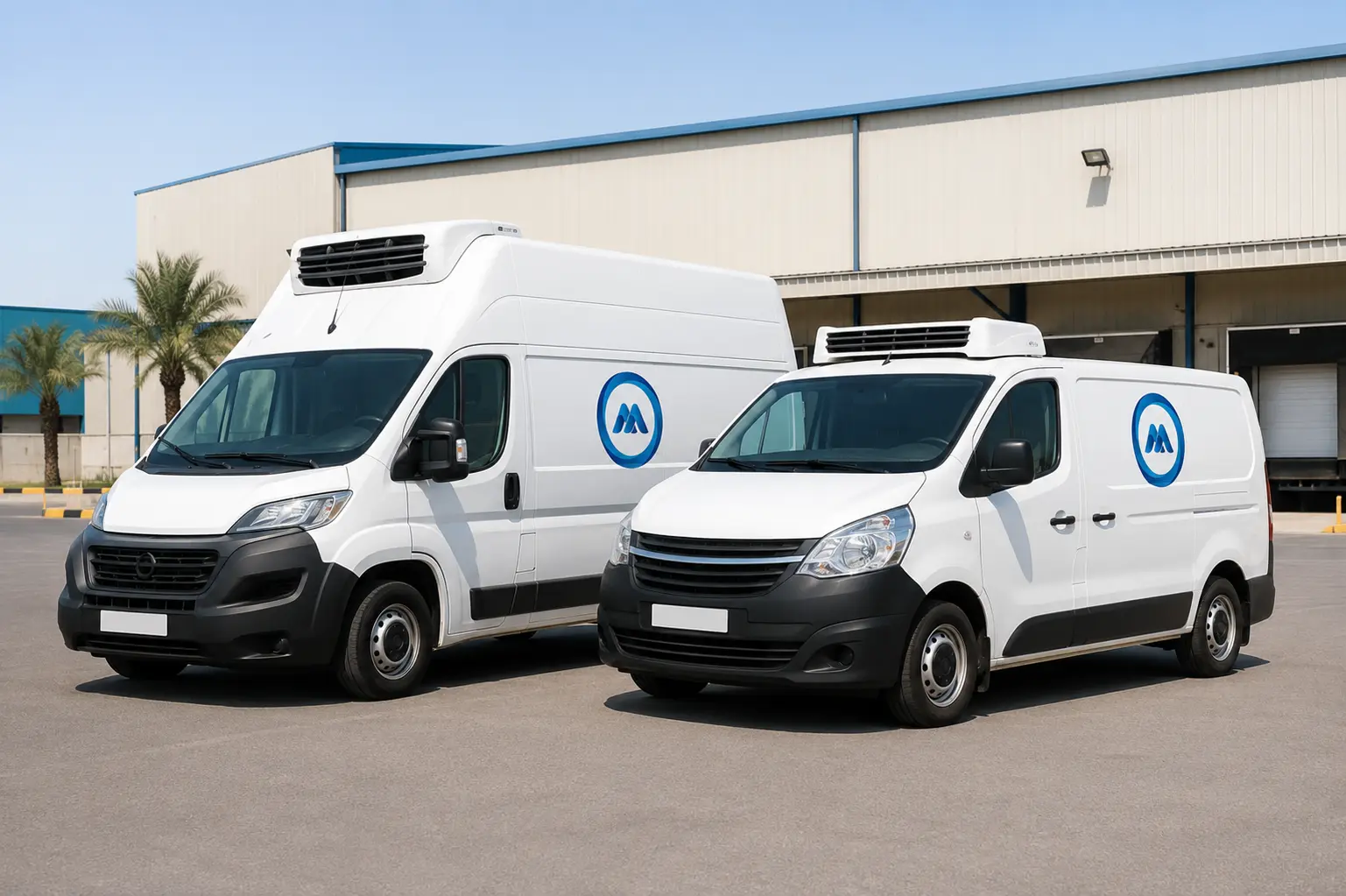
A standard-roof chiller van (based on platforms like the Suzuki Carry or the standard Toyota Hiace) keeps an external height of roughly 1.9 to 2.0 metres and a 1-ton payload rating. A high-roof van (the Toyota Hiace high-roof, or a medium platform like the Foton View) extends external height to around 2.3 to 2.4 metres and lifts payload capacity to about 1.5 tons.
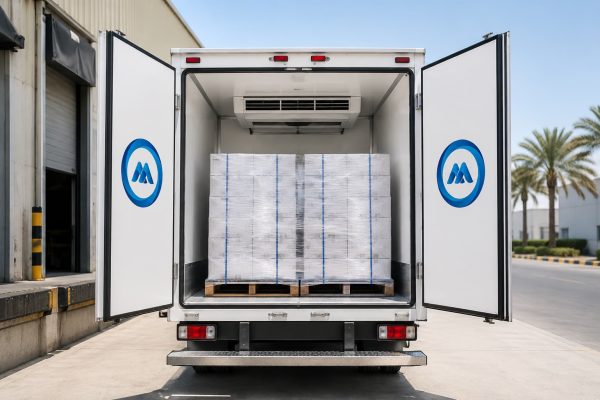
The number that actually matters for cargo, though, is not the manufacturer’s raw internal height — it is what is left after insulation. Chiller conversions require 75–100mm polyurethane panels lining the ceiling, floor, and walls (thicker again for sub-zero freezer builds). That insulation alone removes roughly 200mm of vertical clearance. On a standard-roof van with limited raw height to begin with, that can compress usable standing clearance down to around 1.2–1.4 metres — enough for boxes and crates, not enough to stand upright in. A high-roof van absorbs the same insulation penalty and still leaves 1.9–2.4 metres of clear space inside.
| Feature | Standard-Roof Chiller Van | High-Roof Chiller Van |
|---|---|---|
| Typical payload | ~740 kg – 1.0 ton | ~1.5 tons |
| External height | ~1.9 – 2.0 m | ~2.3 – 2.4 m |
| Usable height after insulation | ~1.2 – 1.4 m | ~1.9 – 2.4 m |
| Estimated cargo volume (chilled) | ~3.5 – 6.0 m³ | ~7.0 – 9.0 m³ |
| Basement / low-clearance access | Yes, typically fits 2.1–2.2 m clearance | Usually blocked by low-clearance bays |
Cargo That Belongs in a Standard-Roof Van
Chiller vans are constrained by two limits at once: physical volume and legal payload weight. A shipment either “weighs out” (hits the payload limit before the space is full) or “cubes out” (fills the space before the weight limit is reached). Dense, heavy cargo weighs out fast, which makes the extra height of a high-roof van pure wasted rental spend — you would hit the weight ceiling long before you used the extra headroom.
Standard-roof is the right call for:
- Raw and fresh meat — dense, heavy, typically packed flat in trays or crates
- Dairy in bulk — milk crates, block cheese, butter — high weight-to-volume ratio
- Wet seafood packed in ice — the ice alone adds significant weight per box
- Stacked beverage crates — liquids are almost always weight-limited, not space-limited
Stacking heavy crates to the ceiling of a high-roof van to “use the space” is also a compliance risk — it can push the vehicle past its gross vehicle weight limit, which risks chassis damage, brake performance, and fines at a weighbridge check. If your cargo is dense, a standard-roof van at a lower daily rate is the more efficient — not the compromised — choice.
Cargo That Needs a High-Roof Van
High-roof configurations exist for cargo that cubes out before it weighs out — lightweight, bulky, tall, or fragile goods that cannot be safely laid flat or crushed under stacked boxes.
- Floral and event logistics — tall arrangements and installations need to travel upright, not on their side
- Multi-tier cakes and event catering — height clearance prevents crushing and preserves presentation
- Palletized lightweight goods — leafy greens, bakery, packaged retail and e-commerce parcels move far more efficiently upright on a pallet or trolley
- Pharma equipment and clinical kits — tall, pre-configured units that need to stay upright and within a controlled +2°C to +8°C range en route
For palletized, low-density freight specifically, a high-roof van can carry 40–60% more cubic volume than a standard van with a similar road footprint — in practice, that can mean one high-roof run replacing two standard-roof runs on the same route.
Where the Van Physically Cannot Go: Dubai Basement Access
This is the constraint that decides the debate outright for a large share of Dubai deliveries. Retail and F&B receiving docks in towers across Business Bay, Dubai Marina, JLT, and Downtown Dubai are almost always in basement loading bays, and those bays are boxed in by structural beams, MEP ducting, and low access ramps. Clearance in many of these basements sits between 2.1 and 2.2 metres.
A standard-roof van, at roughly 1.9–2.0 metres external height, clears this without issue. A high-roof van, at 2.3–2.4 metres, simply does not fit — regardless of how much cargo capacity you need. When that happens, the delivery does not get cancelled; it gets worse. The driver parks on the street or in a surface lot and hand-trolleys chilled goods through a pedestrian entrance, which means five to ten minutes of chilled or frozen product sitting in 45°C+ heat — a cold chain breach that a temperature-conscious receiving manager will notice.
If your route runs through Dubai’s dense vertical commercial districts, standard-roof is not a preference — it is the only configuration that reliably reaches the dock.
Where High-Roof Wins: Industrial and Suburban Hubs
The equation flips in Abu Dhabi’s and Dubai’s industrial zones — Mussafah, ICAD, KIZAD in Abu Dhabi; Al Quoz and Dubai Investment Park in Dubai — where facilities are built around surface-level loading docks rather than basements. Standard dock platforms and overhead clearances in these zones are built for trucks and large vans, typically allowing 4.0–5.0 metres of overhead clearance at covered bays. A high-roof van’s extra 300–400mm of height is a non-issue here, and its extra volume becomes a straightforward efficiency gain rather than a liability.
For distribution centred on these industrial and suburban corridors — or on Abu Dhabi chiller van routes more broadly — the high-roof configuration is usually the more economical choice per delivered pallet, not just the higher-capacity one.
Temperature Recovery: The High-Roof Trade-Off
A high-roof van holds more air, which means more chilled air spills out every time the rear doors open on a multi-stop route. Left unmanaged, that would suggest high-roof vans recover temperature more slowly after each stop. In practice, the opposite tends to be true, for one specific reason: airflow.
Refrigeration units need a clear path for air to circulate — cold air pushed across the top of the load, down the rear doors, and pulled back along the floor as return air. In a standard-roof van, drivers often pack cargo tight against the low 1.2-metre ceiling to make the most of limited space, which blocks the vents and creates hot spots the compressor cannot reach. A high-roof van, even fully loaded, naturally leaves a 300–500mm air gap above the cargo, so the evaporator keeps circulating properly. The result: a correctly specified high-roof van, loaded sensibly, often holds temperature more consistently across a multi-drop route than an over-packed standard-roof van — even though it is cooling a larger volume of air.
The practical takeaway: never load cargo flush to the ceiling in either configuration, and if your route involves 8+ door-opening events per shift, ask what refrigeration capacity the van is running before assuming bigger volume means worse recovery.
Driver Ergonomics and Route Speed
The 1.2–1.4 metre clearance inside a standard-roof van forces drivers into a stooped, crouched posture to locate and retrieve every item. Across 40–50 stops in a shift, that adds up to real fatigue, slower per-stop handling time, and higher risk of lifting-related strain — especially with heavier chilled goods. A high-roof van lets a driver stand upright to sort and retrieve cargo, which measurably speeds up multi-drop routes and reduces physical strain over a full shift. For high-frequency delivery operations specifically, this ergonomic difference is often as commercially relevant as the extra cubic metres.
Rental Pricing: Standard-Roof vs High-Roof in the UAE
| Configuration | Typical Payload | Best Fit | Rate Positioning |
|---|---|---|---|
| Standard-Roof Chiller Van | ~1.0 Ton | Dense cargo, basement/mall access, dense Dubai urban core | Lower daily and monthly rate |
| High-Roof Chiller Van | ~1.5 Tons | Voluminous or fragile cargo, industrial hubs, multi-drop urban routes with surface access | Moderate premium over standard-roof, reflecting extra payload and compressor capacity |
The high-roof premium is easy to justify when it consolidates two standard-roof runs into one — the savings on a second driver, fuel, and Salik tolls typically outweigh the higher daily rate by a wide margin. It is much harder to justify on dense cargo or basement-access routes, where the extra height buys you nothing you can legally use. For an exact quote against your route and cargo type, request a quote and specify pickup zone, delivery zone, and cargo type — that is enough for us to tell you which configuration actually pays off.
Quick Decision Framework
- Does your cargo weigh out or cube out? Dense and heavy → standard-roof. Bulky and light → high-roof.
- Does any stop require basement or low-clearance access? If yes anywhere on the route, default to standard-roof for that leg.
- Is the route mostly industrial/suburban with surface docks? High-roof volume becomes a clear efficiency win.
- How many stops per shift, and how tightly is the van packed? High stop counts reward the airflow advantage of a properly loaded high-roof van — but only if cargo is not packed to the ceiling.
Frequently Asked Questions
Can a high-roof chiller van access basement loading docks in Dubai malls and towers?
Usually not. Most basement receiving bays in Business Bay, Downtown Dubai, and JLT have overhead clearance around 2.1–2.2 metres, while high-roof vans stand roughly 2.3–2.4 metres. Standard-roof vans are built for exactly this kind of access.
Does a high-roof van hold temperature worse than a standard-roof van?
Not necessarily. Although a high-roof van cools a larger volume of air, its extra headroom preserves the air gap the refrigeration unit needs for proper circulation. A high-roof van loaded correctly — with clearance above the cargo — often outperforms a standard-roof van that has been packed tight against the ceiling.
Is a high-roof chiller van always the better choice for e-commerce delivery?
Only if the cargo is lightweight and voluminous and the route has surface-level access at every stop. For dense parcels or any basement-access delivery point, a standard-roof van is often the more practical and cost-effective option.
How much more does a high-roof chiller van cost to rent in the UAE?
High-roof vans typically carry a moderate premium over standard-roof vans, reflecting the larger insulated body and higher-capacity refrigeration unit. That premium is usually offset if the extra volume lets you consolidate two standard-roof runs into one.
Not sure which configuration fits your route? Tell us your cargo type, stop count, and delivery zones and we will recommend the right van. Request a quote, or see current availability on our Dubai chiller van rental and Abu Dhabi chiller van rental pages.
Need Reliable Refrigerated Transport?
Get a free quote for chiller van, truck, or trailer rental in Dubai and across the UAE.
Get a Free QuoteRecommended Services
Our Refrigerated Transport Services
Choose the vehicle that matches your route, payload, and temperature requirements.
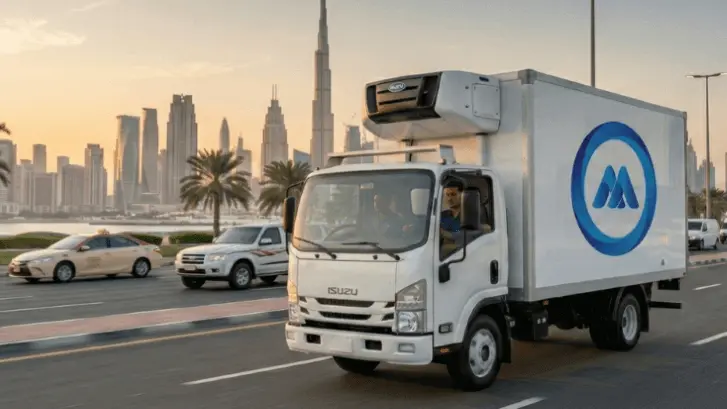 Abu Dhabi
Chiller Truck Rental Abu Dhabi
ADAFSA and ASATEEL-compliant truck rentals for Mussafah, KIZAD, Khalifa City, and Al Ain.
View Service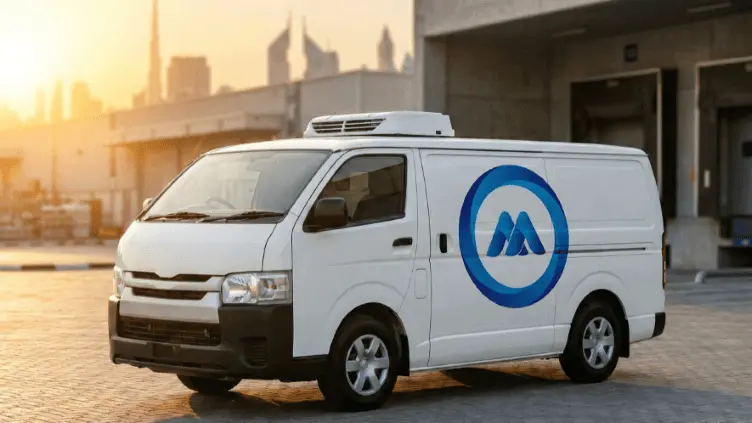 Last-Mile
Chiller Van Rental Dubai
1-Ton and 1.5-Ton chiller vans for last-mile cold chain, catering, and pharmacy routes.
View Service
Dubai
Chiller Truck Rental Dubai
3-Ton to 10-Ton refrigerated trucks for supermarket, pharma, and wholesale distribution.
View Service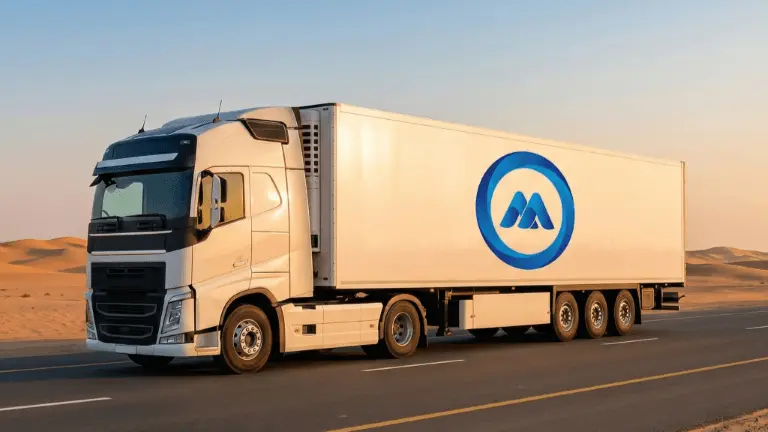 Cross-Border
Chiller Trailer Rental Dubai
20-Ton and 25-Ton reefer trailers for port clearances, warehouse transfers, and GCC routes.
View Service