
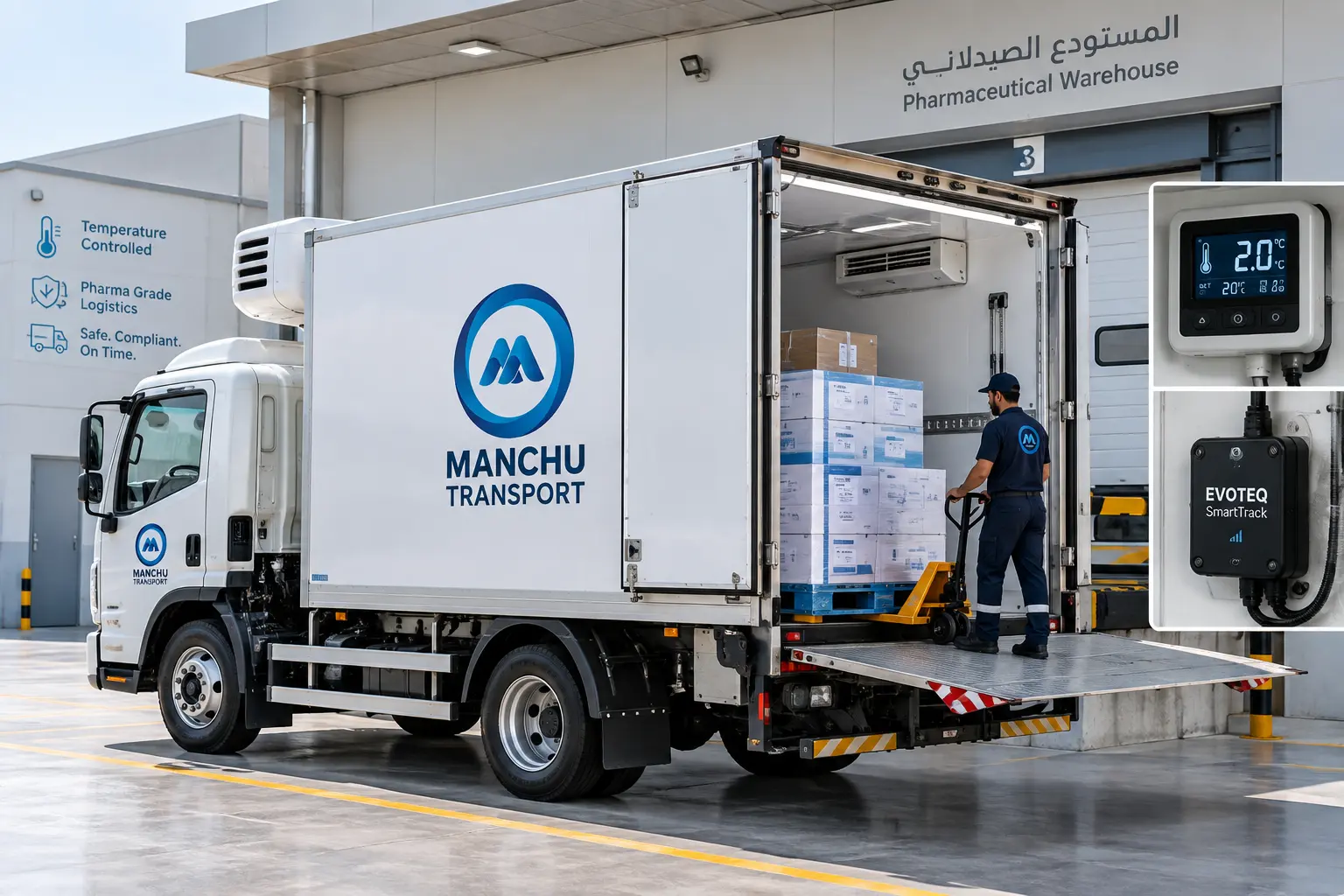
The pharmaceutical logistics landscape in the United Arab Emirates has undergone a fundamental shift, transitioning from a localized distribution framework into a highly centralized, digitally integrated, and stringently regulated ecosystem. As of 2026, the regulatory and operational realities of pharmaceutical transport in the region are defined by an uncompromising approach to supply chain integrity, patient safety, and product efficacy.
This transformation was solidified by the enactment of Federal Decree-Law No. 38 of 2024, which established the Emirates Drug Establishment (EDE) as the sole federal authority overseeing pharmaceutical marketing authorizations, pharmacovigilance, product registration, and the regulation of pharmaceutical products, biologics, and medical devices. For cold chain operators, this means stricter compliance mandates, real-time digital tracking, and zero-tolerance enforcement.
Good Distribution Practice (GDP): The Compliance Foundation
The cornerstone of pharmaceutical transport compliance in the UAE is Good Distribution Practice (GDP). GDP compliance is legally anchored by MOHAP Ministerial Decree No. 7 of 2020, which aligns domestic operations with the stringent European Union GDP guidelines (2013/C 343/01) and the World Health Organization’s Technical Report Series No. 957.
Holding a valid GDP certificate is an absolute prerequisite for any entity participating in the storage, handling, or transportation of pharmaceutical products. The GDP mandate dictates that medical shipments cannot be managed alongside standard FMCG or food supply chains. Transport must occur in dedicated, specialized vehicles equipped with:
- Validated temperature control systems
- Multi-redundant backup refrigeration mechanisms
- Real-time digital temperature monitoring with ±0.5°C accuracy
- Tamper-proof tracking and documentation
- Comprehensive thermal mapping studies
Vehicle Qualification Requirements
GDP compliance requires exhaustive technical validation. Fleet operators cannot rely solely on manufacturer specifications or dashboard refrigeration displays.
Mandatory qualification processes include:
- Temperature Mapping Studies: Conducted in both empty and fully loaded compartments under representative summer and winter conditions. These studies identify localized hot or cold spots within the cargo hold’s airflow patterns.
- Installation Qualification (IQ): Verification that the equipment is installed correctly according to specifications.
- Operational Qualification (OQ): Validation that the equipment operates within specified parameters under actual operating conditions.
- Performance Qualification (PQ): Proof that the vehicle maintains required temperature consistency throughout representative transport cycles.
- Annual Re-validation: All qualifications must be rigorously audited and repeated annually to maintain compliance status.
Once mapping is complete, the identified thermal extremities dictate the placement of permanent, tamper-proof digital monitoring probes and define the safe loading patterns for subsequent operations.
Pharmaceutical Temperature Classifications
Pharmaceutical commodities possess highly specific, fragile thermal profiles. Excursions outside approved temperature bands cause catastrophic biochemical degradation that is entirely invisible to the naked eye.
| Classification | Temperature Range | Examples | Risk Level |
|---|---|---|---|
| Ultra-Cold Chain | -60°C to -80°C | mRNA vaccines, gene therapies | Critical |
| Frozen Storage | -20°C ± 5°C | Specific biologics, plasma products | Critical |
| Standard Cold Chain | +2°C to +8°C | Insulin, liquid vaccines, biologics, eye drops | Critical |
| Cool Storage | +8°C to +15°C | Liquid formulations, suppositories | High |
| Room Temperature | +15°C to +25°C | Oral medications, tablets, capsules | Moderate |
Tatmeen Platform: Digital Track-and-Trace Mandate
Parallel to physical temperature control is the mandate for absolute digital transparency through the Tatmeen platform. Initiated by MOHAP and fully active since December 2022, Tatmeen is a highly advanced track-and-trace system powered by EVOTEQ SmartTrack technology.
The platform mandates global GS1 serialization standards, requiring all secondary pharmaceutical packaging to be marked with a unique GS1 DataMatrix barcode. This serialization allows the EDE and supply chain stakeholders to trace the exact movement and custody of individual medicinal units in real time.
Tatmeen functions as:
- An impenetrable digital barrier against counterfeit or unapproved drugs
- A rapid, pinpoint product recall mechanism
- A complete chain-of-custody audit trail
- Real-time government visibility into pharmaceutical movement
Any discrepancy between the physical cargo and the digital ledger results in immediate compliance violations and the halting of goods.
Most Common Violations and Penalties
Pre-Loading Temperature Failures
The most pervasive violation is the failure of drivers to adequately pre-cool the transport vehicle for the mandatory minimum of 30 minutes prior to loading. Loading temperature-sensitive biologics into a heat-soaked compartment induces immediate thermal shock and triggers real-time sensor alarms.
Penalty: AED 25,000 – AED 100,000 + cargo quarantine and disposition review
Door-Opening Excursions
Prolonged door-opening events during multi-stop routes rapidly equalize the internal cargo environment with the external ambient air (often 45°C+ in UAE summer). These deviations are instantly registered by calibrated sensors (±0.5°C accuracy required).
Penalty: AED 10,000 – AED 50,000 per excursion + mandatory excursion report
Tatmeen Data Discrepancies
Operating without active Tatmeen integration or submitting inaccurate serialization data to the platform violates traceability mandates.
Penalty: AED 50,000 – AED 500,000 + immediate distribution license suspension
Missing or Expired Temperature Records
Failing to maintain or produce complete, uninterrupted digital temperature logs for regulatory audit. Any gaps in the data chain render the entire shipment’s thermal history suspect.
Penalty: AED 20,000 – AED 100,000 + cargo rejection
Operating Non-Qualified Vehicles
Transporting pharmaceuticals in vehicles that have not undergone IQ, OQ, and PQ validation, or whose validation has expired.
Penalty: AED 100,000 – AED 500,000 + immediate fleet grounding + distribution license revocation
The Regulatory Response Framework
The UAE enforces a preventive rather than reactive compliance model. Any threshold breach must trigger real-time alarms notifying fleet managers instantly. The operator is then legally required to:
- Generate an excursion report within 24 hours
- Perform a complete root cause analysis
- Physically and digitally quarantine the affected cargo
- Engage a qualified quality assurance person to review manufacturer stability data
- Make a formal disposition decision (release, re-test, or destruction)
If an operator attempts to bypass this process or systemically fails to maintain compliance, the penalties are debilitating:
- Massive financial fines scaling up to AED 500,000
- Immediate suspension or total revocation of distribution licenses
- Exclusion from government tender processes
- Product seizures and cargo destruction
- Criminal prosecution in cases involving public health endangerment
Best Practices for Pharmaceutical Compliance
- Partner only with GDP-certified providers – verify certificates and annual renewal
- Enforce mandatory pre-cooling: 30-60 minutes minimum before loading
- Implement 24/7 temperature monitoring with real-time alerts to your team
- Maintain complete Tatmeen integration – verify active GS1 barcoding
- Document every shipment: thermal mapping, load plan, temperature records, carrier information
- Conduct quarterly compliance audits of your logistics partner’s documentation
- Train personnel extensively on thermal handling, excursion procedures, and regulatory requirements
- Establish emergency protocols for immediate cargo quarantine if alarms trigger
Frequently Asked Questions
Does every pharmaceutical vehicle need GDP certification?
Yes. Any entity transporting prescription medicines, biologics, vaccines, or controlled pharmaceuticals must hold valid GDP certification. This is a non-negotiable regulatory requirement, not an optional enhancement.
What is the difference between Tatmeen and standard temperature tracking?
Tatmeen is a government-controlled, real-time serialization and traceability platform. It connects directly to EDE systems, enabling federal visibility into the movement of every individual pharmaceutical unit. Standard temperature tracking only records thermal data; Tatmeen adds chain-of-custody verification and counterfeit prevention.
How often do temperature-mapping studies need to be repeated?
Annual re-validation is mandatory. Vehicles aged beyond a certain service life or showing signs of insulation degradation may require more frequent validation.
What happens if a temperature excursion occurs during transport?
The system must trigger an immediate alarm. You then have 24 hours to file an excursion report, conduct root cause analysis, and quarantine the cargo. A qualified QA person reviews stability data to determine if the batch can be salvaged or must be destroyed.
Can pharmaceutical cargo be transported in a standard refrigerated truck?
Not legally. Pharmaceutical transport requires a dedicated vehicle that has undergone IQ, OQ, and PQ validation. A standard food-grade chiller truck, even if maintained at proper temperatures, does not meet GDP requirements.
Ensure Full Compliance
Navigating pharmaceutical logistics in the UAE demands an uncompromising fusion of thermodynamic engineering, rigorous procedural discipline, and real-time data synchronization. Partner with experienced cold chain operators who maintain active GDP certification, Tatmeen integration, and documented thermal qualification.
For pharmaceutical transport inquiries, contact Manchu Transport at +971 54 7171 345, email manchutransport@gmail.com, or WhatsApp.
Regulatory requirements, certification standards, and Tatmeen protocols can change. Verify current compliance requirements with the Emirates Drug Establishment (EDE) and MOHAP before each pharmaceutical shipment.
Need Reliable Refrigerated Transport?
Get a free quote for chiller van, truck, or trailer rental in Dubai and across the UAE.
Get a Free QuoteRecommended Services
Our Refrigerated Transport Services
Choose the vehicle that matches your route, payload, and temperature requirements.
 Dubai
Dubai
Chiller Truck Rental Dubai
3-Ton to 10-Ton refrigerated trucks for supermarket, pharma, and wholesale distribution.
View Service Last-Mile
Chiller Van Rental Dubai
1-Ton and 1.5-Ton chiller vans for last-mile cold chain, catering, and pharmacy routes.
View Service Cross-Border
Chiller Trailer Rental Dubai
20-Ton and 25-Ton reefer trailers for port clearances, warehouse transfers, and GCC routes.
View Service
Abu Dhabi
Chiller Truck Rental Abu Dhabi
ADAFSA and ASATEEL-compliant truck rentals for Mussafah, KIZAD, Khalifa City, and Al Ain.
View Service