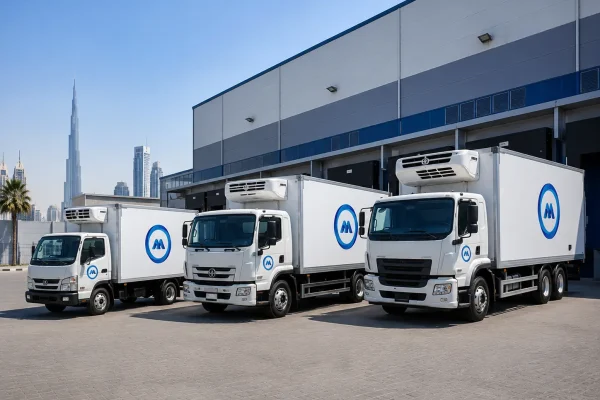
“Reefer truck,” “chiller truck,” and “freezer truck” get used almost interchangeably in everyday conversation, and most of the time that is harmless. But when a procurement manager searches specifically for a reefer truck instead of a chiller truck, they are usually asking a more precise engineering question than the terms let on — and getting the wrong vehicle for the job can mean a broken cold chain halfway through a multi-drop route. This guide breaks down what actually separates the three, when the distinction matters, and which one fits routes in and around Abu Dhabi’s industrial zones, Dubai, and Al Ain.
The Short Answer
- A chiller truck keeps cargo between roughly 0°C and +8°C — a mobile refrigerator for fresh, non-frozen goods.
- A freezer truck holds deep-freeze temperatures, typically -18°C to -25°C, for frozen protein, seafood, and ice cream.
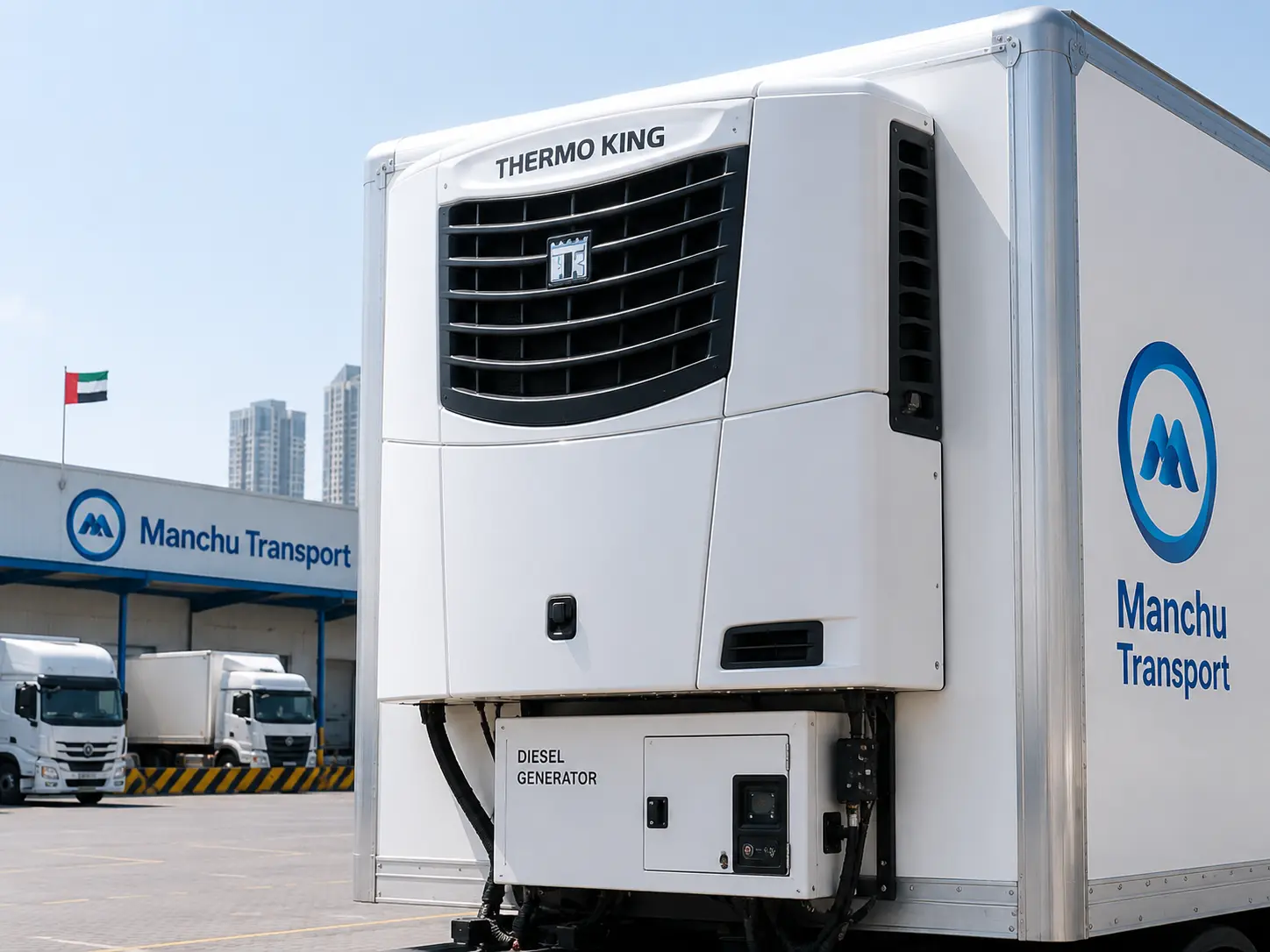
- A reefer truck is not a third temperature category — it describes a vehicle with an independent, standalone refrigeration unit that can be set to chiller range, freezer range, or anywhere in between, powered separately from the vehicle’s own engine.
In other words: chiller and freezer describe what temperature the cargo box holds. Reefer describes how the refrigeration is powered and how flexible that range is. A truck can technically be both a “reefer” and a “chiller” at the same time — the terms answer different questions.
Direct-Drive vs Standalone Refrigeration: The Real Difference
The distinction that actually matters for procurement is the refrigeration system, not the label on the listing.
| System Type | Power Source | Temperature Flexibility | Engine-Off Behaviour | Typical Use |
|---|---|---|---|---|
| Direct-drive | Powered by the vehicle’s own engine or a belt-driven compressor | Fixed to a set chiller or freezer range for that vehicle | Refrigeration weakens or stops when the engine is off for extended periods | Standard chiller vans and trucks on short, continuous-running routes |
| Standalone (reefer) unit | Independent diesel or electric-standby power, separate from the main engine | Adjustable across a wide range, from deep-freeze to ambient | Keeps running independently while the vehicle is parked or the engine is off | Multi-drop routes, long idle periods at loading docks, mixed cargo across a single day |
A direct-drive chiller or freezer unit is perfectly adequate for a large share of UAE cold chain work — most retail and F&B delivery routes involve the vehicle running continuously with short stops. Where a standalone reefer unit earns its higher day rate is on routes with long idle time: a truck parked at a loading dock in Mussafah for 40 minutes while pallets are hand-checked, or a delivery that sits outside a hospital receiving bay waiting for a signature. A direct-drive unit loses cooling capacity in that scenario. An independent reefer unit does not, because it is not depending on the truck’s engine to keep running.
Why “Reefer” Comes Up More in Abu Dhabi and Industrial-Zone Searches
Search demand for “reefer truck” specifically — rather than “chiller truck” — skews toward Abu Dhabi’s heavier industrial logistics zones: ICAD, Mussafah, and KEZAD. That tracks with how those routes actually operate. Businesses moving cargo through these zones are more likely to be dealing with:
- Long dwell times at warehouse loading docks, where engine-off refrigeration matters
- Mixed-cargo runs — for example, deep-frozen seafood outbound in the morning and ambient-temperature goods on the return leg — which only a standalone, adjustable unit can handle without a second vehicle
- Port-linked freight moving through Khalifa Port and onward to KEZAD distribution facilities, where trucks routinely queue for extended periods before unloading
For city-centre retail and hospitality delivery routes with short, frequent stops, a standard direct-drive chiller or freezer truck is usually the more cost-effective choice — see our Abu Dhabi chiller truck rental and Abu Dhabi freezer truck rental pages for those options.
Refrigeration Brands: Thermo King, Carrier, and Others
Most standalone reefer units in the UAE market are built by a small number of established manufacturers, chief among them Thermo King and Carrier Transicold, both of which produce units specifically rated for high-ambient operation in extreme heat. The brand matters less than the unit’s age, maintenance history, and ambient rating — a well-maintained five-year-old unit will outperform a neglected new one. We cover this in more detail in our Thermo King vs Carrier vs Zanotti comparison.
Which One Does Your Route Actually Need?
| Your Situation | Best Fit |
|---|---|
| Short, continuous-running city delivery route with frequent stops | Standard direct-drive chiller or freezer truck |
| Long dock waits or extended engine-off periods during loading/unloading | Standalone reefer unit |
| Same-day route carrying both frozen and ambient-temperature cargo | Standalone reefer unit with adjustable set point, ideally with a partitioned bulkhead |
| Port-to-warehouse or warehouse-to-warehouse bulk transfer with queueing time | Standalone reefer unit |
| Straightforward single-temperature cargo, tight urban access | Standard chiller or freezer van/truck — no need to pay for reefer flexibility you won’t use |
If your operation runs mixed cargo across a single vehicle, it is also worth reading about high-roof vs standard roof chiller vans and comparing that against a partitioned truck configuration, since volume and temperature-zoning decisions often need to be made together.
Frequently Asked Questions
Is a reefer truck always colder than a chiller truck?
No. “Reefer” describes the refrigeration system, not a specific temperature. A reefer unit can be set anywhere from deep-freeze to chilled range — it is the flexibility and independent power source that define it, not the cold.
Can one reefer truck carry both frozen and chilled cargo on the same trip?
Only with a physically partitioned cargo box and either a dual-zone unit or two independent evaporators. A single-zone reefer truck can only hold one set temperature at a time across the whole box.
Is a standalone reefer unit worth the higher cost for a short city route?
Usually not. If your route keeps the engine running with only brief stops, a standard direct-drive chiller or freezer truck delivers the same cold chain outcome at a lower day rate.
Do reefer trucks need different permits than chiller trucks in the UAE?
No — food transport permits and ASATEEL/ADAFSA requirements apply based on the cargo and route, not the refrigeration system type. A reefer-equipped truck still needs the same food vehicle permit as a direct-drive chiller truck carrying the same goods.
Not Sure Which One You Need?
Tell us your route, dwell time at loading and delivery points, and whether your cargo is single-temperature or mixed, and we will match you to the right vehicle rather than the most expensive one. Request a quote, or browse our chiller truck rental Dubai and chiller truck rental Abu Dhabi pages for current availability.
Need Reliable Refrigerated Transport?
Get a free quote for chiller van, truck, or trailer rental in Dubai and across the UAE.
Get a Free QuoteRecommended Services
Our Refrigerated Transport Services
Choose the vehicle that matches your route, payload, and temperature requirements.
 Abu Dhabi
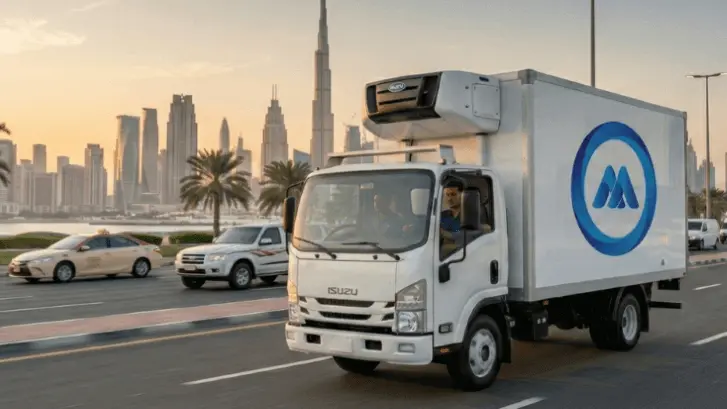
Chiller Truck Rental Abu Dhabi
ADAFSA and ASATEEL-compliant truck rentals for Mussafah, KIZAD, Khalifa City, and Al Ain.
View Service
Dubai
Chiller Truck Rental Dubai
3-Ton to 10-Ton refrigerated trucks for supermarket, pharma, and wholesale distribution.
View Service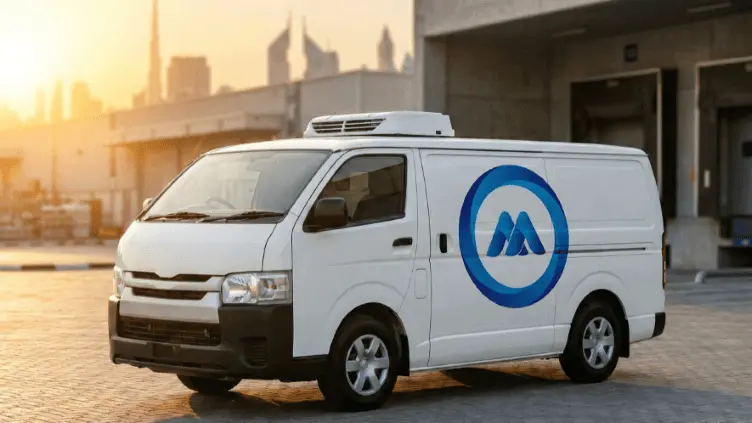 Last-Mile
Chiller Van Rental Dubai
1-Ton and 1.5-Ton chiller vans for last-mile cold chain, catering, and pharmacy routes.
View Service Cross-Border
Chiller Trailer Rental Dubai
20-Ton and 25-Ton reefer trailers for port clearances, warehouse transfers, and GCC routes.
View Service